“Shepitko’s work is disturbing and, with each passing film, it becomes more disturbing, rather than affirming. Or if there is affirmation, it is of a strange and macabre sort – the eeriness with which her work points with increasing urgency, and seeming acceptance, to the death that befell her accidentally.” — Barbara Quart, Between Materialism and Mysticism: The Films of Larisa Shepitko
The German nazis’ genocidal war against the Slavic people lasted from June 1941 to May 1945. From the outset it was a racist war of extermination modeled on the U.S.’s genocide of Native Americans. By the time the Red Army reached Berlin and put an end to it, the nazis and their fascist collaborators had murdered around 25 million Soviet people, 18 million of those civilians. That’s roughly 17,000 people per day (or five “9/11″s), every day, for four years. Belarus in particular was a living hell. The 1976 book Out of the Fire, by Ales Adamovich, is a compendium of oral history transcripts given by those who survived, some of them the only living witnesses to the slaughter of their entire communities. Not surprisingly, nazis loved “big data” and used it to conserve killing resources and track progress towards their 75% depopulation goal. As one 1941 report from Borki states:
“705 persons were shot; 203 of them men, 372 women and 130 children. Expended during the operation: rifle cartridges — 786, cartridges for submachineguns — 2,496.”
To save ammunition, hundreds at a time were locked in barns and schoolhouses and burned alive, with the bullets saved for those trying to escape. Other “resource friendly” killing methods included dumping people alive down wells and bayoneting babies; for the latter, Belarusians speak of S.S. soldiers wearing butcher smocks to keep their uniforms clean. Some “humanitarian” nazis actually felt they were considerate in their killing, letting family members decide among themselves who would be shot into the open pits of bodies first. The German army provided lots of alcohol for workday consumption to make shooting women and kids easier. In Out of the Fire, multiple survivors recall how much laughing some Germans did, sometimes turning up the music on truck radios to drown out the sounds. Over 550 Belarusian villages were destroyed and their inhabitants murdered, or sent back to Germany as slave labor. Those who could fled into the woods, grouping with others and forming partisan bands that conducted sabotage of enemy supply infrastructure, assassinations, and full-scale attacks when possible, tying down nazi manpower and resources that helped lead to their eventual defeat. This is the background for Larisa Shepitko’s dark masterpiece The Ascent, released by Mosfilm in 1977.
Larisa Shepitko, ’65-66 (pic: stuki-druki.com)
I say all this because the filmdoesn’t. Apart from one brief gunfire scene and the remains of a razed home (its clean laundry eerily blowing in the breeze), The Ascent is devoid of action sequences common to many war films. After all, Soviet audiences knew the gory details, and millions still had acute PTSD from their experiences. They didn’t need the adrenaline rush, they needed some added Dostoyevsky. Or, in the case of The Ascent, also some Christ.
Larisa Shepitko was raised by her mother in rural Ukraine and came to Moscow at 16 on her own accord to enroll at the Cinematography Institute, where she worked under one of her idols, the elderly Alexander Dovzhenko, best known for silent classics Arsenal and Earth. Her first film, the graduate project Heat, owed much to her mentor. Like him, she was concerned with landscape and natural surroundings, portraying those in ways that are mystical, unsettling and often dangerous. Scholar Jane Costlow says that, for Shepitko, “Dovzhenko represented integrity and allegiance to film as a vehicle for conscience; despite enormous ideological pressure in the 1930s and ’40s, he had continued making films of artistic value, many of which incorporated elements of visual lyricism and Ukrainian culture” (Costlow, 76). Scholar Barbara Quart says Shepitko’s work “aims for largeness, and her refusal of mediocrity, or ironic views of flawed human life, is what distinguishes her, both philosophically and professionally” (Quart, 11).
Maya Bulgakova in Wings, 1966
The excellent follow-up Wings (1966) becomes both an examination of generational conflict and a poignant look at the role of a woman veteran in postwar Soviet society. Russian women had a history with airplanes and flight; in 1938, a trans-Siberian distance record was set by pilots Marina Raskova, Polina Osipenko, and Valentina Grizodubova which made them national superstars and led to an influx of girls joining flight clubs. When war broke out, Raskova spearheaded the creation of fighter and bomber regiments for women, one of which was the infamous “Night Witches”, who made insanely dangerous bombing runs at night in obsolete biplanes. Shepitko’s Wings protagonist, a former pilot now stranded in an unfulfilling but comfortable Thaw-era educational bureaucracy, seems to long for those years and no longer fits into society. But resolutions are murky in Shepitko’s work, never maudlin and often confusing. The follow up, You and I, dealt with unhappy people abandoning their lives and searching for meaning elsewhere. It ran into problems with the censors and was heavily edited.
Her inspiration for The Ascent came during a seven-month hospital stay in 1973, from a spinal injury and concussion while pregnant. There, she read the novella “Sortinov” by Vasil Bykau and in its pages found key philosophical questions that went far beyond stereotypical war literature tropes about duty and sacrifice. Indeed, Bykau drew direct parallels between his partisan characters and the story of Jesus and Judas. Shepitko incorporates these elements into her film, albeit with some changes. Scholar Jason Merrill discusses these religious differences between book and film in a 2006 article, and he says these elements were toned down by Shepitko in her script. Rather than being a historical piece, he says that she wanted her film to “answer modern-day questions” and called the film “my Bible” and defined its genre as “neo-parable” (Merrill, 149). Shepitko felt it went “beyond a war picture” and that it was directed “at our own days” (Costlow, 87). Thus, The Ascent was a film that represented choices for this generation, for right now in 1970s Soviet society.
Maybe this was because she knew the young were growing increasingly disconnected from the “Great Patriotic War” and the scourge of fascism, or else were tired of hearing about it. In aforementioned Out of the Fire, as the old detail their horrible accounts, the young pace in the background, sighing heavily, bored or doing chores. In the book’s most surreal moment, one boy sits by an elderly relative and assembles a toy plastic model of nazi soldiers as she is speaking her genocide trauma story to the authors and their tape recorder:
“Is that your grandson?” we asked the old lady.
“No, Seryozha is my nephew from Grodno, he came for the summer.”
“Seryozha, can you model birds or animals, or ordinary people?”
The boy was silent.
The Ascent is a film about choices, and the more you parse them, the more complicated they become. Plotnikov’s “Jesus” doesn’t turn the other cheek, he strikes people and says his only regret is not killing more nazis. Gostyukhin’s “Judas” spends the first half of the film saving his ill-equipped comrade from death, dragging him with torturous effort through snowy underbrush. The tenderness of the “warming” sequence only amplifies the psychic break at film’s end, with its fourth-wall-busting snapshot of prolonged suffering and layers of dissonant Germanic and Russian voices (“I want to eat”) stacked upon Alfred Schnittke’s dark score.
In 1979, while shooting her follow up film Farewell to Matyora, Shepitko’s life ended tragically with a car wreck that also killed four of her crew. As she’d feared many years earlier in the hospital, The Ascent would indeed be her last film, a neo-parable testament to her Dostoyevskian worldview. The year before her death, it swept the 1978 Berlin International Film Festival, winning the Golden Bear top prize and other awards. The loss to Russian cinema was profound. Farewell would be finished by her widower Elem Klimov, who would soon dump his grief into the last great Soviet war film, Come and See (1985). He would champion her work for the remainder of his life, making the beautiful short documentary film Larisa (1980), in which she speaks frankly of the slippery, dead-end slope of selling out:
Every day, every second of our life prompts us to fulfill our everyday needs by making some kind of compromise, maneuvering, keeping silent, knuckling under just for now. One might say, well, we must be flexible. That’s what life demands of us. Everybody does it after all. But it turns out that while everyday life seems to let us cheat for five seconds and then make up for it, art punishes us for such things in the most cruel and irreversible way. You can’t make a film today just for the money. They say to themselves, “I’ll make a second-rate film. I’ll bend here. I’ll say something they want to hear. I’ll try to please these people. I will let it slide. I’ll tell a half-truth. I won’t speak up. But, in the next film, I’l make up for it. I’ll say anything and everything I want as a creative person, as an artist, as a citizen.” It’s a lie. It’s impossible. It’s pointless to deceive yourself with this illusion. Once you have stumbled, you will not find the same right road again. You’ll forget how to get there. Because, as it turned out, you can never step into the same river twice.
BIBLIOGRAPHY:
Adamovich/Bryl/Kolesnik. Out of the Fire (Я з вогненнай вёскі / Ia iz ognennoi derevni). Progress Publishers, Moscow, 1980.
Costlow, Jane. “Icons, Landscape, and the Boundaries of Good and Evil: Larisa Shepitko’s The Ascent (1977).” Border Visions, Scarecrow Press, Incorporated, 2013.
Merrill, Jason. “Religion, Politics, and Literature in Larisa Shepit’ko’s The Ascent.” Slovo (London, England), vol. 18, no. 2, 2006, pp. 147–62.
Quart, Barbara. “BETWEEN MATERIALISM AND MYSTICISM: The Films of Larissa Shepitko.” Cinéaste (New York, N.Y.), vol. 16, no. 3, Cineaste Publishers, Inc, 1988, pp. 4–11.
“The world is very ill. The world needs to heal the seas, the rivers, the environment, society, money. It must heal itself. We’re all ill. The artist must react. The artist must be a healer. Cinema must be some sort of revelation. Audiences should not identify with a hero who is generally a pervert. James Bond is a pervert. Superman is a pervert.” – A.Jodorowsky
Since the Dune documentary came out in 2013, so much ink has been spilled on Jodorowsky that it is hard to remember a time when it was not so. Today The Holy Mountain is psychedelic canon, but in the pre-Internet era it was nearly impossible to find, at least in the U.S. The tape I saw in 1991 was bootlegged from a Japanese LaserDisc and sold by Video Search of Miami. They were a sort of renegade Facets (the more reputable rare video lifeline based in Chicago), specializing in Italian giallo and obscure spaghetti westerns, Soviet sci-fi, and Asian ghost stories. They’d send you a janky stapled catalog in the mail every few months. You picked your films and ordered by phone or snail mail, and then they dubbed them for you from their master copies onto a blank videocassette, for a $25 flat fee. The critical success of 1989’s Santa Sangre didn’t really improve things, and this dearth of legal availability would plague Jodorowsky’s back catalog for years. Even after DVDs came out, nothing saw a legit release early on except for Fando Y Lis. According to his new commentary, this was intentional, part of a lingering decades long beef between Jodorowsky and Holy Mountain rights-holder Allen Klein. Jodorowsky now admits to illegally distributing his own film during those years just to keep it alive, which resulted in legal action against him.
(L-R: P. Fonda, Jodorowsky, D. Hopper. The Last Movie set, 1971)
Most late-1960s U.S. counterculture films once lauded as milestones haven’t aged that well. There’s no Z or Weekend. Easy Rider in particular is more often discussed in terms of what it did for independent U.S. filmmakers, not for its content, which, for all its “we blew it” death trip fatalism, tends to reinforce Western expansionist worldviews and prioritize white male freedom fantasies. Jodorowsky, who was friends with director/star Dennis Hopper, hated conventional 3-act plots, and his feedback on the first cut of Easy Rider‘s follow-up The Last Movie resulted in Hopper making disjointed experimental edits that likely doomed the film commercially. For this time period, from 1970-71, Jodorowsky was a bit of a rock star in the U.S. and U.K. John Lennon and Yoko Ono saw El Topo on the advice of a friend and approached the director about financing for his next work, which would come via the bleeding cash cow of Apple Corps. George Harrison originally intended to play the part of the thief “Jesus figure” whose story starts off The Holy Mountain, but Jodorowsky refused to remove a nude scene so he withdrew. The fact that he prioritized a 5-second anus-washing scene over casting one of the biggest pop musicians on the planet does give credibility to the director’s claim that artistic vision is worth more to him than money.
The films takes its visionary point of origin from the unfinished surrealist novel Mount Analogue by René Daumal. Jodorowsky, who did not drink, smoke, or do drugs, took LSD for the first time before filming began, under the advice and guidance of Oscar Ichazo, founder of Arica Training. In Mexico, he lived collectively with the cast in a house for two months before shooting started, sleeping four hours a day and doing exercises and hallucinogens. There was only one trained actor among them, Juan Ferrara. Jodorowsky does not elaborate on his casting decisions except that they were honest and true to life, thus the architect was an architect, the lesbian a lesbian, the millionaire a millionaire. The entire cast ate psilocybin mushrooms on camera for one scene where they needed to appear hyper-emotional. According to Jodorowsky’s commentary, two actors were trans, one of which later transitioned, Bobby Cameron from the San Francisco Cockettes, whom he calls “the most beautiful transvestite I’ve ever met.” Jodorowsky had befriended artist Nikki Nichols at Max’s Kansas City in New York; Nichols worked on the elaborate set design and acted as one of the eight seekers. On the topic of these sets: “My budget was low, but I wanted a grandiose film with grandiose sets. So I would film real locations and add something to make them a bit unreal.” Many of these impromptu stages were in public spaces in Mexico City; no permits were obtained, the cast and crew would quickly set up and shoot. Some of the extras they hired resisted what was being asked of them, and one man in the “gas-mask soldier dancing” sequence put a gun to Jodorowsky’s chest and threatened to kill him. These conflicts continued. Eventually, “two-thousand people marched and compared me to (Charles) Manson and said they wanted me out of Mexico. I fled to New York with the footage after a paramilitary group called The Hawks came to my house in the middle of the night and said they were going to kill me and my family.”
Not surprisingly, it is this same fascist militarism that is criticized within the film’s imagery. Above all, the 1968 Tlatelolco Massacre, where hundreds of students were murdered by the government while protesting the Olympics, still hangs heavy in the air throughout several surreal sequences, with birds flying from gunshot wounds and blood squirting through strange applied cranial tubes. Arms manufacturing and western cultural imperialism are skewered equally: the de-Marilyn Monroe-ing opening sequence; the horde of Minnie Mouse children; the body art assembly line and religious guns customizable with crosses, menorahs, and Buddha statues. The nine disciples themselves and their affiliated “planets” are open to many levels of interpretation, as is the abrupt ending that the cast apparently disliked (his idea to superimpose his actual home address for feedback on the film’s final shot was sadly discarded.) Mexican sculptor Felguerez created several amazing pieces, including a giant machine that births a baby machine. Like other elaborate constructions and detailed shot set-ups, all are given mere seconds of screen time. Cinematographer Rafael Corkidi, who’d collaborated with Jodorowsky on his previous works, created striking and studied compositions. His camera becomes less static and more handheld cinéma vérité for the final half, a switch Jodorwsky says was intentional and meant to signify the seekers’ shifting emotional states.
From 35 hours of footage shot, much of it was unusable. Famous Mexican editor Federico Landeros came to New York and created the final cut. Mexican sound artist Gavira improvised post-production effects, his work so impressing William Friedkin that he hired him for The Exorcist, for which Gavira won an Academy Award. Jodorowsky brought in Free Jazz trumpeter Don Cherry to compose the score. None of this helped its box office success. The Holy Mountain was a financial and critical disaster and went unclaimed by Mexico’s cultural ministry due to its objectionable content. This was fine and even expected by the vagabond Jodorowsky, who has been quoted as saying, “My country is my shoes.” It soured his relationship with Allen Klein and ultimately killed any chance for getting Dune made. He would not release another movie for which he had full creative control until Santa Sangre, some 15 years later. Today, at 94, the time that he was so ahead of has embraced him, and he has lived to see his reputation flourish among a generation who understands his philosophical ideas of filmmaking:
“When you go to the cinema and are treated like a 12-year-old child, you have a good time, but you come out more stupid each time. Cinema is making audiences stupid, it’s treating them like babies. I didn’t want to do that. I wanted to wake people up. I wanted to wake up a society that has been ill since the Middle Ages.”
Perhaps Chameleon Street is most notorious for being a runaway success at the 1990 Sundance Film Festival, winning top prize, and then seemingly falling off the face of the earth, along with its director, Wendell Harris Jr. The film is based on true events, centering around infamous entrepreneur/conman Douglass Street Jr., who from 1971-85 impersonated a wide spectrum of people and professions in order to make a buck. The way the story is shot and told–fast-paced narration, filmed fake television broadcasts, etc.–still feels fresh and DIY today, unlike more polished indie films of that era that strove to mimic Hollywood production styles. Wendell Harris Jr., who started the project in 1985 after reading an article on Street in the Detroit Free Press two years prior, wrote, directed, and stars in the film, with the entire work narrated and told from Street’s perspective. Realizing that all this country cares about is money, Street sets out to get it with his greatest asset: deception. Along the way, he tends to blame the women in his life (mainly Angela Leslie, as wife Gabriella) for bringing him down and not understanding and supporting his true conning genius, a tired patriarchal trope that Harris said Street talked about at length in his letters and during prison interviews. According to Harris, these letters and interviews form the nucleus of his portrayal. In video interviews, Harris said he’d wanted to direct but not star, or maybe it was star but not direct. Either way, he ended up doing all of it, plus writing, out of necessity and lack of money. On rewatching it recently for the first time since 1992, there is a lot that is dated obviously, but much of it holds up. Harris does an excellent job portraying Street just as he presented himself, which is a brilliant deceiver, and also a smug, misogynistic prick. Still, the code-switching explosion might be the funniest few seconds in the movie.
Chameleon Street was part of a resurgence in black independent filmmaking that started at the tail end of the 1980s, with Julie Dash’s Daughters in the Dust and Matty Rich’s Straight Out of Brooklyn being two of its outstanding peers. The movement probably peaked with Deep Cover, Malcolm X, and Menace 2 Society, in 1992-93. Alongside this creative explosion was a reassessment of 1970s blaxploitation films, which up until then were typically viewed through a negative lens by critics like Stanley Crouch, who saw them as reinforcing negative stereotypes about black people as pimps, sex workers, and criminals. Also important was the insulting gesture of plantation throwback Driving Miss Daisy winning the Academy Award for Best Picture in 1990, while they failed to even nominate Do the Right Thing. It was an industry fuck-you to the black film community and meant to codify their place as cultural chauffeurs. Public Enemy answered appropriately with “Burn Hollywood Burn”.
Reading up on what happened to Harris after the film won Sundance is sad but enlightening. He thought he’d made it, that offers for distribution would arrive, that he could reimburse his parents for the life savings they’d invested. Instead, Warner Brothers bought the rights to a remake (not a sequel) for $250,000 and then canned it. Amazingly, they refused to distribute Chameleon Street at all. No other studios would either. Compare that to the lavish treatment lauded upon the previous year’s Sundance (white) winner Steven Soderberg, for Sex, Lies, and Videotape. After the suppression of his film, Harris says he wasted three years of his life pitching unpopular ideas in Hollywood to disinterested corporate hacks:
“I would go to people, and say, ‘Hey, I’ve got a great idea for a satirical comedy called Negropolis. It takes place in ancient Rome, except that black people are the upper class, including the Emperors and the ruling class. All the slaves are white.’ I would pitch that, and they would look at me like I had defecated on their carpet. . . . When you actually know that the house is stacked against you, then you don’t really bother going into the house, if you have any sense.”
Silvy (L) and Nina (R) of Pattie Bersaudara, front cover of Nusa Ina, Indonesia 1970
by Jim Bunnelle
Midcentury communists, always such wet blankets about pop music. In the 1960s, Indonesia’s communist party, the PKI, was the biggest in South Asia, surpassing even Vietnam’s. Along with religious conservatives, they opposed the importing of western pop, arguing that its spreading success in the market left little room for the promotion of indigenous styles of music. The exploding Malaysian “Pop Yeh-Yeh” scene to the north also caused friction and was criticized by the same as a social threat that needed to be countered. Panic ensued when local teenage bands started imitating Elvis and Bill Haley. Watching their children abducted by the trappings of crass white carnival singers was too much for the middle-class to bear. President Sukarno’s government passed laws outlawing rock music and its fashion in 1964, a move that didn’t go over well with the entertainment industries in Jakarta and Medan who wanted to market movies, music, and rock lifestyle to kids. From their view, nationalist Sukarno, and the communists with which he sympathized, were standing in the way of increased western corporate investment. Many know of the Koes Bersaudara incident (“bersaudara” is a gender-neutral word akin to “siblings”) where they were briefly jailed for singing “I Saw Her Standing There” at a private party. The crime was quaint compared to what followed.
On the night of Sept. 30, 1965, several right-wing Army generals were murdered by a clique of the PKI, in a terribly planned coup, or a coup designed to be terrible. Those responsible were quickly arrested. President Sukarno tried to restore calm but he was sidelined by an opportunistic general named Suharto. In retaliation for seven dead military personnel, Suharto would oversee the killing of nearly 500,000 unarmed innocent people by the Indonesian Army (with U.S. equipment and C.I.A. training), aided by vigilante mobs with machetes who openly modeled themselves on nazi death squads; of these, Nahdlatul Ulama and its Ansor Youth Movement were the worst, particularly AYM’s Banser wing (taking its name from “panzer”, a nazi tank designation.) To give a sense of scale, the numbers of slain were so high that sanitation and disease became a municipal concern due to the number of corpses clogging Indonesian waterways. In addition to these mass killings, thousands of women suffered imprisonment and sexual violence. Many were members of Gerwani, a forward-thinking feminist political organization that advocated for gender and class equality, land rights for the poor, and an end to patriarchal polygamy. Although it was more broadly politicide, the Army concocted a special gendered narrative–spread widely via radio stations and newspapers–about these “communist witch whores” castrating the captured generals and dumping them alive down a well, called the “crocodile pit”, or Lubang Baya. Autopsy reports that showed otherwise went intentionally unreported. This misogynistic propaganda poisoned the population against Gerwani and socially ostracized their extended kin. Many who survived the mass killing then spent decades in prison for their political beliefs.
By late 1966, as the killing wound down, the murderers’ teenagers wanted to dance. Suharto sought to solidify his power by unifying all of the islands under one fascio-colonialist ideology called “Pancasila”, which seems like a sort of corporate welfare state for western rubber and rare mineral industries. It also involved establishing one national language from all the archipelago’s dialects. Suharto invested heavily in broadcasting and recording infrastructure, and western media technologies spread like a savior and a plague across the land. Television was still cost prohibitive for most, but transistor radios were common. Cassettes arrived in Indonesia by the early 70s, and, like in India, they had a liberating impact on music consumption and distribution. Bootleg record plants existed in the 60s, but vinyl pressing was cumbersome and static compared to cassette re-production, which could be done on the fly, with minimal workers and portable equipment. As a result, the 70s-80s saw an explosion in bootleg cassette entrepreneurship across South Asia (for the 80s Indian market, the study Cassette Culture: Popular Music and Technology in North India cites a 4:1 ratio for bootleg to corporate/”legit”, and they admit that’s likely lowballing it).
Jeremy Wallach, in his 2002 Ethnomusicology article “Exploring Class, Nation, and Xenocentrism in Indonesian Cassette Retail Outlets”, examines class divides and the widespread perception among middle and upper-class consumers that western music was far superior to working-class Indonesian forms like dangdut. He paints a great contrast between the posh “Tower Music” in a Menteng mall (a Tower Records knock-off), with its posters of western rock icons and expensive compact discs, and the warung kaset (cassette stall) vendors, who tend to offer high-quality bootlegs that were in some ways superior: “One advantage the pirated compilations have over legitimate hits collections is that they can combine songs released by different recording companies, since they are not bound by copyright restrictions. Thus, pirated hits compilations are not only cheaper, but also more likely to contain all the current hit songs.”
Mesra Recording Studio. Photo: Komunitas Aleut
This list is biased towards my favorites. I’m skipping Dara Puspita since they are well covered elsewhere. See the books Dance of Life, Banal Beats/Muted Histories, and Sonic Modernities in the Malay World for scholarly info on this scene. Dance is older and a bit more dismissive of pop culture in that way that 80s Marxist boomer scholars could be. But it is still indispensable and was the sole English language work on this topic for decades, also covering Thailand and the Philippines. While these books don’t specifically discuss the singers below, they are great for getting a feel for the social politics of the region and for textual lyric meaning.
Many thanks to Algerian singer Sofiane Saidi, proprietor of Groovyrecord, for his awesome curation of Indo/Malay vocalists over the years. His great 2020 reissue of Yanti Bersaudara’s rare first album, released in conjunction with La Munai, is a must-have.
Pattie Bersaudara
The hook heavy catalog of Nina and Silvy Pattie is rivaled by few. They brought a beach party vibe that screamed Indo-teen modernity, with phrasing that was heavy on harmony and light on vibrato. They started soon after the genocide, with the Mutiara 7″ EP Rajuanku which has shades of Lilis Surjani. Several 10″ releases followed, along with appearances on Remaco’s pop samplers. Of the early 10″ EPs, Menanti Surat Balasan is the best, containing country twanger “Semoga Djadi Kenangan”, sad harpsichordfest “Kusesalkan Di Kau Pergi”, and Dutch hit “Ik Hield Van Jou”, where their nasally tones in the chorus remind me of Mina Mazzini. The 1969 album Soul is super solid, with Sjafei Glimboh’s arrangements, Pantja Nada’s manic fuzz, and the Patties’ staccato voices soaring and hammering over horn accents and tight backbeats. The “Hippy” album with wah-wah guitar-god Enteng Tanamal is also good, containing “Pesta Ku”, “Rulie Ku”, and “Aku Lupa”. A 1971 self-titled album with The Comets has a great “Mande Mande” (with Be-My-Baby drumming) and the Jakarta-Valley-PTA jammer “Senjum Bahagia”. Their 4 Nada output is not quite as good, recycling western melodies instead of originals. Two exceptions are “Aku Muak Padamu” (“I Am Sick of You”; melody of “Honky Tonk Women”) and a fuzzy raver called “Pesta Meriah”, both from 1970’s Nusa Ina. Also great are two Warna Warni English-language cuts from the year prior, “What Am I Suppose” and “By the Time I Get to Phoenix”, the latter shifting perspective to 3rd person. The latest album of theirs I’ve heard is from 1975, again with Pantja Nada, this time bringing the synth for “Bila Hatiku Rindu” and “Relakan”.
Inneke Kusumawati
Inneke Kusumawati could be psychy and spacey, with a pulsating vibrato on her sustains similar to Malaysian singer Helen Velu. Her best work came out on the short-lived Malaysian label Canary, which had an artist roster heavy in girl singers. Like Lesley Gore, her greatest recordings were done while she was still in high school. The 1971 album Pengen Kenal, recorded with Jopie Item’s The Galaxies, is her masterpiece, a non-stop shimmering soundscape of voice, reverb, fuzz, flute, and organ; check out “Tak Berguna”, “Kau Dusta” (whose vocal intro quotes “Somewhere Over the Rainbow”), and the countrified space ballad “Menangis Lagi”. Side-closer “Rudjak Rudjak” lays down a psychedelic helicoptery drum outro that is somewhat ominous given Indonesia’s 1970s militancy. The album’s predecessor Naik Kuda, done with Eka Sapta supporting, also has many great moments, like “Meidi Addiku” and “Djaket Tua.” The latest record of hers I’ve seen is from 1973 where she is singing Koes songs with them backing, called Top Hits. It stands out due to some phenomenal vocal double-tracking, a technique Kusumawati seldom used (Pengen Kenal is all single-tracked voice, with the exception of one song). She also did one keroncong record with Benjamin S. and two LPs with Oma Irama, as well as a 10″ on Mutiara with 4 Nada. She seems to disappear from the music scene around the mid 70s, at least in Aktuil journal coverage. Like Vivi Sumanti and others on this list, I think she also worked in film or television.
Elly Kasim
Like many Indonesian women singers, Kasim dabbled in a variety of sounds, from Minang to jukebox dance songs. She started in the late 50s, as a singer in a relative’s touring band. The earliest record of hers I’ve seen is from 1966 on the Irama label, backed by the Arsianti Orchestra, who, on standard “Lazuardi”, merge a West-Coast Byrdsy jangle with South Asian sounds. Her best pop records were done with May Sumarna and The Steps: Suara Minang and Elly Kasim di Hong Kong, both from around ‘69. From Suara, “Ayam Den Lapeh” is great, a Minang standard recorded multiple times in her career. Most Indonesian solo women single-tracked their voices or added echo or reverb for depth. Vocal double-tracking, as employed by U.S./U.K. Girl Groups, was rare. But several songs on Elly Kasim di Hong Kong use it to great effect, particularly “Tam Oi”, with its synchronized twin vocals and horn blasts mimicking traffic sounds. Starting in the mid 70s, she shifted away from the pop music scene and focused her time on Minangkabau cultural programs with her partner.
Ernie Djohan
Ernie Djohan released many covers of western hits–“San Francisco”, “Let’s Pretend”, “To Sir With Love”–with phrasing and arrangements that didn’t deviate much from the western versions. Her best records were original melodies recorded with Indonesian lyrics, most on Remaco and Canary. The 10″ EP Semau Guè is a standout, backed by Electrika and issued sometime in the late 60s. Two other exceptional Canary releases were her duet album with Ban Oslein and Aku Sudah Dewasa, where she is supported by psychy outfit The Galaxies, who’d just backed Inneke Kusumawati on Canary’s Pengen Kenal. Its title track is a great example of how international pop songs would sometimes start with a known pop-song hook before switching to a different melody altogether, in this case swiping the intro of “Honky Tonk Women” (another example is the “Hold On, I’m Coming” guitar riff in the fade-out to Pattie Bersaudara’s “Siapa Ikut”). Dewasa also contains cool double-tracking and country reverb. A funky jam from the same record called “Commercial” is also excellent.
Wirdaningsih
Wirdaningsih was the sister of another famous Indonesian girl singer named Irni Yusnita, who recorded some great sides with The Commandos for Singapore-based Panda and other regional labels. There isn’t much info out there on Wirdaningsih; I went through Museum Indonesia Music’s digital archive of the journal Aktuil from 1968-78 and saw maybe one or two nondescript mentions, and zero pics. Her warm tone and lower register were uncommon in this scene, perhaps most closely aligned with peers Norma and Sandra Sanger, or the Malay singer Yetty Jalil. The greatest recording I’ve heard is a song called “Adaik Bachinto”, where she is backed by a fuzzed-out band called El Dorado. I have never seen nor heard any of her LPs.
Norma and Sandra Sanger
I think Norma and Sandra (pictured) were siblings but I’m not sure. They never recorded jointly that I can tell. Norma was older and likely more square by Indonesian teen pop standards. The best record I have of hers is a 7″ EP done with The Steps that has a great version of “We Could Learn Together” that sounds like a long lost drag classic. It also has a song that uses a popular Luigi Tenco melody, also recorded by Wilma Goich. The earliest records of Sandra seem to date from the late 60s. Her must-hear vocal performance is the soaring “Haus” (“Thirsty”), recorded with The Steps and included on an album shared with Marini and issued on PopSound, Semula Di Singapura, around 1970. In it, her deep bone-shaking sustains soar between fuzz blasts, swirling organ, and surf-psych drumming. She continued recording with Marini and The Steps on and off into the mid 70s, including several disco records.
Ervinna
Ervinna came from Surabaya and was maybe the most prolific artist on this list, making tons of records in several languages. She covered hit songs from both East and West, in styles that incorporated pop, keroncong, reggae, disco, and mandopop. Most of her releases came out on the Singapore-based label White Cloud, home of Judy Teng and other greats. Her first volume of Top Hits from 1976 with The Stylers is solid straight through, with seminal versions of “It Never Rains in Southern California”, “You’re So Vain”, “I’d Love You to Want Me”, “Witch Queen of New Orleans”, and “Mrs. Seelo”. Until the end of the decade, she was paired with a variety of different bands, including The Dusk, The Glass Onion, and Charlie & His Boys. Other wonderful covers on these latter albums include “Jolene”, “Daddy Cool”, “Band on the Run”, “Sundown”, “One of These Nights”, “Silly Love Songs”, and “You Don’t Have to Be a Star.”
Marini
Marini started off with several 7″ EPs on the Irama label, one featuring a cover of Ricky Nelson’s “Gypsy Woman”. After that, she released several stellar collaborations with Sandra Sanger and The Steps. The first, Semula Di Singapura, features her standout jammer “Buka Pintu”. The second, called simply Sandra and Marini, has many great covers, including “A Simple Song”, “Yester-Me, Yester-You, Yesterday”, and “Uptight”. But it’s definitely Marini’s blazing version of “Rubberneckin'” that steals the show. In the mid/late 70s, she continued working with the Steps on several disco records, all called Pop Disco/Disko. The one on EMI Malaysia from 1978 has a song that uses the melody of “Lady Bump”, while another on Irama Tara borrows Abba’s “Dancing Queen” tune for the song “Ratu Disco”.
Dina Mariana
Mariana was a huge Indonesian superstar in the 1980s. Her first two Pop Remaja albums came out at the tail end of the 70s and both have some wonderful synth and double-tracked vocals, with mad swinging jams like “Mari Bergoyang”, the lead track on Pop Remaja Vol. 1, on Yukawi from 1977. Several of her slow songs on these albums are also remarkable, with the tempo and piano accents of one reminding me a little of “Moonlight Mile” by the Rolling Stones. She moved more into dance pop in the 1980s.
H. Nur Asiah Jamil
One traditional 20th century genre important to Indonesia’s large Muslim community was called Qasidah. It combined choir with Islamic poetry. In the 1960s, this genre evolved into Qasidah Modern, which replaced classic poetry with modern lyrics reflecting more contemporary concerns. H. Nur Asiah Jamil was one of the most important artists working in Qasidah Modern throughout the 1960s and 70s. She recorded hundreds of songs with her all-women choir. Our favorite is the haunting “Demi Masa”, which can be found on several of her 70s releases on the Musica and Life labels.
Ira Puspita
Ira Puspita released two albums in the early 70s, only one of which is pop. Both were recorded with Marjono & His Boys backing. Dendang Si Dendang came out on PopSound around 1971 and contains several highlights: “1000th Ku Nantikan”, later recorded by Mahani Mohd; a smoking cover of the Carla Thomas song “He’s Beating Your Time”; and her best track, a sauntering slice of vocal huskiness called “Kuingin Kaupun Datang”. The tone of her voice on the latter song reminds me a lot of an Italian singer named Brenda Bis.
Titiek Sandhora
Titiek Sandhora started off doing solo records for Mutiara around 1968 but moved over into duets with fellow singing star, and later spouse, Munchin. Of those I have heard, her solo albums are far better than the Munchin collaborations, with “Mimpi Diraju” (using Birkin-Gainsbourgh’s “Je t’aime… moi non plus” melody”) and “Djangan Pilih-Pilih” being the two standouts, along with a song that steals “Hey Jude” melody. There is also a great country track on her Sayonara album, a superb song called “Djangan Kau Ulangi”.
Yanti Bersaudara
There were several exceptional vocal trios in the Indonesian Pop scene–Sitompul Sisters, Trio Visca–but none of them sounded as trippy and layered as the Yantis. Their records are very hard to find at a reasonable price. Thankfully, Groovyrecord and LaMunai reissued their wonderful first album in 2020, which originally came out on Polydor in the early 1970s and is one of the finest releases of that decade. They were active until the mid 70s, sometimes appearing as guest vocalists with folk outfit Bimbo. One of my favorite tracks of theirs is on one of these albums from around 1975, a beautiful minor key ballad called “Balada Orang Minta Minta”, which features a prominent mellotron throughout.
Andrianie
Andrianie recorded often with D’Strangers backing, with most releases on Diamond and Remaco. The best that I’ve heard is an album called Belajar, which is also the name of the excellent title song and features impressive double-tracked vocals, cool tempo changes, and surprising turns. Beladjar Sepeda is also good, particularly her duet with Jessy Robot on Side 1, a track called “Kedjam”.
Lily Junaedhy & Lanny Sukowati
Two separate singers I am combining because their collaborative album, Dua Gadis Remadja with Discotique backing, is a twangy Indonesian truck stop classic, with arrangement and production that mimics super warm 1970s Nashville country. It was issued on the Bali label. Both of these artists had solo careers, with Lanny being one half of the teen duo Lanny Sisters, whose Bertamasja LP contained the hit “Pagi-Pagi”. Sukowati’s solo records are hard to find. Junaedhy recorded one solo album on Canary called Pergi Tanpa Kata and several other collaborations with singer/actor Vivi Sumanti, only one of which I have heard, Adikku Baladhar Menjanji on Canary Records.
Titiek Puspa
Unlike others on this list, Titiek Puspa wrote many of her own songs and also had them covered by other women singers. She had a deep amazing register similar to Wirdaningsih, with a voice like a jazz singer. I only have a couple of her records so can’t comment much on her extensive catalog of recordings. An entire chapter is dedicated to her in the 2017 book Vamping the Stage, with superfan Bart Barendregt discussing her career at length. Of the few songs I have of hers, my favorite is on a 7″ EP from 1969, a swinging percussive samba she penned called “Ice Cream Ting-Ting”.
Grace Simon
Grace Simon became an Indonesian pop music sensation in 1976, after she won a popular song competition, which landed her on the front cover of Aktuil. I have only heard one of her albums, called Bing and released that same year. It contains one of her best songs, the fantastic synthy track “Hanya Semalam”. She continued recording into the 1980s, releasing a lot of LPs on the Life label, primarily ballads.
Sources for Intro and Recommended Reading:
Barendregt, Bart A., et al. Popular Music in Southeast Asia: Banal Beats, Muted Histories. Amsterdam University Press, 2017.
Barendregt, Bart A., and Philip Yampolsky. Sonic Modernities in the Malay World: a History of Popular Music, Social Distinction and Novel Lifestyles. Edited by Bart A. Barendregt, Brill, 2014.
Griswold, Deirdre. Indonesia: the Bloodbath That Was. World View Publishers, 1975.
Kolimon, Mery, et al. Forbidden Memories: Women’s Experiences of 1965 in Eastern Indonesia. Edited by Mery Kolimon et al., Translated by Jennifer Lindsay, Monash University Publishing, 2015.
Lockard, Craig A. Dance of Life: Popular Music and Politics in Southeast Asia. University of Hawaii Press, 1998.
Manuel, Peter. Cassette Culture: Popular Music and Technology in North India. University of Chicago Press, 1993.
Marching, Soe Tjen, et al. The End of Silence: Accounts of the 1965 Genocide in Indonesia. Amsterdam University Press, 2017.
Wallach, Jeremy. “Exploring Class, Nation, and Xenocentrism in Indonesian Cassette Retail Outlets.” Indonesia, no. 74, 2002, pp. 79–102. JSTOR, https://doi.org/10.2307/3351527.
Wieringa, Saskia, and Nursyahbani Katjasungkana. Propaganda and the Genocide in Indonesia: Imagined Evil. Routledge, 2019.
Djauhar Zaharsjah Fachruddin Roesli (Sept 10, 1951 – Dec 11, 2004), aka Harry Roesli was born in Bandung, West Java. Roesli was raised in a privileged family, being the fourth son to parents of a father who was an army major general and his mother being a doctor. In middle school, Roesli was taught the basis of gamelan music using metallophones played by mallets and a set of hand drums called kendhang used to register a beat. As a teenager he was exposed to music by The Beatles, The Rolling Stones, Frank Zappa and Gentle Giant, resourced from Hidayat record store on Jalan Sumatra, pirate radio, and from reading Aktuil magazine (Irfani, 2020). He later expanded his listening to encompass avant garde composers such as John Cage, Iannis Xenakis and Karlheinz Stockhasuen and mixed in poetry to avant garde compositions (wiki).
Roesli’s early compositional works were a blend of psychedelic rock music, blues, funk, jazz, Sudanese gamelan and avant garde played with bands that mirrored Roesli’s personalities. He called himself a “janus-headed” man who upheld positive social Indonesian identity, plus Christian moral citizenry which included opening his home to street kids. He also was a radical who rejected authoritative regimes (Lamunai, 2019). Roesli lived in Indonesia during the fascist Suharto regime where free thinking ideals and protest music was mostly censored by the Suharto government’s New Order policies that were enforced to maintain political order, keep economic gains and constrict peoples’ participation in Indonesia’s political process.
New Order policies infiltrated the arts by promoting beliefs for Indonesians to become participants in the future of the country which supported artists to use satire and mock politicians who were corrupt, had operations tied to drug abuse, crime, poverty, population illiteracy plus idolisation of famous figures, based on New Order standards. Roesli’s musical experimental and antithetical performances often divulged opposition to dominant state ideals to keep order and enforce hegemonic rules to include what Indonesians should like, how they think and behave. Roesli became infamous through musical parody, combining rock operas and lyrical satire, targeting Suharto and his predecessors. Roesli confronted Suharto’s nationalistic ideology, New Order patriot songs and verses, and called out Suharto’s lead government for maintaining institutionalized oppression, murder of communists, continued poverty for poor people, assault on free speech and persisting moral decay (Tyson, 2011).
Roesli started his first band, Batu Karang in high school. After graduating from high school, Roesli studied electrical engineering at the Bandung Institute of Technology. While attending university he started a band for fun in 1971 called Harry Roesli and His Gang with friends and band members, Hari Pochang, Indra Rivai, Albert Warnein, Janto Soedjono and Dadang Latiev. At this time, Roesli was also musically influenced by Remy Sylado who was popular in younger Indonesian culture. Sylyado was a prominent author, actor and musician who promoted his own California hippie philosophy as well as freedom from Suharto standards. Harry Roesli and His Gang released their first protest album inspired by Bob Dylan, Philosophy Gang in 1973. The album is an enticing blend of blues, funk and jazz bossanova with proggy variations as heard in, “Don’t Talk About Freedom” and “Peacock Dog,” featured on the album (Irfani, 2020).
Harry and His Gang played at a music festival in Ragunan, Pasar Minggu, Jakarta August 1973. Their performance appealed to music critics and they received a review in the national Kompas (Compass) newspaper praising Roesli’s vocals for “Peacock Dog” and “Nyamuk Malaria.” In 1975 Harry and His Gang broke through to Indonesia stardom adapting an East Javanese legend, Ken Arok to an operatic “shock rock gamelan” performance, inspired by Andrew Lloyd Weber’s Jesus Christ Superstar (1970) and the work of Orexas. Orexas is an acronym for the Free Sex Organisation led by Remy Sylado. Harry and His Gang’s first show was held at the Badung’s Gedung Merdeka (Independence Building). They continued performing for several months at various large sold out venues in Bandung and Jakarta, playing to sometimes 800+ people. Ken Arok was an opera of protest satire where musical pitch and tone were composed to make listeners feel on edge, much like their response to the everyday environment which was saturated by government corruption. Dancers, wayang puppets, and clowns interacted with the audiences along with draped long curtains and stage lights beaming into audiences’ eyes to intensify a shared mania between musicians, performers and audiences, mirroring living in the New Order environment (Tyson, 2011).
The opening act of Ken Arok featured a demented clown explaining to audiences in technical terms how the show will unfold. After the clown followed a friendly bum rush to the stage, of dancers and musicians, followed by Roesli who was conducting. The stage was unlit and dark with eerie music intertwined with coins jingling and intersecting with picking of guitar strings and pleasant ringing of Chinese bells. Giant fabric curtains were suddenly released from the ceiling and dangled above audiences’ heads invading their personal space bubble. High pitch reverberations suddenly were amplified out of the venue’s 4,000 watt sound system which fused Sudanese instruments, wayang golek (wooden puppet theater), godang (drum and dance) with modern rock, blues and cabaret. Typical instruments including guitar, bass, keyboards and drums were played with Sudanese instruments synthesizing traditional sounds and expanding the musical ear stock of Indonesian audiences. Roesli described Ken Arok as contemporary wayang, electronic gondang or electric ludruk (Javanese folk theater). His objective was to overwhelm the audience into submission, to enforce a collective self consciousness and ensure no distractions or sense of security. Roesli’s ultimate goal was to receive no applause from audiences but his goal was never achieved (Tyson, 2011).
Harry and His Gang released Ken Arok on cassette by P.T Eterna in 1977. It has since been reissued by Lamunai (2018) on LP limited to 333 pressings, remastered at Carvery Cuts, London. His album Titik Api (1976) has also been reissued by Lamunai/Groovyrecord (2019). The reissue of Titik Api is a double LP gatefold release with information about Roesli, rare pictures of the Harry and His Gang performances and pressed on quality thick vinyl. Titik Api is a dynamic recording that displays Roesli’s diverse compositions combining gamelan with guitars, organs, early synthesizers with Western tempered scales of funk, folk, rock, blues, prog, jazz, avant garde and psychedelic compositions.
The opening song “Sekar Jepun” is a traditional gamelan piece or kreasi baru, that is played at all parties. The piece is played in Balinese kebyar style and composed in Jaraaga/North Bali but later identified as a South Bali composition (Lamunai, 2019). Heavy western drums, guitar, bass, choral chanting and early synthesizer drives traditional gamelan instrumentation that exhumes listeners with pentatonic scales and ostinato power, giving listeners’ ears delight from the full range of uniquely arranged sounds. Titik Api is a true masterpiece.
Roesli lost interest in engineering between 1970-1975 and decided to study music composition at Institut Kesenian Jakarta. He was then awarded a scholarship to continue his studies in Holland. There is also another story: Roesli became involved with a student political group participating in events asking for the resignation of Suharto. All the students who were in the political group, including Roesli were imprisoned. A Dutch member of Amnesty International was the person who awarded Roesli with a scholarship to study percussion in Rotterdam until 1978, to escape the Suharto’s regimes’ punishment (Lumanai, 2019).
After completing his studies in Rotterdam in 1981, Roesli came back to Indonesia and organized a musical association named the Bandung Creative Arts Center (Depot Kreasi Seni Bandung) DKSB, now Rumah Musik Harry Roesli (RMHR). DKSB was run out of his studio on Jalan Supratman (Tyson, 2011). His association enticed talented Indonesian musicians to gather, socialize, collaborate and perform at DKSB. Roesli continued to perform electronic rock operas, teach, record, perform, compose music and vocalize political reform until the end of his life. Captivating large audiences with his sometimes a circus of 250 performers, musicians, dancers providing a provocative, overwhelming audible and visual show of the senses.
His studio was also a refuge for young musicians and artists who were houseless, struggling with substance abuse and sex work violence, and DKSB was also known as a shelter. Roesli often provided meals and therapeutic assistance to underprivileged youth who were struggling with poverty and the intersectional stressors attached. Roesli passed away at the age of 53, his demise increased by multiple comorbidities. Before his passing he experienced a ‘lucid interval’ awaking and pleading with his family; jangan matikan lampu di meja kerja saya (don’t turn off the lamp on my work desk). His family continues to run RMHR and advocate to support houseless youth of Bandung (Tyson, 2011).
Bibliography:
Tyson, Adam D. “Titik Api:Harry Roesli, Music, and Politics in Bandung, Indonesia.”Indonesia (Ithaca), vol. 91, no. 91, 2011, pp. 1–34, https://doi.org/10.5728/indonesia.91.0001.
Reissue liner notes. Titik Api. Groovyrecord/Lumunai, 2023.
On Dec, 14 2019, Jim and I had the privilege of interviewing Temi Kogbe on Freeform Portland, Weekend Family Hour (WFMH). Kogbe is a cofounder of Odion Livingstone Records, curator, African music archivist and collector. He operates Odion Livingstone with former heavyweight EMI-Nigeria producer and musician, Odion Iruoje. Odion Livingstone Records was founded in 2017 and is the only vinyl reissue label operating in Nigeria today. Their recordings are deeply based in African groove heavy tempos, soulful boogie, disco, synth, funk and electro psychedelic tones.
K&J– Can you please tell me how you got started as a deejay and what stood out for you with Odion Iruoje productions and being a co-owner of the Odion Livingstone label?
TK– First of all, I’m not a deejay but that’s a secret between us. I’ve had opportunities to play out but I don’t really care about deejaying. I’m basically a collector and someone who is interested in the history of the music, culture plus the context the music was created. So that’s my primary interest. I got into the music late. I used to read a music blog called Voodoo Funk by Frank Gossner. He wrote about amazing trips through Africa, about African music which got me interested. I thought, how can I live here and not even try to find records? I spoke to Frank and he told me to not even try to find the music because there was nothing left, not to bother. But I stumbled on some people, found some stuff, and then I found some other stuff. Nigeria is a big country where there is a lot of music. There is music that is undiscovered, there is music that the Western guys are not looking for because it’s not their taste. But to me it’s still relevant. So I became a digger; I would go on the radio, find heirlooms, and stumble on gems.
K&J-Whenever we try to find African records they are sometimes not in good shape because the African climate is not record friendly.
TK– The environment is not conducive to records. It’s a whole bunch of factors, and if you look at records, they are just a medium to listen to music. People live poor lives in general. If you look at life constraints and having records, there are no turntables to play records anymore. They probably thought this record doesn’t have any value anymore and CDs had taken over and people stopped buying records. You could find records in chicken coops, exposed to elements like water. However some records survived, and you can maybe meet the artists who have five copies at their mother’s house, or find a distributor who still has stock because a lot of records were flops at the time. First off, they didn’t make many of them, and secondly, few survived. So they are rare. That’s why the prices are high. You can compare African records to jazz collector records where the market is very high. I think they’re well priced, to be honest.
K&J-The Odion reissues are the best price. When Odion Livingstone started reissuing records we flipped out! We’re your biggest fans and we appreciate your label so much.
TK– Thank you. The label is 100% African but the records are made in Germany. We wanted them to sound like Soundway records which are high quality. We have to use mixers and producers that everybody uses. We found our own guy in Australia who’s a genius, I’ll give you his name before the show is up. We have to keep the original quality of the record we reissue.
K&J– We love the quality of Odion Livingstone records. Exampling Livy Ekemezie, the first reissue you put out. Keeping the original artwork from the first press, keeping the blue vinyl and creating the labels looking similar to original releases.
TK– We put out Livy Ekemezie with Strut, Quinton Scott. So basically, I asked him if we could put it out on blue vinyl like the original record. He also wanted to keep it close to the original which was pressed at William Onyeabor’s record plant, whose entire catalogue had been reissued by Luaka Bop. So originally Livy went up there and got his record pressed, and William Onyeabor asked him if he wanted it on blue vinyl for the same cost. Livy told him yes. A fun fact: Livy gave me the studio photo he used on the cover so we didn’t have to scan the cover of the original album. We had the original studio photo that he took for the reissue of the record.
K&J– Did that record do well when it came out, was it a private press originally?
TK– Everything was pretty much private press, apart from EMI stuff. Mostly, artists found someone to sponsor them. The Livy Ekemezie was a private press, and it did not do well so he went back to school after that. His parents gave him permission to be a musician for a few months and get it out of his system. He made an amazing record and our mixer who did the pre-production was Frank at The Carvery, he did a fantastic job on that. Dan Elson is the genius Australian who’s produced our fourth release to the seventh. Frank produced the first three.
Going back to Livy, he took the masters of Friday Night to EMI and wanted to meet with Odion. This was 1979-1980. And Odion wouldn’t see him because Odion was the biggest producer at the time. Someone else looked at the record and told him EMI was not interested, so Livy put it out himself. It was arranged by (Livy) and Julius Elong who is Cameroonian, a keyboard player. The album has a different sound when it was produced. It’s super dense, hyper funky, it’s focused funk.
K&J– We love that record and play it out all the time.
TK– It’s actually our biggest seller and shows another side of Nigeria that people don’t expect to hear from Africa. It sounds like New York.
K&J– How hard was it to track down Odion Irojue and involve him in the label, did you have records by him you wanted to release?
TK– To be honest, I just wanted to meet the guy. You can compare him to Phil Spector. Odion is an enigmatic genius. I wasn’t sure how to go about licensing, so I found I had to track down the artists first. Odion Irojue’s name opens doors, and he agreed to reissue records with me. I approached artists on a record-by-record basis. Some artists are hard to find, some artists disappeared, some had stage names, some are not on Facebook. So you find a guy, then they want too much money, or you can’t find them. So some records are not released because of licensing.
K&J– It’s great you’re being ethically correct and trying to find artists to ask for consent.
TK– It’s the minimum we have to do. Livy didn’t believe it until he got the money for the reissue. He couldn’t understand how we knew about his record. He was actually scared and thought we were kidnappers. He couldn’t believe we wanted licensing to reissue his record. He was shocked! It was a short chapter in his life, he did the record at 18 or 19 years old and that was it, he wasn’t a musician but really into music. It is very Nigerian to reinvent yourself and when he made the record he moved on. Livy did some studies in Marketing, he worked for an oil company; when he got the check from the record he said, “Look, I never expected this”. He was really happy. When Strut got the record, it sold out like hotcakes and they asked us if he can talk or do some appearances. I talked to him about it and he laughed, it was too far away from his experience for him. He is older and in his 60s, he has eyesight problems. It’s the strangest story for him he can imagine. I think the internet has a big part in this.
K&J– It’s a great story for him, it’s nice how artists can be remembered and highlighted for their musical accomplishments when they were younger. There are musicians that are having a resurgence such as Ata Kak who’s touring with Awesome Tapes from Africa. Like Livy, he is able now to make a living off his music because of reissue labels.
K&J– What’s the story with the two Grotto records?
TK– The two Grotto records were EMI releases at the time. EMI had just come from the Ofege madness which was a very successful release. So Ofege came out as a monumental hit and they couldn’t press the records fast enough. So Odion tried more boy bands, he was experimenting with a lot of boy bands.
K&J– Was C.S Crew one of those?
TK– No, they were older. Odion used to go to schools and listen to talent shows. So Grotto was one of those bands. I met the lead guitarist and worked a deal with him.
K&J– I love the female vocalists on the first record…
TK– I met them after the record and they told me about their experiences, Ukay and Bola. The first record is very sought after in the rock collector world. The second record is more straight ahead funky stuff. I am fortunate enough to be able to sell some Grotto originals, and I have sold the first Grotto record to rock guys who really like it. But the second Grotto record was a more successful release because it’s easy to dance to. The first Grotto record is like a unicorn, the rock guys really like it, similar to Hendrix, maybe Sly Stone. It sounded interesting. They went to Saint Gregs College and were members of a school band. Similar to the whole Ofege thing, Grotto did not do as well as Ofege but they were very interesting.
K&J– Did those bands play live at hotels in the 70s?
TK– They played at hotels, universities, stadiums, there were a lot of live shows in the 70s and early 80s.
K&J– Manford Best from the Wings wrote in his book there were many Nigerian bands playing at different hotels. He explained how rival bands, such as Wings and Super Wings, played at different hotels on the same day. It’s a very interesting book about the Nigerian music scene in the 70s and 80s. Did you read it?
TK– Yeah, I read that book. One of my diggers introduced me to Manford Best. I spoke to him and told him “I love your stuff”. I told my guy to buy his book and send it to me. We need more of those books. I wish Jake Sollo had a book, or Nkono Teles. There are guys who had incredible careers in Nigeria who played amazing music and no one knows anything about them. This music was on the radio, this music was the soundtrack to Africa at the time. Some of the songs were really big hits, the songs on the radio people would sing along with. But nobody knows anything about them.
K&J– Well you’re such a good writer, Temi, so maybe you can start another career documenting biographies and start Odion Livingstone books…
TK– Nah, Uchenna (Ikonne) does a good job.
K&J– Your liner notes for the N’Draman Blintch Cosmic Sounds reissue are great.
TK– One of my good friends was involved with that reissue, and I always wanted to put that record out but I couldn’t find N’Draman Blintch. He is one of the biggest enigmas in the Afro Music collecting world. Blintch is originally from the Ivory Coast. He recorded the music in Nigeria, and then Harry Mosco took it to England and laid some voices over the tracks, post production. I found out there was Blintch and then some session men from Cameroon. Session musicians from Cameroon were more versatile and easier to work with. So they did a three or four day recording at Decca studios, recorded the material, got paid, and left. Decca gave it to Harry Mosco to go to London to lay over voices, and they basically made two records out of the material. There’s Cosmic Sounds, which is also the name of the record, and Passport. Those two albums came out of one session. But the guys never listened to the final product, so they never really knew what Harry Mosco did. The bass player thought he produced Cosmic Sounds, but he said there was no girl in the studio, even though there was a girl on the record. It was very common to start a record in Nigeria and then take them to London to finish. Odion did it a lot, Jake Sollo and Harry Mosco also.
N’Draman Blintch is from the Ivory Coast where they speak French, so he speaks English with a French African accent. Harry Mosco made the girls sing with a French African accent, so the whole record has these weird French African intonations. It’s such a beautiful album.
K&J– Are you planning to release Passport?
TK– Yeah, I have no idea about that.
K&J– What inspired you to reissue Apples?
TK– Apples was another Odion Irojue boy band made up of two half Swiss guys from either the Ivory Coast or Dakar whose dad was a diplomat. They were in Nigeria at the time and they were part of the Ofege wave. Frank was the drummer and the leader of the band who was older. I like Apples because they remind me of Shuggie Otis. I thought they were special and had a laid back soul sound. I met Frank and licensed the music from him. Mind Twister is a special album because the tracks were recorded in Lagos, Nigeria and then Odion took the tapes to London and mixed them at Abbey Road because he had access to EMI studios. He worked with a session keyboard player called Monkman who added keyboards to it. It took the music to another level. You would never guess the record was recorded in two sessions because of the layering and sounds. If you listen to the lyrics you can hear English is not the singers first language but it adds to the charm of the record. It’s beautiful. Most albums I put out I have an emotional attachment to the record, I’m not in business to make profit. It’s music I like, I find different. Nigerian music is not just this or that, it is “this.” Music has certain qualities, feelings.
K&J– How has the response been locally for Odion Livingstone records?
TK– I think it’s mostly Western taste driven. I have to struggle sometimes to listen to music outside of that spectrum. There’s no music scene in Nigeria per se. I have played music out when people invite me to play. I have guys who like the music we release, but I have more guys asking me about music from Russia, Japan, guys from all over the world. There are guys in Japan who know much more about music than I do, they come with information. Some guys relate to Nigerian music on levels that I cannot even imagine, it’s crazy. Music is international and universal.
K&J– What about the Willy Nfor double reissue?
TK– He came to Nigeria at 19 with his bass guitar. He lost his mum at some point and wasn’t getting along with his dad. He became a session guy for EMI and formed a band called The Mighty Flames. They put out some great music. He was one of the biggest bass players around at the time. He played with the biggest musicians such as, Sonny Okosun, Bongos Ikwue, they were the big guys at the time. He was very busy in the 70s and 80s, and then ended up in Paris and died very young. He played with Manu Dibango and made a name for himself but he passed from cancer. I love the guy, his feeling with the bass. He is on another level of music. I was happy to find his wife, his last partner, so I licensed the music from her.
K&J– It’s a great compilation.
TK– I’m glad you like it. It’s a great album, I love the album. I love his music.
K&J– It’s a beautiful release with the liner notes and the photos especially.
TK– We tried to keep the quality, it’s not easy. If you’re going to do something, do it well.
K&J– Can you talk about the Duomo label and how the Duomo compilation came about?
TK– Duomo was a fascinating label in the 80s with an amazing catalogue.
K&J– Mike Umoh is one of my favorite artists on that compilation, he drummed on some records that I also love. I also found out Christy Ogbah was a police officer after reading the liner notes on the record.
TK– I think the Advice album she (Christy Ogbah) released should be reissued as well, it deserves a merit. She was an amazing singer.
Duomo was run by this guy Humphrey, who was a producer. He ran Duomo like a proper label, and I think Mike Umoh was his music director. The first record they released was Bassie Black, which was a huge hit. They used EMI studios and paid the EMI engineer to put out tapes after mastering. I knew straight away after collecting Iruoje that there are more highly sought after records. I thought the common thread was the record label, so if I can do a deal with this guy who lives on the Ivory Coast, I could put out all this music. So I went after him through a Nigerian friend I knew from the record collecting world who said he knew this guy from the 80s and knows how to get in touch with him. And the rest is history. It came out after Soundway’s Doing It In Lagos comp but it didn’t hurt record sales because it was a different curation. It wasn’t just disco, it was more rural and pointed in another direction which was interesting. I didn’t want to do another boogie comp, I wanted something with a bit more variety.
K&J– The Johnny Obazz song “Xmas Eve” is a good song.
TK– Yes! “Xmas Eve”. That was the only song on the comp I did not have an original of so I had to get that from a friend. Once I heard it, I knew I had to put it on.
K&J– How many records do you think Odion Iruoje has produced in his lifetime?
TK– Probably close to 1000 records, I’d say. Not all of them were released, including singles.
K&J– We follow you on instagram and we recently saw some pictures of Irojue, perhaps sitting in a sauna, were you sitting in the sauna with him?
TK– Actually, Lagos is a sauna right now. And I popped over to his house, he was sitting on his terrace. He’s been there, done that. It’s impossible to quantify the amount of what he’s done. Nigeria is a fast life, there’s the now and no one remembers someone who’s done so much, so much good stuff, amazing mind boggling stuff. I don’t want it to waste away. I’ve at least got him to release records again. It goes both ways because it’s been a blessing for me too.
K&J– Thank you for joining us today and nerding out with us. Are there any sneak previews you would like to talk about?
TK– Thank you for having us. I’m glad I’m not the only nerd here. There are some ideas, working with stuff that’s already licensed for next year. I would say just hold tight and keep watching.
For those accustomed to the lushness of 60s French pop, Italian can take some getting used to. Its screeching string accents, midrange vibratos and operatic brain-piercing can feel more Wall of Shrill than Wall of Sound. Still, there is something in its assertiveness and power lacking in ye-ye or schlager, two other European pop movements where women played critical roles. In his capacity as a staff arranger at labels ARC, RCA Italiana, and Ricordi, Ennio Morricone worked on many of these sessions, with the voices of Edda Dell’Orso and her Cantori Moderni, along with Alessandroni’s guitar, audible throughout. For teens, 7″ singles were the order of the day. Italian LPs were expensive deluxe products aimed more at the adult market. This list is biased and attempts to highlight a few lesser known Italian women singers at the expense of some very famous ones, such as Patty Pravo, Rita Pavone, Caterina Caselli, Wilma Goich, Gigliola Cinquetti, Isabella Iannetti, Ornella Vanoni, and Nada. Some of their best songs can be found on Ace’s Ciao Bella! compilation for those interested, which also contains many artists below. I’ve linked out to YouTube clips when possible. — Jim Bunnelle
Mina
Sarah Vaughn once said that if she did not have her voice, she would like to have that of “a young Italian girl named Mina.” Louis Armstrong referenced her in interviews as well, calling her the best white singer in the world. Today she remains obscure to US audiences but is well-known in Europe and Japan. As a teenager, she started her career on the Italdisc label, recording rhythmic rock hits like “Renato,” “Tintarella Di Luna,” and “Una Zebra Pois,” along with ballads like “Il Cielo In Una Stanza,” and jazzy mashups like “La Notte.” She moved to RiFi Records in 1964, where she shifted into the second stage of her career, working with Italy’s biggest orchestras and arrangers. She recorded and performed constantly during this period, making promotional films for her singles with pasta company Barilla. In these, her pale angularity, modernist fashion, and alien-like shaved eyebrow look would serve to inspire David Bowie among others (see her telephone-cable outfit in this Barilla film for “Se Telefonando”). Her vocal range was so incredible that songs like “Brava” were written specifically for her as tongue-in-cheek scale exercises, which she soared through effortlessly, sometimes while smoking. Mina was radical in other ways, mocking the Pope’s “banning” of her music after having a baby from an affair, which only increased her popularity and record sales among Rome’s godless youth. Her fame was such that, by the release of the 1965 single “L’Ultima Occasione,” her name was not even printed on the sleeve. After leaving RiFi, she started her own label, PDU, working with superstars like Lucio Battisti and songwriter Mogol. The Morricone-penned “Se Telefonando,” with its swirling choir, deep trombones, and siren-inspired 3-note structure, is a great starting point for delving into her massive catalogue. I’m linking to her famous RAI premiere of the song from a Studio Uno broadcast in 1966. Its pounding B-side “No” is equally accomplished, with nice multi-tracking of vocals and echoey, high-in-the-mix acoustic guitars. LISTEN
Milva
The Italian media loved to play up the great diva rivalry between Mina and Milva but it’s unclear how much of that was journalistic fantasy. Milva was dubbed “La Rossa” both because of her red hair and her outspoken socialist beliefs (a big fan of Brecht, she has performed his work regularly throughout her career.) Her first fame came covering Edith Piaf’s “Milord.” She then went on to release tons of albums and singles between 1960-65, mainly on the Fonit Cetra label, in a variety of musical styles and in multiple languages. Among her great Italian songs from this early period are “Tango Italiano,” “Flamenco Rock,” “Una Storia Cosi,” “Nessuno Di Voi,” and Morricone’s “Quattro Vestiti.” One of her Spanish 7″ 45 EPs also includes a gloomy take on Agnes Varda’s “Cleo Dalle 5 Alle 7.” In 1967, she would move towards a heavier orchestral beat sound for a few singles, the best being “Uno Come Noi,” a smoking A-side on Ricordi that is a favorite (a lamer version of this song, by guy band Los Bravos, beat her at San Remo.) That same year saw “Dipingi Un Mondo Per Me” b/w “Io Non So Cos’È,” the latter using Nora Orlandi and her 4+4 ensemble to great effect. Among her LPs, the only one I have heard is her Ricordi collaboration with Morricone from 1972, called Dedicato A Milva Da Ennio Morricone, with “Metti Una Sera A Cena” being one of many standouts found there. LISTEN
Rita Monico
Although far less popular than Mina or Milva at the time, Rita Monico was one of the best. She began performing as a child, cutting songs for labels Cricket and Red Record. In 1964, Fonola signed her for a couple of shared split 7″ sides, released to coincide with San Remo. Her greatest works came on the ARC label, starting that same year, with “Se Tu Non Mi Vuoi” b/w “Di Sera.” The A-side showed a new explosive range and experimentation with multi-tracked vocals while the B was a study in meticulous phrasing that used the melody of Elvis Presley’s “It Hurts.” She collaborated with Ennio Morricone, then staff arranger at ARC, three times in her career. The first was the stunner “Thrilling (La Regola Del Gioco)” in 1965, full of great nasally sustains and powerful vibratos that propel the track forward. Next came “Non È Mai Tardi” b/w “Gocce Di Mare, Gocce Di Sole.” In “Tardi,” reworking the Shangri-Las “Dressed in Black” melody, Morricone and Monico shift from near silence and whispers to piano-pounding, choir-fueled angst. “Gocce” is a classic summer beach song; Cantori Moderni with sea strings and horn blasts of sun. Although she had no Italian albums, RCA France issued a 7″ 45 in September 1966 that compiled her best ARC sides onto a four-song EP. She simultaneously branched out into the Spanish market with two singles, including the standout “Puede Ser” b/w “Lo Que Me Pasa A Mi”; her English language versions of these tracks remained in the vaults until a few years ago. In 1966 and 1968, she cut two more 45s for ARC, “Nata Per Amare Te” and “Tu Perdi Tempo.” She subsequently moved to European United Record for three final releases, only one of which I have heard, “La Pace Nel Cuore.” After a long hiatus, she appeared briefly in 1975 for one final 7″ outing with Morricone, the proto-disco wah-wah jammer “Sono Mia,” for television show Pianeta Donna. LISTEN
Dominga
Dominga started on New Star in the mid 60s with a 3-songer 7″ 45, “Ho Dimenticato Per Te.” The switch to Decca in 1969 brought a new look and sound, with a Brooksian helmet bob, black boots, and better material. Dominga’s best record that I’ve heard is 1970’s “Dimmi Cosa Aspetti Ancora” b/w “Cieli Azzurri Sul Tuo Viso,” the A-side sporting a melody by Daniela Casa whose chorus, a chiming synthesis of voice, piano, acoustic guitar, and percussion, embodies all the best earwormy elements of orchestral Italo-pop; an uptempo Migliacci composition with staccato strings is on the B-side. She then put out “Sto Con Te” b/w “Una Ragazza Sola,” again backed by Piero Pintucci’s orchestra. Her subsequent Decca singles are a mixed bag and a bit on the schlagery side. LISTEN
Mara Brunetta Pacini
Using just Brunetta for most of her career, she started as a teen singer for Ricordi in the early 60s, backed by I Cavalieri (whose lineup included a young Luigi Tenco.) She then moved to RiFi-subsidiary Primary and recorded in a similar style, using Mara Pacini. Her fame today rests on a recording session she did in 1966 with backing band The Balubas from which two RiFi singles were culled, the most popular being the A-side “Baluba Shake,” which, while a cool beat, does reek of racist Euro-colonialist “African exoticism” in much the same way as Janko Nilovic’s “Mao Mao,” Sladana’s “Das Licht Von Kairo,” or Louiselle’s “Cammelli E Scorpioni.” The double-sider and strongest single of her career “Solo Per Poco Tempo” b/w “Dove Vai?” followed, the B-side featuring a superb use of the “Summer Wine” melody for solo voice. In March 1968, she recorded her last RiFi 45, pairing with The Sounds for “Felicità Felicità” b/w “Il Nuovo Tema Dell’Amore.” Her final two 7″ releases, “Ti Costa Così Poco” and “Senza Te,” were ballads which she also co-wrote. The B-side of the latter, a track called “Grazie Amore,” is probably the best song from this later period. (FYI: as of this writing, all versions of “Solo Per Poco Tempo” on YouTube and Spotify are really her song “Perdono”.) LISTEN
Daniela Casa
Today, Casa is primarily remembered for her groundbreaking experimental LPs, including America Giovane N. 2, Società Malata, and Arte Moderna, recorded for a variety of Italian labels in the mid 70s. Some of these were compiled by Finders Keepers on the compilation Sovrapposizione Di Immagini, in 2014. She had periodic stints as a pop singer, releasing the single “L’Amore Estivo” b/w “Beati Voi” in 1964, on Fonit. Later on came the wonderful A-side “Uomo” on the Mimo label, its entire chorus consisting of the word “No!” sang about thirty or forty times. She then shifted strictly into prog and electronic music. Her pop songwriting credits for others include two classic 7″ melodies by women artists on this list: the A-side “Dimmi Cosa Aspetti Ancora” by Dominga, and the B-side “Ci Vuole Coraggio” by Peggy March. She continued working into the 80s, releasing one LP, Breeze, under the name Elageron in 1983. Her premature death from cancer in 1986 was a huge blow to Italian music. LISTEN
Donatella Moretti
Published women songwriters in the 60s Italian pop market were rare. Casa was one, Loredana Ognibene was another. Her only release was a renowned collaboration with Donatella Moretti called Diario Di Una Sedicenne (Diary of a 16-Year Old Girl), on RCA Italiana in 1964. It was an early concept album, with actress Valeria Ciangottini, from La Dolce Vita, journaling on the front cover and elaborate gatefold photo montage, “cast” as the physical container for Donatella Moretti’s voice. Moretti penned a lengthy dedication of sorts inside, purposefully forging bonds with teen girls, whom she listed among the project’s active participants (“This record therefore is ours: yours, mine, Loredana’s, and Valeria’s.”) The exterior packaging highlights this, with Loredana Ognibene adorning the entire back cover, in a moody “writing music” pose lit low-key; there are no track listings or any words at all, apart from her name, which is unusual for LP paratext from this era. Arrangements are by Morricone, with one track flagged by R.A.I. for controversial content, called “Matrimonio D’Interesse” (“Marriage of Interest”). A second great song, the album’s opener, “Mille Gocce Piccoline,” apparently also generated some controversy. Throughout the 60s, Moretti continued to work with RCA and Morricone on singles. Her best two were B-sides: 1966’s “Era Più Di Un Anno” and 1965’s “Non M’Importa Più.” She later moved to Parade. She had a resurgence in the disco years as the powerhouse voice behind D.M. System Orchestra. LISTEN
Nancy Cuomo
Cuomo’s first two 7″s came out under her real name, Maria Cuomo, on a small label called KappaO. In 1966, she had her big break, signing to Parade to record a song for a Bruno Nicolai score, released as the A-side “Love Love Bang Bang.” In 1968, “Chiedi E Ti Darò” b/w “Ieri” was released on Cetra, the latter being one of her best tracks. The only other single of hers I have is an unreleased promo on a label called Hello Records from the early 70s, where she records in English under the name Mary Featt, “It Takes Too Long To Learn To Live Alone”. It was penned by African-American songwriter Leon Carr and was first recorded in the U.S. by Alice Clark. Cuomo’s take is less soulful and sounds more like a suicidal version of ABBA’s “If It Wasn’t For The Nights”. LISTEN
Maria Luigia Bis / Brenda Bis / Maria Luigia
Another confusing artist who recorded using three names. Her first release was on CBS circa 1964, under Maria Luigia Bis, “Siamo Al Mare” b/w “A Chi Dai Il Bacio Della Buonanotte?” and was possibly part of a promotional swimsuit tie-in. Three years brought a dramatic Dusty-sized drop in vocal register for 1967, when Brenda Bis came out with a 7″ on the CBD label, “Per Vivere Insieme” b/w “Hold On! I’m Coming,” the A-side using the melody of “Happy Together.” Starting in 1968, Maria Luigia appears at the new indie Clan Celentano label, releasing two singles. Of these, “Ai Quattro Venti” b/w “Sento Una Canzone” is maybe the better of them. LISTEN
Rosy (Rosanna Negri)
Rosy’s first recording session for RCA was in 1963 with Morricone arranging. The resulting self-titled LP, issued in 1964, contains many great tracks, several of which were released as singles, including “La Prima Festa Che Darò” and “Tutto L’amore Del Mondo.” “Ti Voglio Come Sei” uses the melody of “I Can’t Stay Mad At You” by Skeeter Davis. Also of note is a Jenny Luna cover, “Chiodo Scaccia Chiodo.” My favorite record of hers came out in 1965, the A-side “L’amore Gira,” which has this great descending choir signature throughout and is a precursor to where Cantori Moderni and Mina would go the following year with “Se Telefonando.” LISTEN
Ambra Borelli
Borelli recorded under her own name and also La Ragazza 77. Her first two singles were on King Universal, from 1964-65; “In Questo Momento” features some splattery guitar accents, but otherwise, they are somewhat flat. Her best work came after she moved to Ricordi in 1967, starting with the A-sides “Il Beat Cos’è” and “Il Paradiso Della Vita,” credited to La Ragazza 77. The classic A-side groover “Mela Acerba” (Bad Apple), released on Ricordi in 1969, is probably her finest song. (Super rare promotional video, but with damaged audio, can be seen here.) LISTEN
Lisa Gastoni
Mainly an actor, Gastoni released two singles that I know of, both of which were tied to films. The best is her gloomy minor-key A-side “Una Stanza Vuota” from the crime drama Svegliati E Uccidi, which features a signature piano riff from Morricone, over Allesandroni’s guitar, that would pop up elsewhere in his soundtracks. A few years later she appeared in another film called Maddalena, releasing “Chi Mai…” in support. LISTEN
Marita
Marita released three 45s, all on a small subsidiary of Durium, called Sun. The best is from 1968, the double-sider “Pata Pata” b/w “I Primi Minuti.” The Miriam Makeba cover is explosive, with an Augusto Martelli orchestral arrangement that puts voice, choir, piano, and horns over a drum beat that never deviates. The latter incorporates the melody of “I Say A Little Prayer.” Her other two releases are from around the same year but not quite as catchy, “Non Ti Credo” and “Torna Questa Estate.” LISTEN
Christy
Christy’s subacquatic masterpiece “Deep Down” is from the Danger: Diabolik soundtrack. I think her film version featured English dubbing for the lyrics used in its cues, which might have also used a slightly different backing track. Regardless, the Italian-language version is the stellar B-side of a 1968 Parade single that pairs Piccioni and Morricone film songs, both sung by Christy, the A-side being “Amore Amore Amore Amore.” Another single side of hers, “Run Man Run,” is also great and, like Rita Monico’s “Non È Mai Tardi,” runs the scales of silence and scream. It was recorded for La Resa Dei Conti in 1966 and released on the Eureka imprint of Parade the following year, as an A-side. Later on, in 1968-9, she would release another great Morricone melody, the ballad “Al Messico Che Vorrei.” She continued to release 45s on Parade, RCA, and Carosello throughout the late 1960s. LISTEN
Dora Musumeci
Primarily a jazz pianist and vocalist, Dora Musumeci recorded one excellent pop single for RCA Italiana, with Morricone arranging: 1961’s “Qualcuno Ha Chiesto Di Me” b/w “Caffe E Camomilla.” Although its ballad A-side is more accomplished or “adult,” featuring Musumeci on voice and piano track, it is probably most known for its phenomenal B-side, with its string plucks, gravelly vocal shouts, and catchy harpsichord, which Musumeci might have played as well. It seems to have been a one-off for her, perhaps even a novelty side at the time. Nevertheless, its sound has endured, being included on several Morricone pop music compilations over the past twenty plus years. LISTEN
Louiselle
Most of Louiselle’s best 7″ singles can be found on ARC, taken from sessions she did with Morricone throughout 1964-65. The best of these is probably “La Mia Vita” b/w “Sorridono,” although “Quello Che C’È Fra Me E Te” b/w “Anche Se Mi Fai Paura” is a close runner-up. A move to the Parade label saw her paired with different backing bands with mixed results. The most interesting of these is her collaboration on the psychy A-side “Cammelli E Scorpioni” from a 1966 single, which is credited to Louiselle E I Suoi Arcieri (or “Her Archers”). LISTEN
Anna Indentici
Indentici has a few great singles and a lot that I have never heard. Among her early sides on Ariston is a rare cover version of Ginny Arnell’s classic “I Wish I Knew What Dress to Wear,” called “Lo Stile Adatto A Me.” 1967’s “Tanto Tanto Caro” b/w “Una Stretta Di Mano” and 1968’s “Non Calpestate I Fiori” (Don’t Trample the Flowers) b/w “Non Mi Cambierai” are her finest releases, with strong A/B sides on each. Her massive double-tracked vocals on “Tanto” might make it the loudest Italian vocal 45 ever. LISTEN
Peggy March
Italian-American Margaret “Peggy March” Battavio recorded several sessions for RCA in Italy that deserve mention. Her first release was in 1963, “Te Ne Vai” b/w “Così.” The A-side is an Italian rewrite of her hit “Hello Heartache, Goodbye Love” and uses the same Sammy Lowe Orchestra backing track as that song, with new vocal overdubs. The B-side was the first song released from new sessions she’d just recorded in Rome with Morricone, material that would comprise her next two singles: “Passo Su Passo” b/w “Carillon” and “Gli Occhi Tuoi Sono Blu” b/w “Eh, Bravo.” In 1964, the Italian album version of Little Peggy March was released, with roughly half being new tracks with Morricone and half being Italian-language overdubs onto the Lowe masters. Apart from the singles, her best two songs from the record are called “Ora Che Sai” and “Cielo.” Later on in the decade, she had two more 7″s on RCA Italiana: 1966’s “Che Cosa Fa Una Ragazza” and 1969’s “Che Figura Ci Farei,” whose B-side contains a great Daniela Casa melody. LISTEN
“It is not something that is low class. It is a big thing and you can move it anywhere. For postwar Germans, the mobile home was almost a dream home.” – Werner Herzog
The script for Stroszek was drafted on a whim in just four days, a guilt-driven vehicle written specifically for Bruno S. after Herzog gave his promised lead in Woyzeck to Klaus Kinski. As ridiculous as that casting decision seems now, back then Kinski could pull a crowd, so it made financial sense, even if it was Bruno who really embodied Büchner’s expressionistic fragments. A couple of years before, in 1974, he had starred as the lead in Herzog’s Every Man For Himself And God Against All, a semi-fictionalized biopic about Kasper Hauser. Stroszek would be Bruno’s own biopic of sorts. It is hard to separate the background of Bruno Schleinstein from the backstory of Bruno Stroszek. According to Herzog, Bruno was abused so severely by his mother that he initially lost the capacity to speak at age 3. Abandoned by her, he spent the next 23 years of his life in a cycle of institutions, constantly escaping and being recaptured, each confinement worst than the last; literally mental health care administered by Nazis. Herzog first spotted him in a 1970 documentary on West German television on marginalized peoples, Bruno der Schwarze. For money, he drove a forklift at a steel factory. For leisure, he sang old arcane songs in public spaces accompanied by his accordion, xylophone, and bells. (The use of “S.” instead of “Schleinstein” derives from a common German newspaper practice of identifying juvenile delinquents by only their first letter to preserve anonymity.)
New York and L.A. viewers probably saw Stroszek as a German’s cynical dark view of working-class rural America, mocking its truck stops, trailer life, theme parks. But Herzog’s commentary in 2001 paints a different picture of his feelings towards Midwesterners, whom he called “genuine, with no bullshit.” He picked the area around Plainfield, Wisconsin because of the mystique given to the region by filmmaker and friend Errol Morris, who had been working there on a project about serial killer Ed Gein. Having an obsession with American auctioneers (“It is the last poetry possible, the poetry of capitalism”), Herzog had filmed a documentary in Pennsylvania for German television in 1975, called How Much Wood Would a Woodchuck Chuck. The master of ceremonies at that event was Scott McKain, who made a deep and profound impression on Herzog, calling him “a brilliant man, one out of thousands.” His role as the apologetic screw-turning banker in Stroszek is unmatched. Similarly, Herzog’s car had broken down during a trip to meet Morris in Wisconsin, and he was rescued via tow-truck by mechanic Clayton Szalpinski and his assistant Ely Rodriguez. Herzog said he stored them all away in his brain for later. Indeed, the casting remains the best of any of his films. Eva Mattes was the only professional actor, having been in several great Fassbinder movies, like The Bitter Tears of Perta Von Kant, and who would soon do Germany, Pale Mother with Helma Sanders-Brahms, one of the best German films on the war. The acting agency who represented the elderly Clemens Scheitz warned Herzog that he was “not quite right in the head anymore.” His mathematical equations on animal magnetism, which Herzog worked into an improvised scene with Wisconsin deer hunters, made him the perfect choice for Herr Scheitz. With Bruno, he had previously been in Every Man For Himself. The two German pimps from the film’s first half exude capitalist darkness, negotiating ownership rights to Eva’s body. Herzog had seen boxer/actor Norbert Grupe, a.k.a. Wilhelm von Homburg, in an infamous interview on a German broadcast in 1970, calling it the best thing he had ever seen on television. The other pimp actor, Burkhard Driest, was a writer and painter who had once served time for armed robbery when he was about to finish his law exams. The shoot was contentious behind the scenes but not too bad on-set. The biggest disruption was that the technical crew hated the film, hated the script, hated Bruno, hated Scheitz. They also hated the ending and flat-out refused to film it. Herzog did most of that alone, according to him, and with second-unit cameraman Ed Lachman, who seemed to be the only crew person having a good time. Lachman’s contributions to the work were huge, particularly his ability to improvise believable truck-stop dialogue and recruit unexpected strangers on-the-fly as actors.
Shooting in North Carolina (Kino Images)
Like Döblin’s Berlin Alexanderplatz, it begins with a prison release. And like Franz Biberkopf, Bruno is forever imprisoned: through the barred fingers he flashes in front of his face periodically, to the similar wooden schematic he builds for Eva to explain his interior self; the latter exposition shows Bruno taking off on an improvised autobiographical tangent, demonstrating how he was forced to hold urinated bed sheets over his head for hours in the rain after institutional beatings. But there is no exit, they are always shutting doors on Der Bruno, trapping him in a foreign landscape of rubber toy tomahawks and brainwashed barnyard animals. The pick-up circles, the lift circles, “Is This Really Me?” with his beloved mynah bird now a frozen turkey in this Appalachian abyss. “Look into the eyes of a chicken and you will see real stupidity,” Herzog has said. “It is a kind of bottomless stupidity, a fiendish stupidity. They are the most horrifying, cannibalistic and nightmarish creatures in the world.”
As his two film performances drifted into the past, Bruno S. continued making music and painting until his death in 2013, still living in the same Berlin apartment seen in Stroszek. When asked by the New York Times in 2008 about his movie star days, he answered, in typical third-person: “Everybody threw him away.” That may be, but a new generation of outsider artists, inspired by his genuineness, his brokenness, his humanity, would come to champion him as a beacon of authenticity in bullshit times.
Bruno S. is a man to me
You’re just some dude with a stilted attitude
That you learned from TV
In Tokyo Boogie-Woogie: Japan’s Pop Era and Its Discontents, Hiromu Nagahara talks about western influences in Japanese pop music emerging 100 years ago. Jazz journeyed back over the Pacific on steamers by citizens traveling abroad, first in sheet music form, and then as 78s. It was a woman singer named Sumako Matsui who got it all going, in 1914, with a shellac side called “Katyûsya No Uta” which sold an unheard-of 20,000 copies. It was the beginning of a genre called ryûkôka (‘fashionable songs’). The trend continued into the 1920s as the recording industry matured and began cross-marketing music and cinema, with Chiyako Sato’s title track from the film “Tokyo March” so successful, it caused one critic to worry that “the taste of the citizens of Tokyo will become depraved beyond salvation.” As in the West, patriarchal fears of feminine empowerment were palpable as modernity and capitalism upended traditional gender roles. Japan’s militarist expansion from 1936-45 resulted in the banning of western music, but America’s postwar occupation brought Kasagi Sizuko’s runaway hit “Tôkyô Boogie-Woogie” whose lyrics incorporated words like ukiuki (‘buoyant’) and zukizuki (‘throbbing’) to rhyme with boogie-woogie.
Television and radio were key to the dissemination of imported rockabilly and surf music. The Ventures visit in 1962 is often referenced as a key moment in Japan on par with The Beatles landing at JFK in America. Japanese kids went wild for this new sound, dubbed ereki bûmu (‘elec boom’). Post-British Invasion, it became gurûpu saunzu (‘group sounds’), with vocal harmony and beats taking center stage. Although women were largely absent from these bands, they continued to be driving forces in enka and kayōkyoku, the two genres that had diverged from ryûkôka. Enka was ballad-centric, traditionalist, and has been compared to the Blues due to its melancholic tone. Kayōkyoku (‘pop songs’) borrowed heavily from western melody. Just as in the West, masculine attitudes surrounding rock music continued to dominate the discourse and define the parameters of what was worthy or authentic. As much as it was used to describe, Kayōkyoku was used to deride those who sang commercialized material written by others.
The Girl Group explosion that peaked in 1963 in the U.S. never really caught on in Japan. There were a few duet teams–The Peanuts, Jun & Nene–but most women artists were solo acts until the early J-pop era. Oddly, very few covered any of the U.S. Girl Group hits so common in other Asian states, like Indonesia, Malaysia, and Singapore; Japanese teen women singers were more likely to cover white adult-pop-market acts like Connie Francis than black teenagers like The Chiffons. Almost all of the top artists worked with original material, written for them by songwriting teams, much like a Brill-Building arrangement. Western covers were often album filler, with few appearing as 7″ releases. One exception to this is Italian singer Mina, who was hugely influential among artists like The Peanuts, Kayoko Moriyama, Maria Anzai, and Mieko Hirota, all of whom recorded and released Japanese-language versions of her songs as singles.
Biographical information in English is limited. Japanese name order has been flipped to reflect Western conventions. Anyone wanting to know more on the above period should check out Hiromu Nagahara’s book. — Jim Bunnelle
(Soundcloud yanked most of my uploads mentioned below, sorry. Most are on YT ripped by others.)
Hibari Misora
Without question, Misora is the most famous woman singer in the history of postwar Japanese pop music. Due to the fact that she was a child star, had yakuza mob connections, and embraced kitschy stage attire, writer Hiromu Nagahara called her the Japanese equivalent of Judy Garland, Frank Sinatra, and Elvis Presley. Her first recordings mimicked rival Shizuko Kasagi’s colonialist boogie music, but the 1950 release of “Echigo Shishi No Uta” introduced a new synthesis of East and West that silenced her early critics and put her on the path to superstardom. She recorded thousands of songs in a variety of genres, mainly in the enka style. Her biggest kayōkyoku hit came out on Columbia in 1967, an A-side called “Makkana Taiyō” (Deep Red Sun), where she is backed by Jacky Yoshikawa & His Blue Comets, one of the best Group Sounds bands.
Jun Mayuzumi
That’s Mayuzumi in tears as our profile pic, getting the news over the telephone that she had just won a prestigious music award in 1968. She was massively famous and had a great vocal range and dynamic stage presence, spending the majority of her career recording for Capitol Japan. Her debut 7″ release “Hallelujah” from 1967 started a long string of great songs: “Otome No Inori”; “Angel Love” b/w “Black Room”; “Something’s Happening And It’s Saturday Night”; “First Heartache”; and “Among The Clouds” b/w “Dreaming,” a B-side that starts ingeniously with a fake skip. Few kayōkyoku house bands could compare to Mayuzumi’s lineup, as exemplified by this rare live TV performance of “Angel Love”. In 1971 she switched to the Philips label, her best single release being the sitar-tinged “Totemo Fukouna Asa Ga Kita”. She gradually shifted her sound towards ballads as the decade wore on. Since most are already familiar with the brilliant “Black Room,” listen to what she does with this traditional Japanese song “Yagi Bushi” from her 1969 album Recital, recorded live at Tokyo’s Sankei Hall, with the great Akira Ishikawa on drums. LISTEN
Akiko Wada
Another Japanese superstar of mixed Korean ancestry (like Hibari Misora), Wada’s deep bluesy sound is immediately distinguishable from all of her kayōkyoku peers. In terms of her chesty voice, and also being embraced early on by the LGBTQ drag community, she could be called Japan’s equivalent of Britain’s Dusty Springfield or Yugoslavia’s Beti Đorđević. Like them, Wada excelled at big power ballad numbers and could easily match the volume of her supporting orchestras, while always managing to swing her phrasing in a soulful way. Like many here, she also starred in films, famously playing a biker gang girl, along with Meiko Kaji, in Stray Cat Rock: Delinquent Girl Boss, from 1970, in which she sings a portion of her famed flip-side to “In The Pouring Rain,” a B-side jammer called “Boy & Girl.” Also wonderful are the subsonic trombones and fuzz accents featured on the 1971 single on RCA, “Sotsugyou Sasete Yo.”
Yumi & Emi Ito (The Peanuts)
Twin sisters Yumi and Emi Ito are best known in the U.S. for their groundbreaking role in the 1961 Toho film Mothra, where they play humanoid anti-nuclear activist fairies who can communicate telepathically with a giant radioactive moth through song. Their repertoire is more varied and international than most singers on this list. Attempts at U.S. marketing fell flat, but they were popular in Germany and Austria’s schlager scene. As for their LPs, 1970’s Feelin’ Good: New Dimension of the Peanuts is their pop-psych songbook album, with superior covers of “Spinning Wheel,” “And I Love Her,” and “Moanin’.” They appeared constantly on Japanese television variety shows until their early retirement from the industry in 1975. Although many solo singers double-tracked their voices, the Itos achieved that by default, occasionally double-tracking their backing vocals to create a cavernous choir sound. “The Woman of Tokyo” is probably their best known single, a shimmering spacey example of late 60s orchestral pop. But I am uploading a fave B-side called “Happy’s Coming” that features some cool vocal counterpoint.
Chiyo Okumura
Writing of enka at the time and defending it against charges of vulgarity, Hiroyuki Itsuki said it was “like the sound of groaning coming from someone who is being oppressed, discriminated, and trampled on; someone who is suffering and yet attempting to resist. That song is needed by people who don’t belong to a large organization, religion, or other forms of solidarity–people who are dispersed and alone” (Nagahara). Such is the sound of Chiyo Okumura, who fluctuates between smoky subtlety and a high-pitched assertive vibrato that borders on the emotionality of enka. Her layered voice could get frenetic in the bridges of songs, then spiraling into an orchestral backing track. Her first teenage releases covered French singer Sylvie Vartan, but she had better success in 1967 with a song called “Kitaguni No Aoi Sora,” a vocal rendition of a melody from a Ventures song, “Hokkaido Skies.” After that came a stretch of really great releases, including “Namidairo No Koi,” “Koigurui,” and “Koi No Dorei.” Her LPs, the few I’ve heard on Toshiba, are less interesting in terms of non-single offerings. My hands-down favorite is her 1969 A-side jammer “Koi Dorobo,” a 45 that never leaves my DJing box. It’s also found on most of her greatest-hits albums.
Tomoko Ogawa
Ogawa has been sadly neglected on contemporary anthologies, although she was prominent on girl-singer compilations back in the day on her home label Toshiba, where she was often paired with peers Jun Mayuzumi and Chiyo Okumura on joint releases. Like Miki Hirayama, she tossed in a couple of popular English-language tracks per album, her best being an electrified fuzz-laden cover of Jefferson Airplane’s “Somebody to Love” from her first LP, around 1968. She also has several great 45s that are worth tracking down. One of my favorites, which I’m uploading, is a B-side called “Futari Ni Naritai,” a smooth eruption of cool-jazz saxophone, muted trumpet, and piano fills over periodic crashing drums and Ogawa’s soaring vocal sustains.
Akiko Nakamura
Akiko Nakamura recorded prolifically for the King label, mainly singles, and also starred in several films. Her first 7″ was in 1967, “Nijiiro No Mizuumi” (Rainbow-colored Lake), where she is backed by Masaaki Hirao & All Stars Wagon (she also performed this track live in a film, backed by The Jaguars; see here.) “Suna No Jujika,” or “Cross In The Sand,” followed in 1968. She continued to record up until the early 80s. Like Okumura, she was more of a singles act, and her King LPs can get repetitive, re-using past hits as filler while neglecting her best B-sides, of which she had many. To that end, I’m uploading an energetic B-side called “Koi No Magunoria” (Love’s Magnolia) from 1968.
Kayoko Moriyama
Japanese women singers had an affinity for their Italian contemporaries, especially Mina, whose Italdisc single “Tintarella di Luna” (Moon Tan?) was covered by many, including a young Kayoko Moriyama on her early smash hit “Tsukikage No Napori.” She started on the tail end of Japan’s rockabilly/beach movie craze, her two early 10″ releases featuring covers by Western women like Connie Francis and Alma Cogan. Her biggest hit came much later, on a transcendent 1970 A-side called “Shiroichonosanba”, or “Butterfly Samba,” that came out on Toshiba and went through multiple pressings. She had one LP released around the same time, on Denon.
Kiyoko Itoh
Information is hard to find on Kiyoko Itoh. Her first LP was in 1969, called Ballads of Love, and a renowned collaboration with Kuni Kawachi and The Happenings Four followed, Woman At 23 Hour Love-In. She had a handful of singles before then, released on CBS. Our favorite is “When the Apple Blossoms,” a track saturated in warm tones that, like classic early Hibari Misora, creates a sonic mish-mash of “East” and “West.” She recorded this song twice, the second version being slower and jazzier. I have uploaded the original 45 A-side version, issued on Columbia in 1967.
Jun & Nene
Another act for which little information exists in English. The duo consisted of Jun Chiaki and Nene Sanae. My favorite song of theirs is called “O Netsui Naka”, which is a B-side released in 1969 on King Records. It is also on their first album, released that same year. Like The Peanuts, the vocal fill bits of their double-tracked voices could really make a song; in this one, listen for their cool overdubbed choral fades between lines, during the verses.
Miki Hirayama
All of Miki Hirayama’s fantastic early 45 sides–“Beautiful Yokohama”, “Noah’s Ark”, “Don’t You Know, I Love You!”–can conveniently be found on her debut album My Beautiful Seasons, issued on Columbia in 1971. Among her great LP-only cuts is her uptempo, piano-propelled cover of Dusty Springfield’s “You Don’t Have to Say You Love Me,” which booms deeply between organ and snazzy horn blasts. Like Yuki Okazaki, she went synthy in the late 70s and continued to record and work hard into the 80s, singing on television regularly.
Mie Nakao
Nakao recorded a slew of groovy singles for Victor. Her first 7″ was in 1962, a cover of “Pretty Little Baby” by Connie Francis. French covers of France Gall and Sylvie Vartan followed. Like Kayoko Moriyama, she was a versatile singer and dabbled in jazz standards and also cinema. Her best pop 45 came out in 1968 and is an absolute double-header, the fuzzy powerhouse “Koi No Sharock” b/w “Sharock No. 1.” Both are essential but I am linking to the former because of that amazing overlapping chorus.
Linda Yamamoto
Yamamoto was brilliantly hammy. Her over-the-top stage persona was a clear forerunner of late-70s J-Pop acts like Pink Lady, and she caused a scandal with her stage outfits, with their exposed midriffs, honking bell bottoms, and overall extroverted flamboyance. Her early releases on Minoruphone are pretty run-of-the-mill, but she embraced her dancing side on the Canyon label, from 1971 onward. Since then, her career has gone through several renaissance periods and she continues to perform today.
Ayumi Ishida
Another superstar that enjoyed a long and prolific career, Ishida’s early sides on Victor are difficult to find, so I can’t comment on those. Her big break came in 1968, with “Blue Light Yokohama,” her first 7″ release on Columbia Japan, which went to number #1 on the pop charts. The powerful “Taiyou Wa Naiteiru” followed. She continued to record throughout the 1970s.
Mieko Hirota
Like Kayoko Moriyama, Hirota started her career young at the Toshiba label, covering western pop songs like “You Don’t Own Me,” “Be My Baby,” “Happy Birthday, Sweet Sixteen,” and Mina’s “Renato.” Her most interesting work came post-1965, on the Columbia label, where she matured as a singer and grew increasingly funky, with standout LPs like Exciting R&B Vol.2. In the 70s, she moved more strictly into jazz and pop standards. From the Columbia period, after Vol.2‘s blistering “Knock On Wood,” her best side that I’ve heard is undoubtedly the famed flip of “Ballad of a Doll’s House,” a track called “On A Sorrowful Day.”
Yuko Nagisa
Melodies recorded by the Ventures were highly popular among kayōkyoku singers, with new lyrics written to be sung over the main instrumental riff, similar to how jazz bop singer Annie Ross composed lyrics to Wardell Gray’s saxophone solos in 1952. Along with Okumura’s “Hokkaido Skies,” Yuko Nagisa’s “Kyoto Doll” is probably the finest example of this trend, released on Toshiba in 1970. Primarily a singer of darker ballads, there are only a few uptempo Nagisa songs from this period. I have not heard her LPs. She subsequently released a second follow-up Ventures song, called “Reflections in a Palace Lake.”
Yuki Okazaki
Okazaki was a movie star. Unlike some kayōkyoku singers who struggled to find a new style in the late-70s, she switched to the disco and boogie scene very well, with the twin albums Do You Remember Me and So Many Friends, from ’80 and ’81, still highly regarded today (see live clip here). During her earlier period, she recorded at least two LPs for Toshiba. My favorite song from that era is the B-side of her first 7″, called “Hanabira No Namida,” a spectacular acoustic mix of voice, vibraphone, trumpet, and strings.
Ouyang Fei Fei
Fei Fei was a Taiwanese-Japanese singer who started her career in 1971 with a hit on Toshiba, “Ame No Midōsuji.” From there, she had continued chart success for several years, easily transitioning into the disco scene in 1978-79. I’ve only heard one of her Toshiba albums, which is half- Japanese/half-English, containing covers of Karen Carpenter’s “Superstar” and Carole King’s “You’ve Got A Friend.” My pick that we are uploading is the splendid A-side of her second 45, the torrential tarmac drama “Ame No Eapōto” (Rain Airport).
Sources for Intro:
Garland Encyclopedia of World Music. “Twentieth-Century Popular Music in Japan.” Written by Mitsui, Tôru; edited by Robert C. Provine, Yosihiko Tokumaru and J. Lawrence Witzleben. Routledge, 2001.
Sayonara Amerika, Sayonara Nippon: A Geopolitical Prehistory of J-Pop. Michael Bourdaghs. Columbia University Press, 2012.
Tokyo Boogie-Woogie: Japan’s Pop Era and Its Discontents. Hiromu Nagahara. Harvard University Press, 2017.
Francis Bebey (July 15, 1929-May 28, 2001) was a Cameroonian-born father, musician, artist, filmmaker, author, musicologist, anthropologist and composer. He was born in the city of Douala, where he attended college, played in a band and studied mathematics. Bebey is considered the father of African music, educating inquisitive minds and ears to African culture, musical songs, rhythms, sounds, history and theory. In the mid 1950s he moved to France to study at Sorbonne University. In Paris, Bebey was influenced musically by Spanish guitar player Andres Segovia, who played there often and specialized in concert flamenco and classical guitar. Bebey also loved jazz artists like Duke Ellington and Louis Armstrong, stating he bought Armstrong’s records like he was buying cigarettes. Bebey sang, played Pygmy flute, African sanza thumb piano and guitar in his younger years. In 1960, after attending New York University, Bebey settled in Paris where he worked at various radio stations, broadcasting shows and educating listeners on different forms of African music and culture. He was eventually hired by the United Nations Educational, Scientific and Cultural Organization (UNESCO) to document and research African music. Throughout this time Bebey continued to work on his own music. He eventually left UNESCO to focus on composing, playing and blending Latin American, Western, and Asian influences with African music (Kisliuk, 2003).
Bebey was a multifaceted artist who immersed himself in every aspect of musicology. He went through a “colonialist” period fusing Western technology with African rhythms to promulgate any preconceived notions about African rhythms being “primitive.” To facilitate this he sang traditional African songs and ballads in French, English and Douala. He also yodeled (Kisliuk, 2003). In the 1970s he integrated synthesizers, drum machines, harps, flute, electric keyboards, guitar and electrified sanzas, overdubbing all of the instruments on his albums Fleur Tropicale, La Condition Masculine, Heavy Ghetto, Sanza Nocturne and Un Petit Ivoirien and other releases on his label Ozileka. Ozileka studio was a spare room built onto his apartment where he recorded and released over 20 albums between 1975 and 1997, not counting 12 or more on other labels.
Bebey’s artistic manifesto was spreading information about African music. Throughout his life he was focused on regenerating African art. From an interview with Bebey by Chris May in 1982, Bebey wrote, “Many of the foreign influences that have penetrated Africa will be incorporated into a new form of black African art. This form of initiation may be deplored by those with deep-seated conservative or racist tendencies, but far from resulting in a bastardized and damaging modernism, we believe this mutation will breathe new life into African art and will demonstrate the triumph of humanism and universality over esoteric sterility….It is imperative that the future of African music be based on the idea of development and not merely upon preservation.” Focusing on preservation would be tokenizing African music much like exhibiting pieces in a museum, concluded Bebey (The Vinyl Factory, 2018). The “world music” movement hounded Bebey for much of his career. He challenged colonialist views about African musics’ “authenticity” perpetrated upon African music from audiences who are Western. Many Western audiences questioned “foreign” influences in African music, implying racist beliefs that African music cannot modernize without changing qualities. This inspired President Sekou Toure in independent Guinea, and other post-colonial African countries later, to support traditional African arts while also embracing avant garde creativity and experimentation (May, 2018). Bebey coined a term “amaya” in English, which stood for “African modern and yet authentic” as an umbrella descriptor to explain his work (Winders, 2006).
As an example of Bebey’s modernization of African music, Bebey yodeled in Pygmy vocal style, refashioning Western style song structure. From his book, African Music: A People’s Art, Bebey explains how the human voice is the most widely used instrument by Africans. Voice is used by Africans in differing nuances, such as manipulating appendages to produce modulating timbres similar to yodeling. Like a modulator, voices can be reconstituted by pinching the nose, fluctuating the tongue, plugging the ears, or singing through a repository. Bebey asserted that the West’s definition of a “beautiful singing voice” is a subjective notion that applies to the standards of melodic pitch, perfection and purity in tone, all based on Western criteria. A “beautiful” African voice, according to these criteria, could be a tonal accident in traditional African music. Music in Africa is used every day to delegate life, nature, beliefs and rituals where the context of “beauty” is secondary in maintaining a constant purpose. African life requires musical adaptation, preserving a collective aspect where no one is ruled out as being a “bad singer.” Anyone who has the urge to sing or make their voice heard have the liberty to do so, and singing is not a grandiose or beautiful affair. Africans use musical affirmations to fill conversations when retelling indiscreet affairs with a husky voice, or using a mocking tone to produce a satirical account of a circumstance. It gives people a rite to preach, pray, validate, settle affairs, and execute their actions in pronounced verbalizations. Voice is a common language that all African ethnic groups can understand to reframe life banality with philosophic wisdom (Bebey, 1969).
Bebey’s song “Divorce Pygmy” exemplifies his feelings about African voice as an instrument. Translating the song in English from French, Bebey is singing about a failed Pygmy marriage; or more specifically, a wife’s treatment from the husband’s standpoint, where she is asking for a divorce. He sings, she does not tell him nice things anymore, after everything he has done for her to change her from a thin “small leaf” into a beautiful “fat” woman (being a thin woman is considered less attractive by African standards). Bebey yodels after each song segment which adds a satirical inflection on the catastrophic circumstance of divorce. In addition to entertaining, he is also educating listeners about the process of marriage in African communities, where giving gifts such as elephant tusks to the bride’s parents is ceremonial in Pygmy culture, much like a dowry, mirroring marriage ceremonies in Asian cultures.
Bebey was an experimental African music visionary, ranking with legends such as Fela Kuti, Manu Dibango, Franco, William Onyeabor, and Odion Iruoje. Like Bebey, Iruoje believes that Africans should be proud of their musical innovations and aimed to integrate these sounds into his production and arrangement for EMI Nigeria throughout the 70s and 80s. He is currently reissuing some of these records with deejay Temitope Kogbe on their reissue label, Odion Livingstone. Given the global north’s colonialist history of unauthorized bootlegging of African records, it is important to see a Lagos-based label taking ownership of what is theirs.
Bebey was prolific, releasing 25 albums, authoring 9 books, radio broadcasting, lecturing about musicology and African culture, plus performing his music globally. His albums have been compiled by numerous labels, highlighting different periods of his career. John Williams composed a tribute piece honoring Bebey, named “Hello Francis.” The piece is based on the Makossa dance rhythm from Cameroon documented and performed by Bebey and other African musicians. Arcade Fire also has paid tribute to him through their song, “Everything Now” which includes the flute melody from Bebey’s “The Coffee Cola Song” played by his son, Patrick. Bebey passed away on May 28, 2001 and is survived by his wife, a daughter, and two sons: Toups (saxophonist) and Patrick (keyboardist) Bebey who continue his father’s legacy of “amaya.”
References
Bebey, F. (1969) African Music: A People’s Art.
Kisliuk, M. (2003). The Pygmy: Hunter, Gatherer, Survivor, and Yodeler: The yodeling and hocketing of Pygmy singing has served as an icon of social and musical utopia. In Platenga, B., Yodel-Ay-Ee-Oooo: The Secret History of Yodeling Around the World, chapter 6 (pp. 137-149). Routledge, New York, NY.
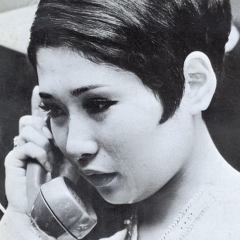

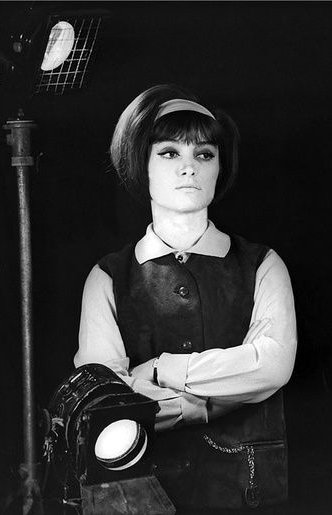
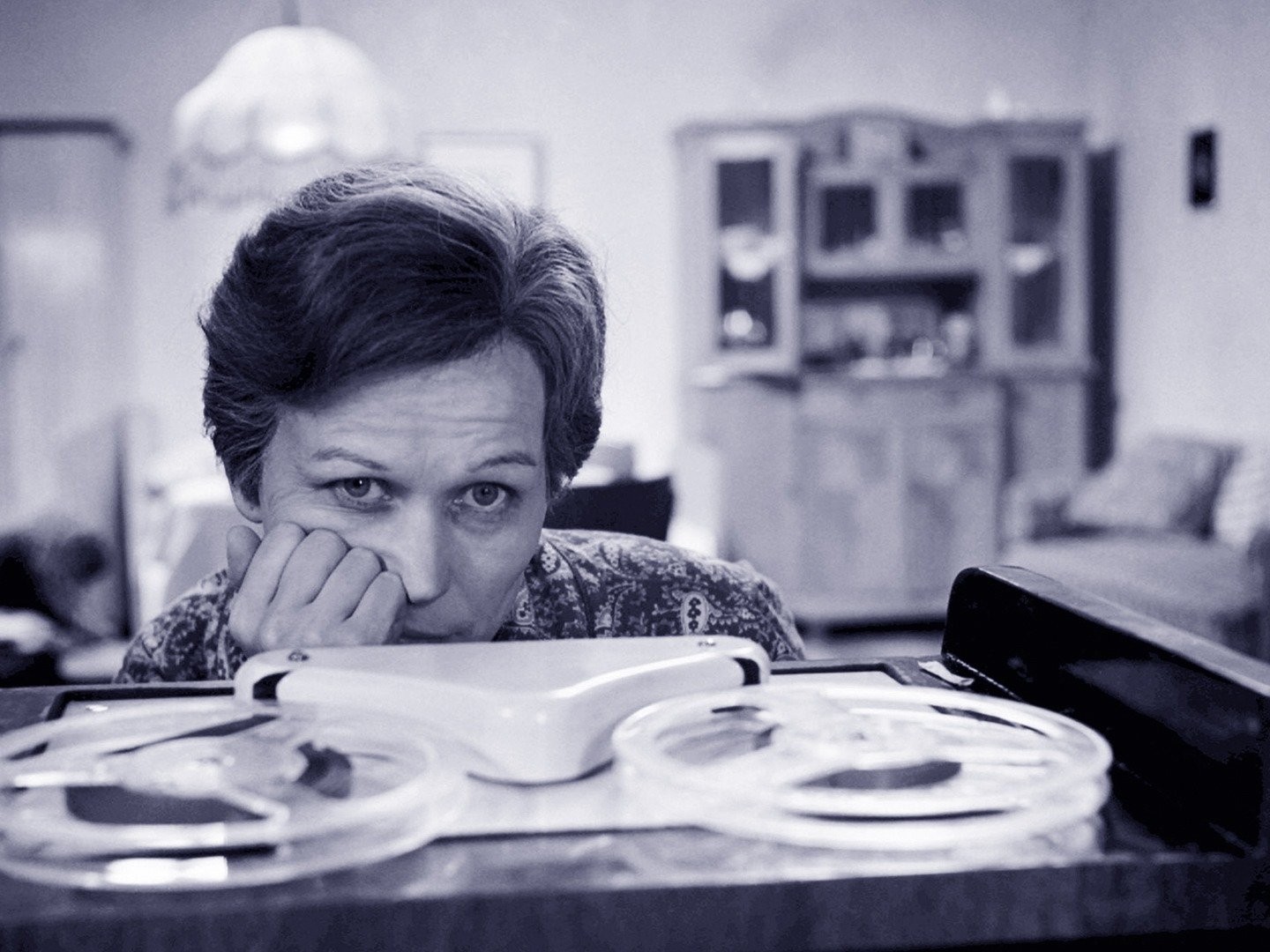
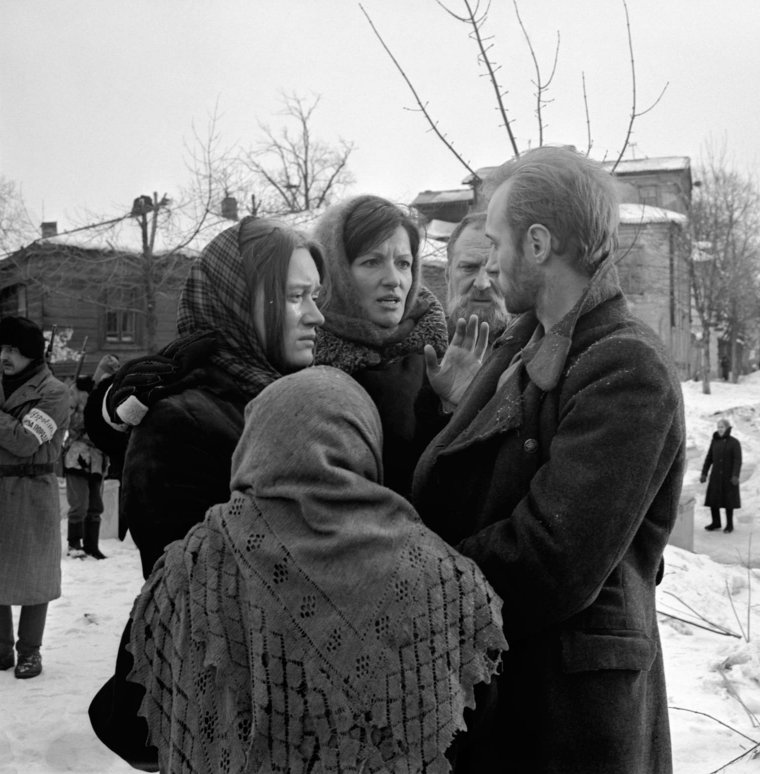




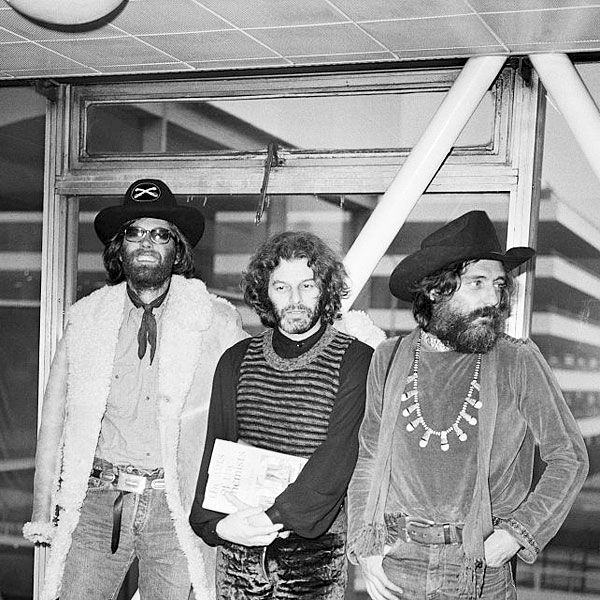

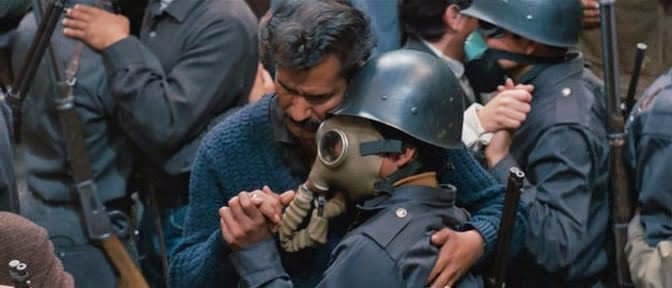






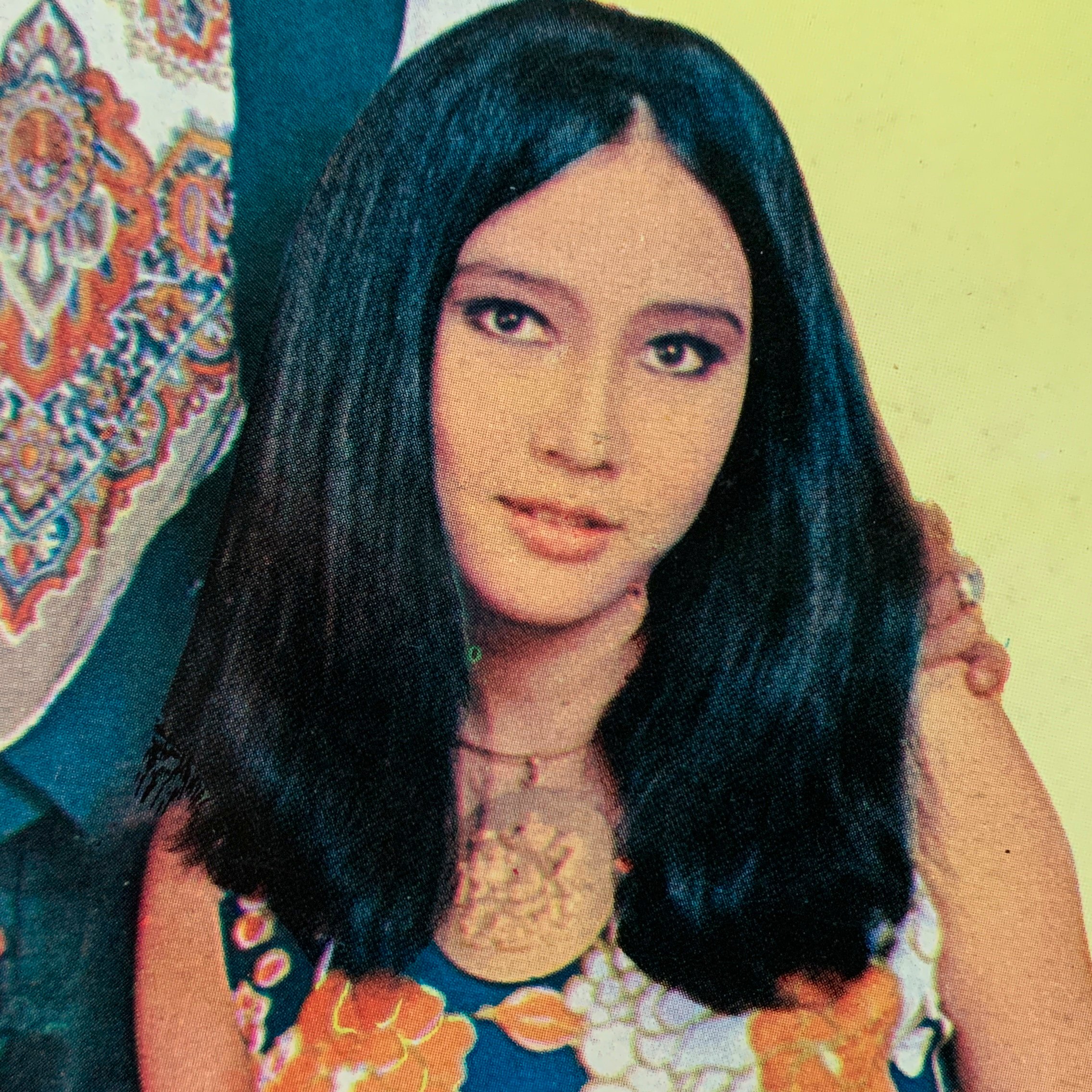

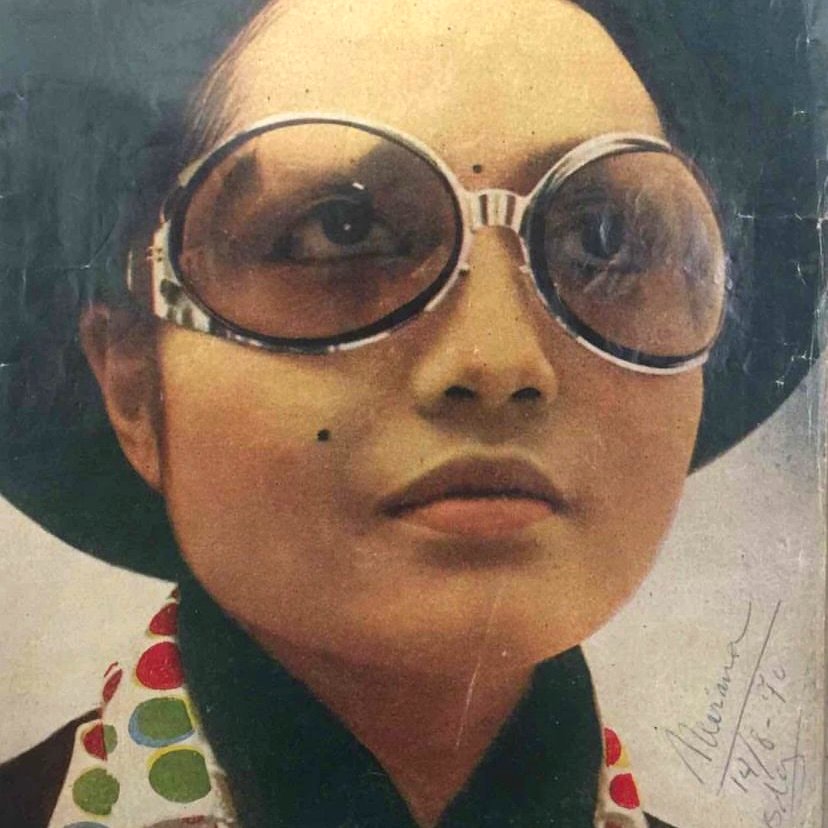


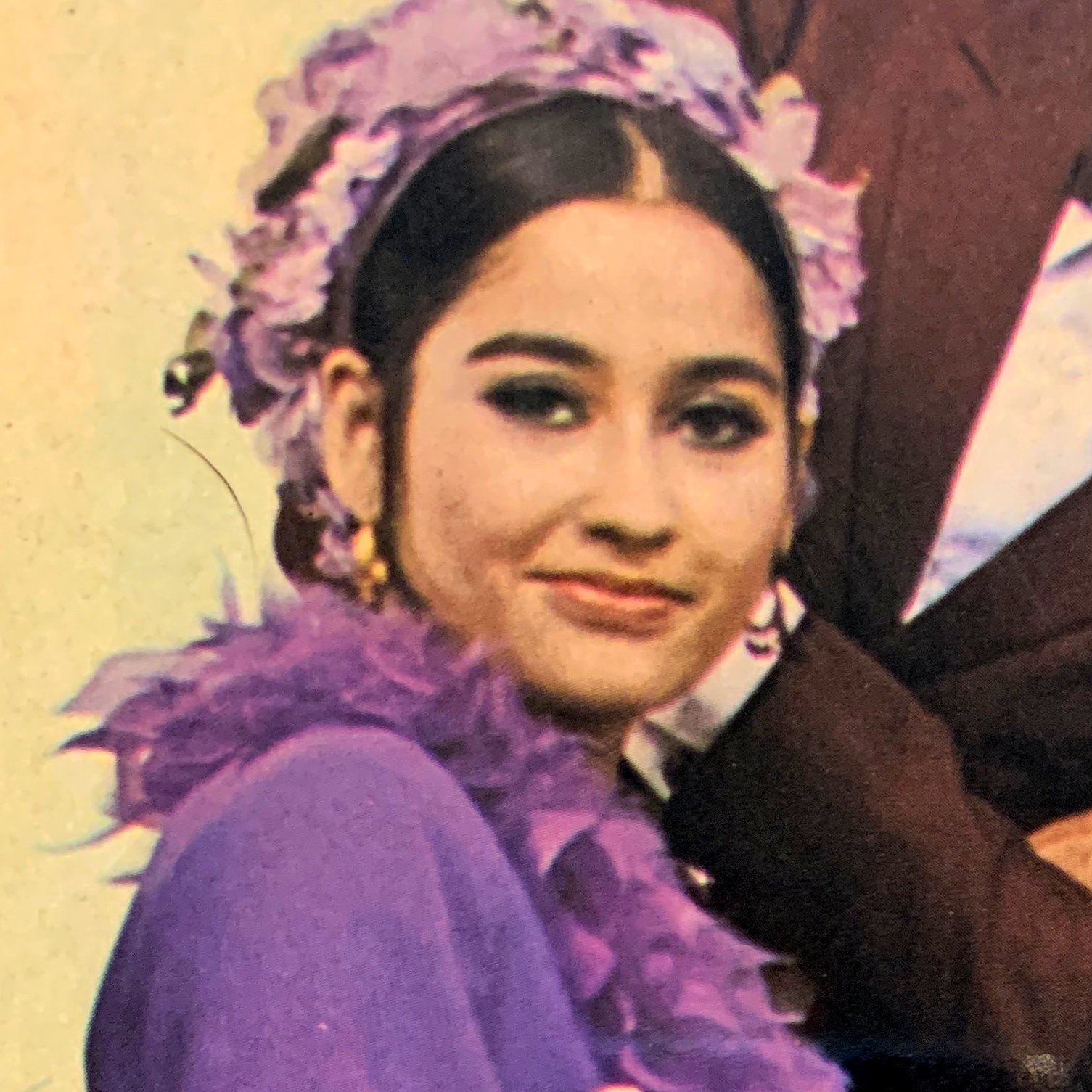


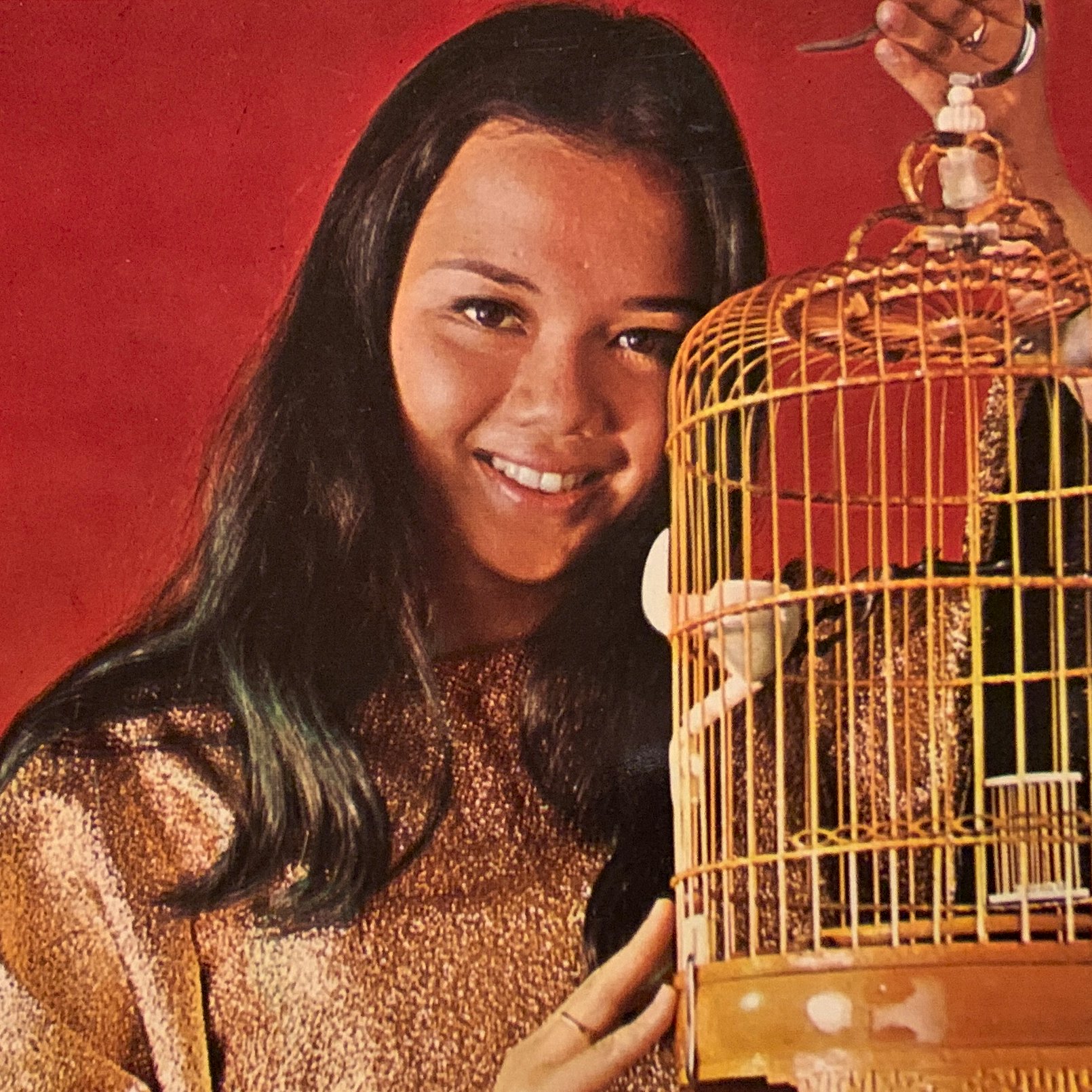


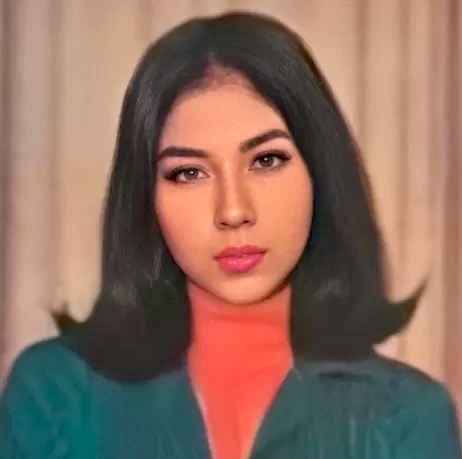


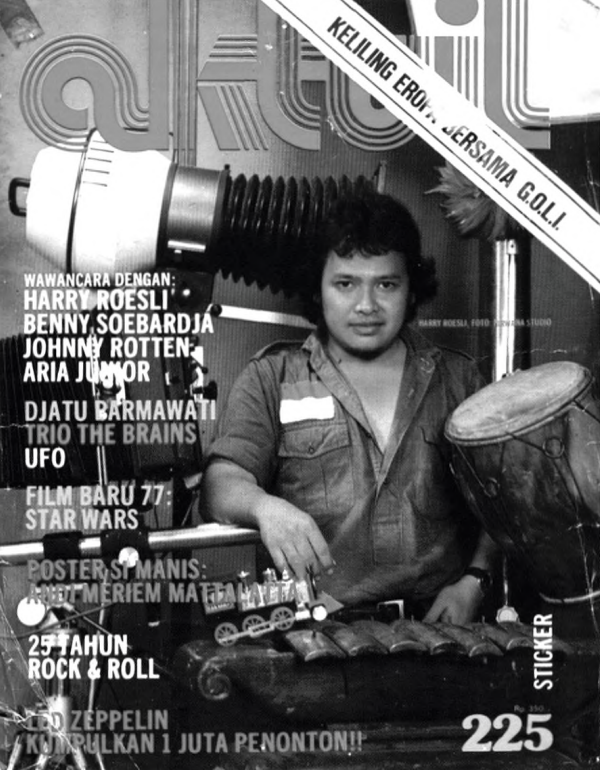


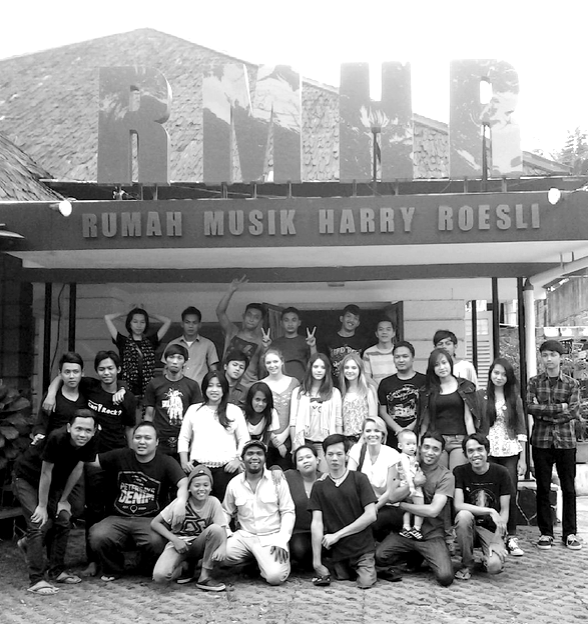
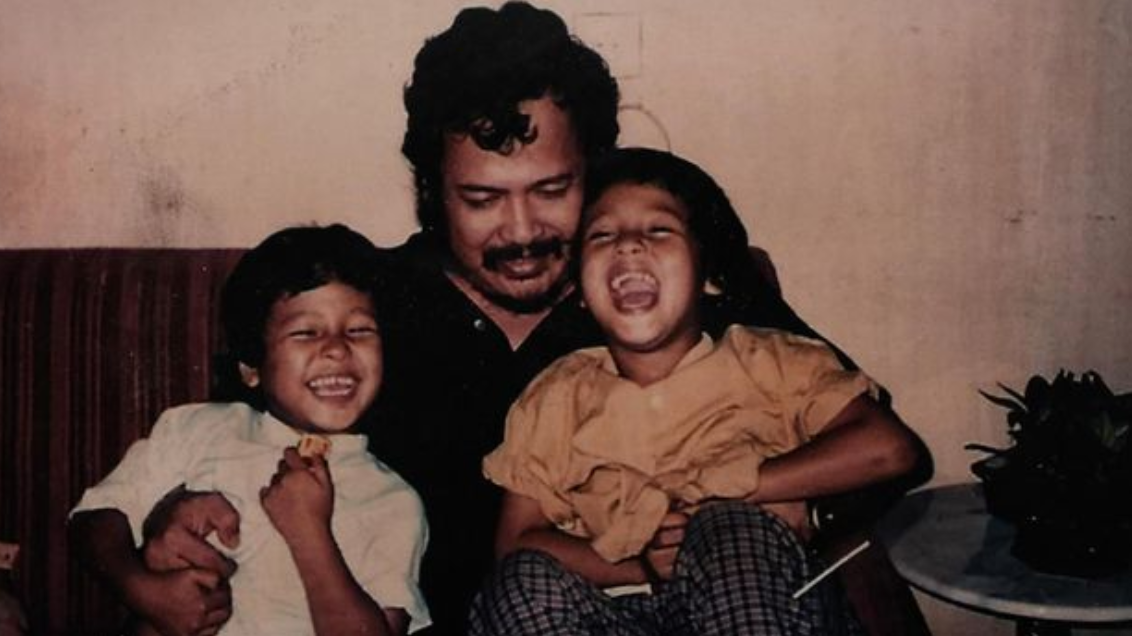


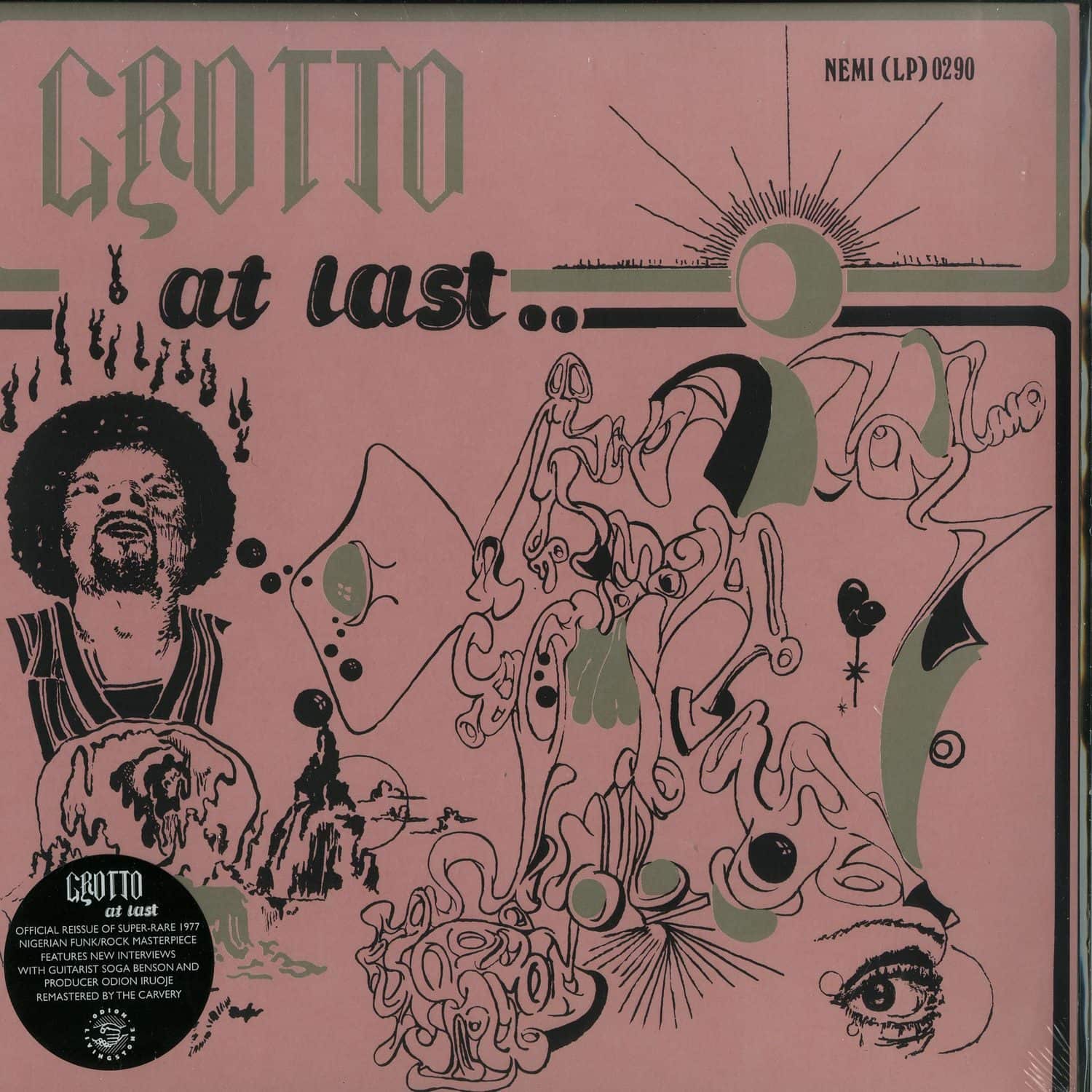



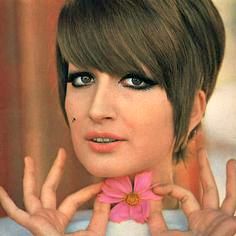

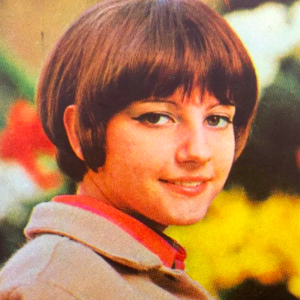

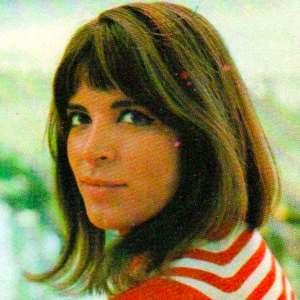
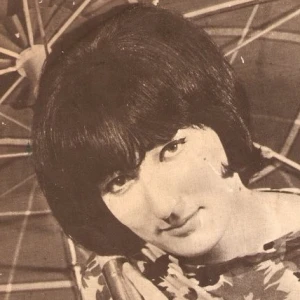
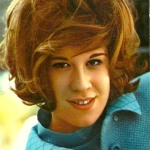
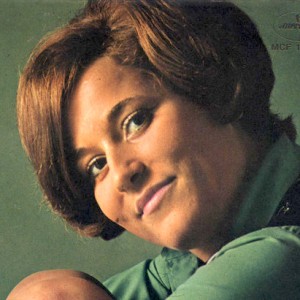
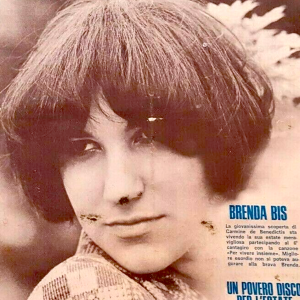
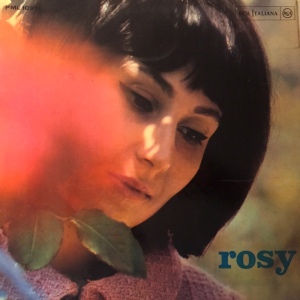
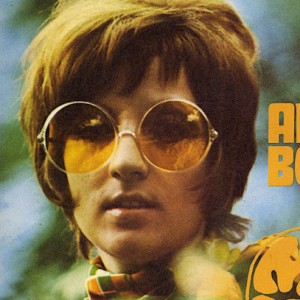

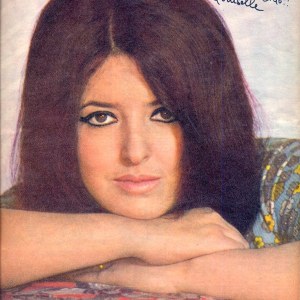

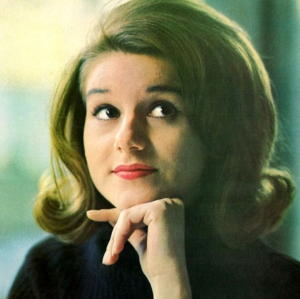
 “It goes in circles.” – Bruno S.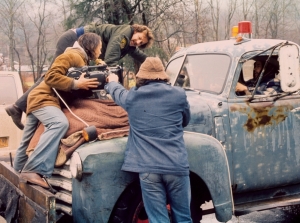




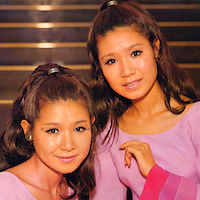
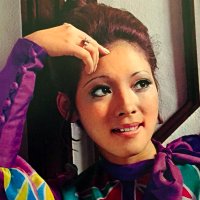
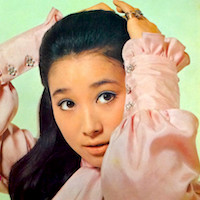
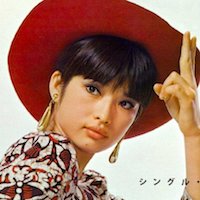

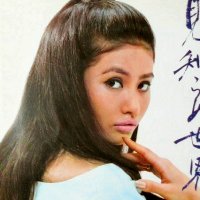
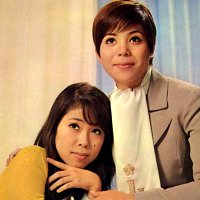

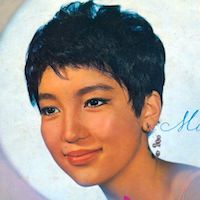

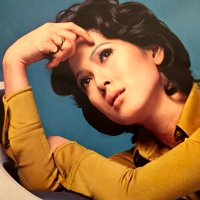
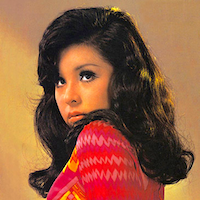

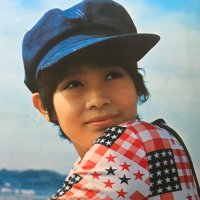
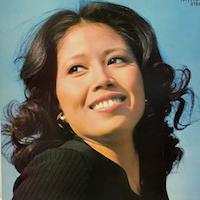

 Center For Cassette Studies