“Shepitko’s work is disturbing and, with each passing film, it becomes more disturbing, rather than affirming. Or if there is affirmation, it is of a strange and macabre sort – the eeriness with which her work points with increasing urgency, and seeming acceptance, to the death that befell her accidentally.” — Barbara Quart, Between Materialism and Mysticism: The Films of Larisa Shepitko
The German nazis’ genocidal war against the Slavic people lasted from June 1941 to May 1945. From the outset it was a racist war of extermination modeled on the U.S.’s genocide of Native Americans. By the time the Red Army reached Berlin and put an end to it, the nazis and their fascist collaborators had murdered around 25 million Soviet people, 18 million of those civilians. That’s roughly 17,000 people per day (or five “9/11″s), every day, for four years. Belarus in particular was a living hell. The 1976 book Out of the Fire, by Ales Adamovich, is a compendium of oral history transcripts given by those who survived, some of them the only living witnesses to the slaughter of their entire communities. Not surprisingly, nazis loved “big data” and used it to conserve killing resources and track progress towards their 75% depopulation goal. As one 1941 report from Borki states:
“705 persons were shot; 203 of them men, 372 women and 130 children. Expended during the operation: rifle cartridges — 786, cartridges for submachineguns — 2,496.”
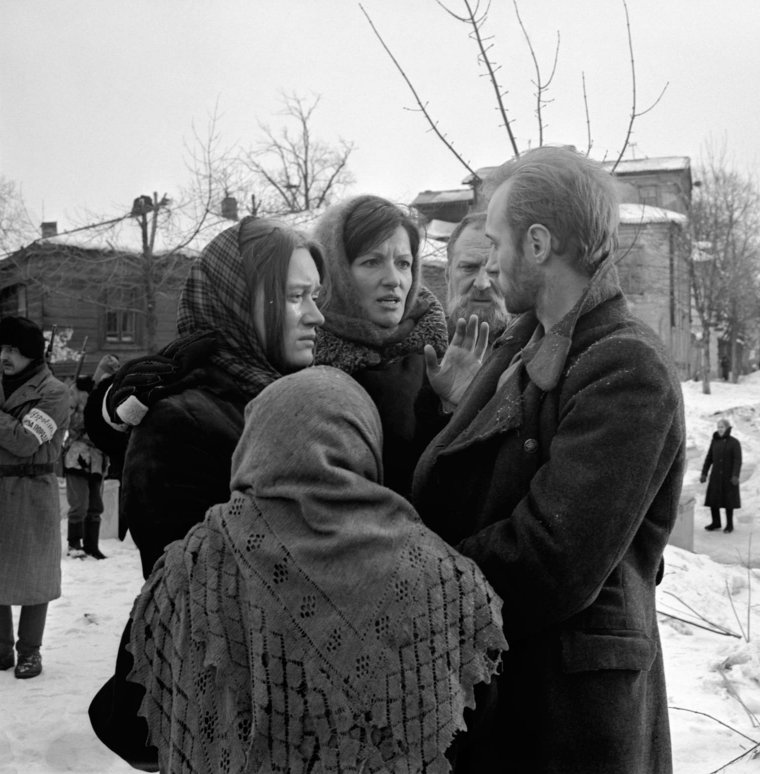
To save ammunition, hundreds at a time were locked in barns and schoolhouses and burned alive, with the bullets saved for those trying to escape. Other “resource friendly” killing methods included dumping people alive down wells and bayoneting babies; for the latter, Belarusians speak of S.S. soldiers wearing butcher smocks to keep their uniforms clean. Some “humanitarian” nazis actually felt they were considerate in their killing, letting family members decide among themselves who would be shot into the open pits of bodies first. The German army provided lots of alcohol for workday consumption to make shooting women and kids easier. In Out of the Fire, multiple survivors recall how much laughing some Germans did, sometimes turning up the music on truck radios to drown out the sounds. Over 550 Belarusian villages were destroyed and their inhabitants murdered, or sent back to Germany as slave labor. Those who could fled into the woods, grouping with others and forming partisan bands that conducted sabotage of enemy supply infrastructure, assassinations, and full-scale attacks when possible, tying down nazi manpower and resources that helped lead to their eventual defeat. This is the background for Larisa Shepitko’s dark masterpiece The Ascent, released by Mosfilm in 1977.
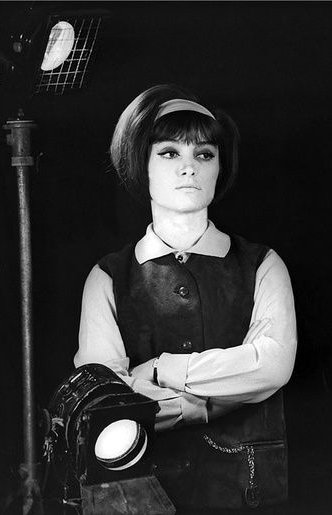
Larisa Shepitko, ’65-66 (pic: stuki-druki.com)
I say all this because the filmdoesn’t. Apart from one brief gunfire scene and the remains of a razed home (its clean laundry eerily blowing in the breeze), The Ascent is devoid of action sequences common to many war films. After all, Soviet audiences knew the gory details, and millions still had acute PTSD from their experiences. They didn’t need the adrenaline rush, they needed some added Dostoyevsky. Or, in the case of The Ascent, also some Christ.
Larisa Shepitko was raised by her mother in rural Ukraine and came to Moscow at 16 on her own accord to enroll at the Cinematography Institute, where she worked under one of her idols, the elderly Alexander Dovzhenko, best known for silent classics Arsenal and Earth. Her first film, the graduate project Heat, owed much to her mentor. Like him, she was concerned with landscape and natural surroundings, portraying those in ways that are mystical, unsettling and often dangerous. Scholar Jane Costlow says that, for Shepitko, “Dovzhenko represented integrity and allegiance to film as a vehicle for conscience; despite enormous ideological pressure in the 1930s and ’40s, he had continued making films of artistic value, many of which incorporated elements of visual lyricism and Ukrainian culture” (Costlow, 76). Scholar Barbara Quart says Shepitko’s work “aims for largeness, and her refusal of mediocrity, or ironic views of flawed human life, is what distinguishes her, both philosophically and professionally” (Quart, 11).
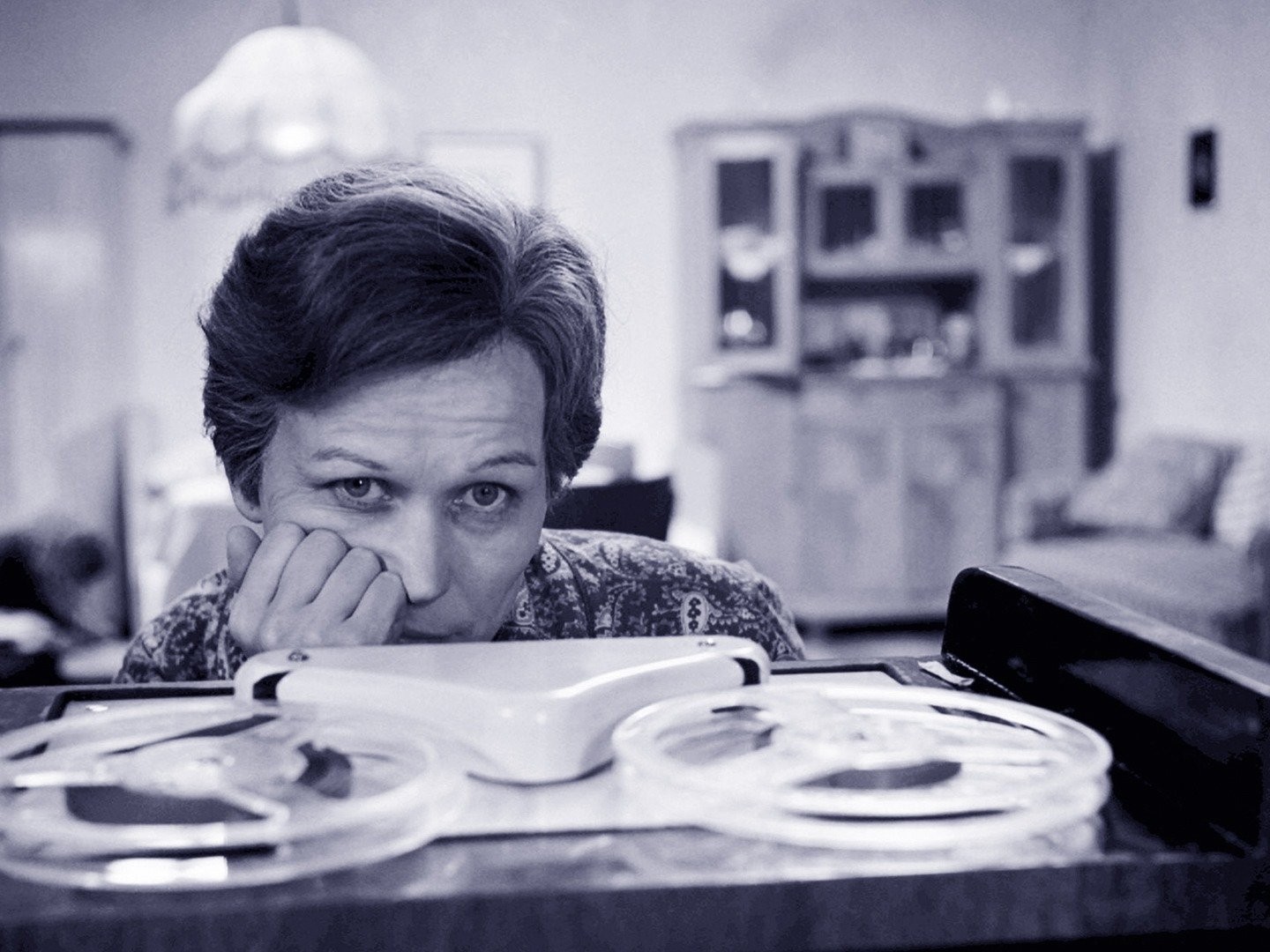
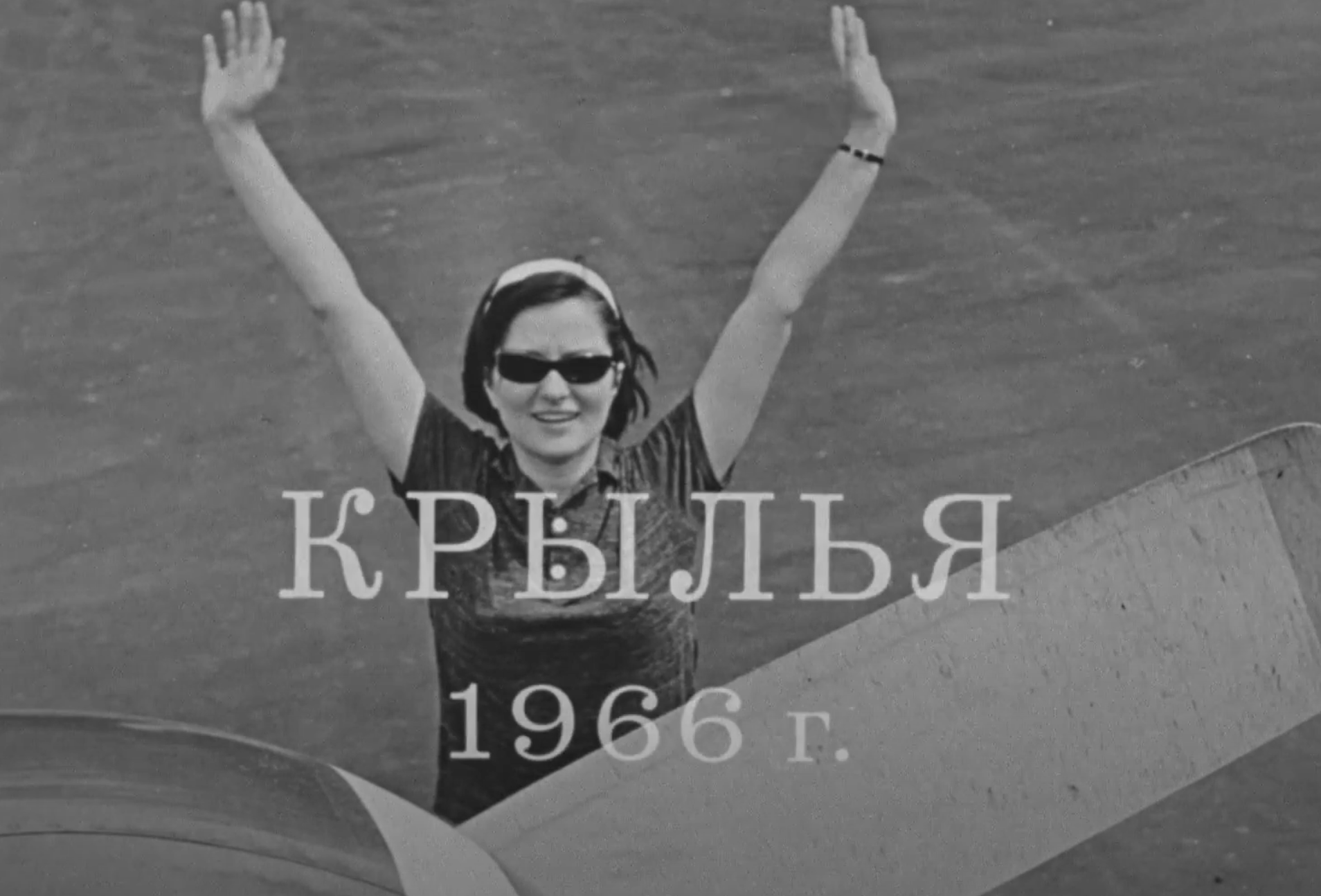
Maya Bulgakova in Wings, 1966
The excellent follow-up Wings (1966) becomes both an examination of generational conflict and a poignant look at the role of a woman veteran in postwar Soviet society. Russian women had a history with airplanes and flight; in 1938, a trans-Siberian distance record was set by pilots Marina Raskova, Polina Osipenko, and Valentina Grizodubova which made them national superstars and led to an influx of girls joining flight clubs. When war broke out, Raskova spearheaded the creation of fighter and bomber regiments for women, one of which was the infamous “Night Witches”, who made insanely dangerous bombing runs at night in obsolete biplanes. Shepitko’s Wings protagonist, a former pilot now stranded in an unfulfilling but comfortable Thaw-era educational bureaucracy, seems to long for those years and no longer fits into society. But resolutions are murky in Shepitko’s work, never maudlin and often confusing. The follow up, You and I, dealt with unhappy people abandoning their lives and searching for meaning elsewhere. It ran into problems with the censors and was heavily edited.
Her inspiration for The Ascent came during a seven-month hospital stay in 1973, from a spinal injury and concussion while pregnant. There, she read the novella “Sortinov” by Vasil Bykau and in its pages found key philosophical questions that went far beyond stereotypical war literature tropes about duty and sacrifice. Indeed, Bykau drew direct parallels between his partisan characters and the story of Jesus and Judas. Shepitko incorporates these elements into her film, albeit with some changes. Scholar Jason Merrill discusses these religious differences between book and film in a 2006 article, and he says these elements were toned down by Shepitko in her script. Rather than being a historical piece, he says that she wanted her film to “answer modern-day questions” and called the film “my Bible” and defined its genre as “neo-parable” (Merrill, 149). Shepitko felt it went “beyond a war picture” and that it was directed “at our own days” (Costlow, 87). Thus, The Ascent was a film that represented choices for this generation, for right now in 1970s Soviet society.
Maybe this was because she knew the young were growing increasingly disconnected from the “Great Patriotic War” and the scourge of fascism, or else were tired of hearing about it. In aforementioned Out of the Fire, as the old detail their horrible accounts, the young pace in the background, sighing heavily, bored or doing chores. In the book’s most surreal moment, one boy sits by an elderly relative and assembles a toy plastic model of nazi soldiers as she is speaking her genocide trauma story to the authors and their tape recorder:
“Is that your grandson?” we asked the old lady.
“No, Seryozha is my nephew from Grodno, he came for the summer.”
“Seryozha, can you model birds or animals, or ordinary people?”
The boy was silent.
The Ascent is a film about choices, and the more you parse them, the more complicated they become. Plotnikov’s “Jesus” doesn’t turn the other cheek, he strikes people and says his only regret is not killing more nazis. Gostyukhin’s “Judas” spends the first half of the film saving his ill-equipped comrade from death, dragging him with torturous effort through snowy underbrush. The tenderness of the “warming” sequence only amplifies the psychic break at film’s end, with its fourth-wall-busting snapshot of prolonged suffering and layers of dissonant Germanic and Russian voices (“I want to eat”) stacked upon Alfred Schnittke’s dark score.
In 1979, while shooting her follow up film Farewell to Matyora, Shepitko’s life ended tragically with a car wreck that also killed four of her crew. As she’d feared many years earlier in the hospital, The Ascent would indeed be her last film, a neo-parable testament to her Dostoyevskian worldview. The year before her death, it swept the 1978 Berlin International Film Festival, winning the Golden Bear top prize and other awards. The loss to Russian cinema was profound. Farewell would be finished by her widower Elem Klimov, who would soon dump his grief into the last great Soviet war film, Come and See (1985). He would champion her work for the remainder of his life, making the beautiful short documentary film Larisa (1980), in which she speaks frankly of the slippery, dead-end slope of selling out:
Every day, every second of our life prompts us to fulfill our everyday needs by making some kind of compromise, maneuvering, keeping silent, knuckling under just for now. One might say, well, we must be flexible. That’s what life demands of us. Everybody does it after all. But it turns out that while everyday life seems to let us cheat for five seconds and then make up for it, art punishes us for such things in the most cruel and irreversible way. You can’t make a film today just for the money. They say to themselves, “I’ll make a second-rate film. I’ll bend here. I’ll say something they want to hear. I’ll try to please these people. I will let it slide. I’ll tell a half-truth. I won’t speak up. But, in the next film, I’l make up for it. I’ll say anything and everything I want as a creative person, as an artist, as a citizen.” It’s a lie. It’s impossible. It’s pointless to deceive yourself with this illusion. Once you have stumbled, you will not find the same right road again. You’ll forget how to get there. Because, as it turned out, you can never step into the same river twice.
BIBLIOGRAPHY:
Adamovich/Bryl/Kolesnik. Out of the Fire (Я з вогненнай вёскі / Ia iz ognennoi derevni). Progress Publishers, Moscow, 1980.
Costlow, Jane. “Icons, Landscape, and the Boundaries of Good and Evil: Larisa Shepitko’s The Ascent (1977).” Border Visions, Scarecrow Press, Incorporated, 2013.
Merrill, Jason. “Religion, Politics, and Literature in Larisa Shepit’ko’s The Ascent.” Slovo (London, England), vol. 18, no. 2, 2006, pp. 147–62.
Quart, Barbara. “BETWEEN MATERIALISM AND MYSTICISM: The Films of Larissa Shepitko.” Cinéaste (New York, N.Y.), vol. 16, no. 3, Cineaste Publishers, Inc, 1988, pp. 4–11.
“The world is very ill. The world needs to heal the seas, the rivers, the environment, society, money. It must heal itself. We’re all ill. The artist must react. The artist must be a healer. Cinema must be some sort of revelation. Audiences should not identify with a hero who is generally a pervert. James Bond is a pervert. Superman is a pervert.” – A.Jodorowsky
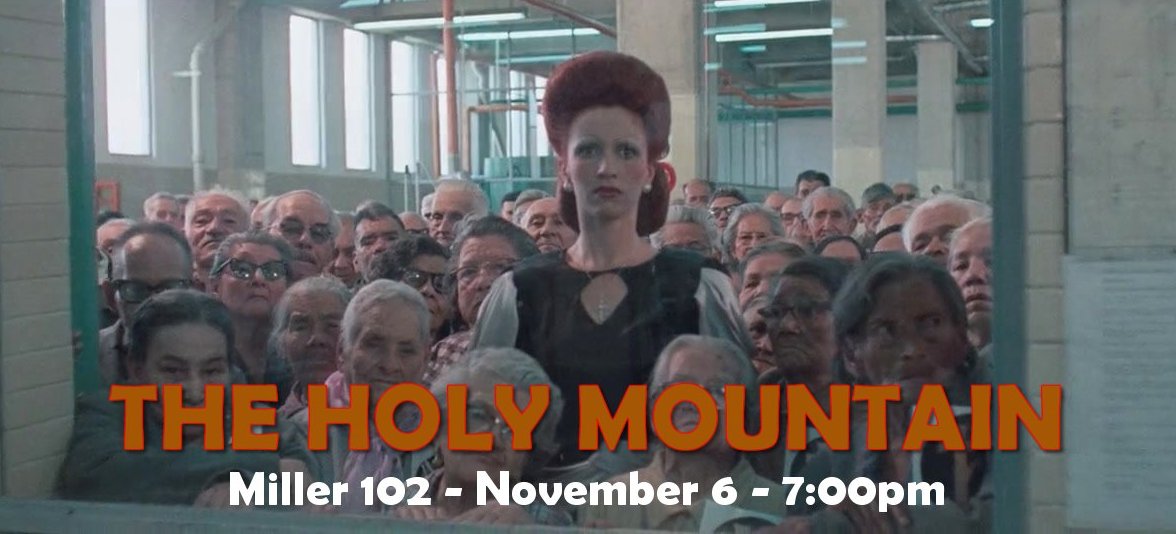
Since the Dune documentary came out in 2013, so much ink has been spilled on Jodorowsky that it is hard to remember a time when it was not so. Today The Holy Mountain is psychedelic canon, but in the pre-Internet era it was nearly impossible to find, at least in the U.S. The tape I saw in 1991 was bootlegged from a Japanese LaserDisc and sold by Video Search of Miami. They were a sort of renegade Facets (the more reputable rare video lifeline based in Chicago), specializing in Italian giallo and obscure spaghetti westerns, Soviet sci-fi, and Asian ghost stories. They’d send you a janky stapled catalog in the mail every few months. You picked your films and ordered by phone or snail mail, and then they dubbed them for you from their master copies onto a blank videocassette, for a $25 flat fee. The critical success of 1989’s Santa Sangre didn’t really improve things, and this dearth of legal availability would plague Jodorowsky’s back catalog for years. Even after DVDs came out, nothing saw a legit release early on except for Fando Y Lis. According to his new commentary, this was intentional, part of a lingering decades long beef between Jodorowsky and Holy Mountain rights-holder Allen Klein. Jodorowsky now admits to illegally distributing his own film during those years just to keep it alive, which resulted in legal action against him.
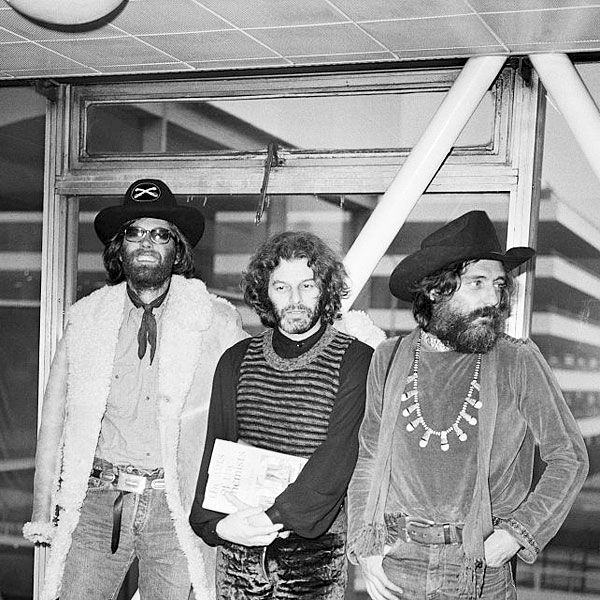
(L-R: P. Fonda, Jodorowsky, D. Hopper. The Last Movie set, 1971)
Most late-1960s U.S. counterculture films once lauded as milestones haven’t aged that well. There’s no Z or Weekend. Easy Rider in particular is more often discussed in terms of what it did for independent U.S. filmmakers, not for its content, which, for all its “we blew it” death trip fatalism, tends to reinforce Western expansionist worldviews and prioritize white male freedom fantasies. Jodorowsky, who was friends with director/star Dennis Hopper, hated conventional 3-act plots, and his feedback on the first cut of Easy Rider‘s follow-up The Last Movie resulted in Hopper making disjointed experimental edits that likely doomed the film commercially. For this time period, from 1970-71, Jodorowsky was a bit of a rock star in the U.S. and U.K. John Lennon and Yoko Ono saw El Topo on the advice of a friend and approached the director about financing for his next work, which would come via the bleeding cash cow of Apple Corps. George Harrison originally intended to play the part of the thief “Jesus figure” whose story starts off The Holy Mountain, but Jodorowsky refused to remove a nude scene so he withdrew. The fact that he prioritized a 5-second anus-washing scene over casting one of the biggest pop musicians on the planet does give credibility to the director’s claim that artistic vision is worth more to him than money.
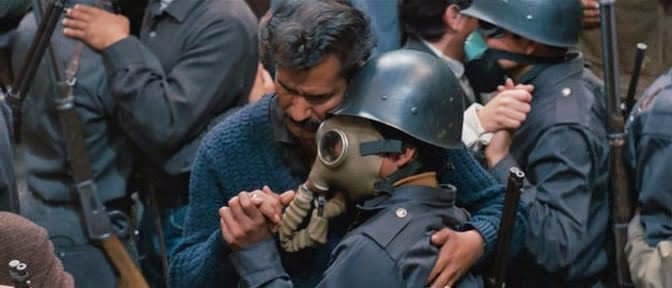
The films takes its visionary point of origin from the unfinished surrealist novel Mount Analogue by René Daumal. Jodorowsky, who did not drink, smoke, or do drugs, took LSD for the first time before filming began, under the advice and guidance of Oscar Ichazo, founder of Arica Training. In Mexico, he lived collectively with the cast in a house for two months before shooting started, sleeping four hours a day and doing exercises and hallucinogens. There was only one trained actor among them, Juan Ferrara. Jodorowsky does not elaborate on his casting decisions except that they were honest and true to life, thus the architect was an architect, the lesbian a lesbian, the millionaire a millionaire. The entire cast ate psilocybin mushrooms on camera for one scene where they needed to appear hyper-emotional. According to Jodorowsky’s commentary, two actors were trans, one of which later transitioned, Bobby Cameron from the San Francisco Cockettes, whom he calls “the most beautiful transvestite I’ve ever met.” Jodorowsky had befriended artist Nikki Nichols at Max’s Kansas City in New York; Nichols worked on the elaborate set design and acted as one of the eight seekers. On the topic of these sets: “My budget was low, but I wanted a grandiose film with grandiose sets. So I would film real locations and add something to make them a bit unreal.” Many of these impromptu stages were in public spaces in Mexico City; no permits were obtained, the cast and crew would quickly set up and shoot. Some of the extras they hired resisted what was being asked of them, and one man in the “gas-mask soldier dancing” sequence put a gun to Jodorowsky’s chest and threatened to kill him. These conflicts continued. Eventually, “two-thousand people marched and compared me to (Charles) Manson and said they wanted me out of Mexico. I fled to New York with the footage after a paramilitary group called The Hawks came to my house in the middle of the night and said they were going to kill me and my family.”
Not surprisingly, it is this same fascist militarism that is criticized within the film’s imagery. Above all, the 1968 Tlatelolco Massacre, where hundreds of students were murdered by the government while protesting the Olympics, still hangs heavy in the air throughout several surreal sequences, with birds flying from gunshot wounds and blood squirting through strange applied cranial tubes. Arms manufacturing and western cultural imperialism are skewered equally: the de-Marilyn Monroe-ing opening sequence; the horde of Minnie Mouse children; the body art assembly line and religious guns customizable with crosses, menorahs, and Buddha statues. The nine disciples themselves and their affiliated “planets” are open to many levels of interpretation, as is the abrupt ending that the cast apparently disliked (his idea to superimpose his actual home address for feedback on the film’s final shot was sadly discarded.) Mexican sculptor Felguerez created several amazing pieces, including a giant machine that births a baby machine. Like other elaborate constructions and detailed shot set-ups, all are given mere seconds of screen time. Cinematographer Rafael Corkidi, who’d collaborated with Jodorowsky on his previous works, created striking and studied compositions. His camera becomes less static and more handheld cinéma vérité for the final half, a switch Jodorwsky says was intentional and meant to signify the seekers’ shifting emotional states.
From 35 hours of footage shot, much of it was unusable. Famous Mexican editor Federico Landeros came to New York and created the final cut. Mexican sound artist Gavira improvised post-production effects, his work so impressing William Friedkin that he hired him for The Exorcist, for which Gavira won an Academy Award. Jodorowsky brought in Free Jazz trumpeter Don Cherry to compose the score. None of this helped its box office success. The Holy Mountain was a financial and critical disaster and went unclaimed by Mexico’s cultural ministry due to its objectionable content. This was fine and even expected by the vagabond Jodorowsky, who has been quoted as saying, “My country is my shoes.” It soured his relationship with Allen Klein and ultimately killed any chance for getting Dune made. He would not release another movie for which he had full creative control until Santa Sangre, some 15 years later. Today, at 94, the time that he was so ahead of has embraced him, and he has lived to see his reputation flourish among a generation who understands his philosophical ideas of filmmaking:
“When you go to the cinema and are treated like a 12-year-old child, you have a good time, but you come out more stupid each time. Cinema is making audiences stupid, it’s treating them like babies. I didn’t want to do that. I wanted to wake people up. I wanted to wake up a society that has been ill since the Middle Ages.”
Perhaps Chameleon Street is most notorious for being a runaway success at the 1990 Sundance Film Festival, winning top prize, and then seemingly falling off the face of the earth, along with its director, Wendell Harris Jr. The film is based on true events, centering around infamous entrepreneur/conman Douglass Street Jr., who from 1971-85 impersonated a wide spectrum of people and professions in order to make a buck. The way the story is shot and told–fast-paced narration, filmed fake television broadcasts, etc.–still feels fresh and DIY today, unlike more polished indie films of that era that strove to mimic Hollywood production styles. Wendell Harris Jr., who started the project in 1985 after reading an article on Street in the Detroit Free Press two years prior, wrote, directed, and stars in the film, with the entire work narrated and told from Street’s perspective. Realizing that all this country cares about is money, Street sets out to get it with his greatest asset: deception. Along the way, he tends to blame the women in his life (mainly Angela Leslie, as wife Gabriella) for bringing him down and not understanding and supporting his true conning genius, a tired patriarchal trope that Harris said Street talked about at length in his letters and during prison interviews. According to Harris, these letters and interviews form the nucleus of his portrayal. In video interviews, Harris said he’d wanted to direct but not star, or maybe it was star but not direct. Either way, he ended up doing all of it, plus writing, out of necessity and lack of money. On rewatching it recently for the first time since 1992, there is a lot that is dated obviously, but much of it holds up. Harris does an excellent job portraying Street just as he presented himself, which is a brilliant deceiver, and also a smug, misogynistic prick. Still, the code-switching explosion might be the funniest few seconds in the movie.
Chameleon Street was part of a resurgence in black independent filmmaking that started at the tail end of the 1980s, with Julie Dash’s Daughters in the Dust and Matty Rich’s Straight Out of Brooklyn being two of its outstanding peers. The movement probably peaked with Deep Cover, Malcolm X, and Menace 2 Society, in 1992-93. Alongside this creative explosion was a reassessment of 1970s blaxploitation films, which up until then were typically viewed through a negative lens by critics like Stanley Crouch, who saw them as reinforcing negative stereotypes about black people as pimps, sex workers, and criminals. Also important was the insulting gesture of plantation throwback Driving Miss Daisy winning the Academy Award for Best Picture in 1990, while they failed to even nominate Do the Right Thing. It was an industry fuck-you to the black film community and meant to codify their place as cultural chauffeurs. Public Enemy answered appropriately with “Burn Hollywood Burn”.
Reading up on what happened to Harris after the film won Sundance is sad but enlightening. He thought he’d made it, that offers for distribution would arrive, that he could reimburse his parents for the life savings they’d invested. Instead, Warner Brothers bought the rights to a remake (not a sequel) for $250,000 and then canned it. Amazingly, they refused to distribute Chameleon Street at all. No other studios would either. Compare that to the lavish treatment lauded upon the previous year’s Sundance (white) winner Steven Soderberg, for Sex, Lies, and Videotape. After the suppression of his film, Harris says he wasted three years of his life pitching unpopular ideas in Hollywood to disinterested corporate hacks:
“I would go to people, and say, ‘Hey, I’ve got a great idea for a satirical comedy called Negropolis. It takes place in ancient Rome, except that black people are the upper class, including the Emperors and the ruling class. All the slaves are white.’ I would pitch that, and they would look at me like I had defecated on their carpet. . . . When you actually know that the house is stacked against you, then you don’t really bother going into the house, if you have any sense.”
“It is not something that is low class. It is a big thing and you can move it anywhere. For postwar Germans, the mobile home was almost a dream home.” – Werner Herzog
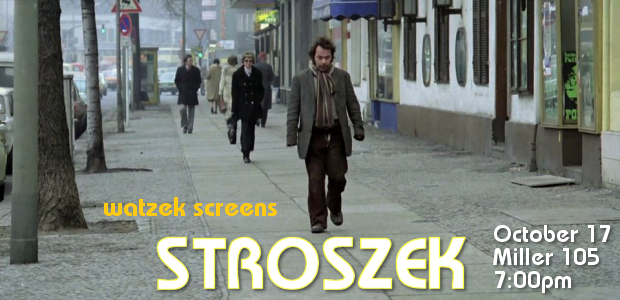
The script for Stroszek was drafted on a whim in just four days, a guilt-driven vehicle written specifically for Bruno S. after Herzog gave his promised lead in Woyzeck to Klaus Kinski. As ridiculous as that casting decision seems now, back then Kinski could pull a crowd, so it made financial sense, even if it was Bruno who really embodied Büchner’s expressionistic fragments. A couple of years before, in 1974, he had starred as the lead in Herzog’s Every Man For Himself And God Against All, a semi-fictionalized biopic about Kasper Hauser. Stroszek would be Bruno’s own biopic of sorts. It is hard to separate the background of Bruno Schleinstein from the backstory of Bruno Stroszek. According to Herzog, Bruno was abused so severely by his mother that he initially lost the capacity to speak at age 3. Abandoned by her, he spent the next 23 years of his life in a cycle of institutions, constantly escaping and being recaptured, each confinement worst than the last; literally mental health care administered by Nazis. Herzog first spotted him in a 1970 documentary on West German television on marginalized peoples, Bruno der Schwarze. For money, he drove a forklift at a steel factory. For leisure, he sang old arcane songs in public spaces accompanied by his accordion, xylophone, and bells. (The use of “S.” instead of “Schleinstein” derives from a common German newspaper practice of identifying juvenile delinquents by only their first letter to preserve anonymity.)
New York and L.A. viewers probably saw Stroszek as a German’s cynical dark view of working-class rural America, mocking its truck stops, trailer life, theme parks. But Herzog’s commentary in 2001 paints a different picture of his feelings towards Midwesterners, whom he called “genuine, with no bullshit.” He picked the area around Plainfield, Wisconsin because of the mystique given to the region by filmmaker and friend Errol Morris, who had been working there on a project about serial killer Ed Gein. Having an obsession with American auctioneers (“It is the last poetry possible, the poetry of capitalism”), Herzog had filmed a documentary in Pennsylvania for German television in 1975, called How Much Wood Would a Woodchuck Chuck. The master of ceremonies at that event was Scott McKain, who made a deep and profound impression on Herzog, calling him “a brilliant man, one out of thousands.” His role as the apologetic screw-turning banker in Stroszek is unmatched. Similarly, Herzog’s car had broken down during a trip to meet Morris in Wisconsin, and he was rescued via tow-truck by mechanic Clayton Szalpinski and his assistant Ely Rodriguez. Herzog said he stored them all away in his brain for later. Indeed, the casting remains the best of any of his films. Eva Mattes was the only professional actor, having been in several great Fassbinder movies, like The Bitter Tears of Perta Von Kant, and who would soon do Germany, Pale Mother with Helma Sanders-Brahms, one of the best German films on the war. The acting agency who represented the elderly Clemens Scheitz warned Herzog that he was “not quite right in the head anymore.” His mathematical equations on animal magnetism, which Herzog worked into an improvised scene with Wisconsin deer hunters, made him the perfect choice for Herr Scheitz. With Bruno, he had previously been in Every Man For Himself. The two German pimps from the film’s first half exude capitalist darkness, negotiating ownership rights to Eva’s body. Herzog had seen boxer/actor Norbert Grupe, a.k.a. Wilhelm von Homburg, in an infamous interview on a German broadcast in 1970, calling it the best thing he had ever seen on television. The other pimp actor, Burkhard Driest, was a writer and painter who had once served time for armed robbery when he was about to finish his law exams. The shoot was contentious behind the scenes but not too bad on-set. The biggest disruption was that the technical crew hated the film, hated the script, hated Bruno, hated Scheitz. They also hated the ending and flat-out refused to film it. Herzog did most of that alone, according to him, and with second-unit cameraman Ed Lachman, who seemed to be the only crew person having a good time. Lachman’s contributions to the work were huge, particularly his ability to improvise believable truck-stop dialogue and recruit unexpected strangers on-the-fly as actors.
Shooting in North Carolina (Kino Images)
Like Döblin’s Berlin Alexanderplatz, it begins with a prison release. And like Franz Biberkopf, Bruno is forever imprisoned: through the barred fingers he flashes in front of his face periodically, to the similar wooden schematic he builds for Eva to explain his interior self; the latter exposition shows Bruno taking off on an improvised autobiographical tangent, demonstrating how he was forced to hold urinated bed sheets over his head for hours in the rain after institutional beatings. But there is no exit, they are always shutting doors on Der Bruno, trapping him in a foreign landscape of rubber toy tomahawks and brainwashed barnyard animals. The pick-up circles, the lift circles, “Is This Really Me?” with his beloved mynah bird now a frozen turkey in this Appalachian abyss. “Look into the eyes of a chicken and you will see real stupidity,” Herzog has said. “It is a kind of bottomless stupidity, a fiendish stupidity. They are the most horrifying, cannibalistic and nightmarish creatures in the world.”
As his two film performances drifted into the past, Bruno S. continued making music and painting until his death in 2013, still living in the same Berlin apartment seen in Stroszek. When asked by the New York Times in 2008 about his movie star days, he answered, in typical third-person: “Everybody threw him away.” That may be, but a new generation of outsider artists, inspired by his genuineness, his brokenness, his humanity, would come to champion him as a beacon of authenticity in bullshit times.
Bruno S. is a man to me
You’re just some dude with a stilted attitude
That you learned from TV







 “It goes in circles.” – Bruno S.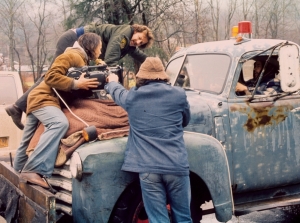
 Center For Cassette Studies