Tag: Film (Watzek Screens)

The Land Speaks Arabic (2007)

by Jim

“By ‘Jewish national home’, I mean the creation of such conditions that as the country is developed, we can pour in considerable numbers of immigrants and finally establish such a society in Palestine that Palestine will be as Jewish as England is English, or America American.” – Chaim Weizmann, 1919

“War will give us the land. The concepts of ‘ours’ and ‘not ours’ are peace concepts only, and in war they lose their whole meaning.” – David Ben Gurion, 1948

It has always been the intent of Israel to depopulate and steal Palestinian lands. Numerous documents exist in the historical record stating as much, and Maryse Gargour’s outstanding 2007 documentary The Land Speaks Arabic leads us through this historical papertrail of meeting minutes, correspondence, internal documents, and newspaper reports. While other films cover various aspects of the conflict, few of them focus on the earlier period before Israel’s 1967 invasion and occupation. The theft began many years before the “Nakba” of 1948, in stages through the 1920s-30s, fueled by Europeans harboring fantasies of returning to an ancestral utopian homeland. The film helps lift a veil of confusion from a history often obscured by Biblical justifications, at least in America.

As a kid growing up in a white working class Alabama family in the 1980s, I had zero understanding of what was really going on in the Middle East. The news always portrayed it as an irreconcilable religious clash borne out of some ancient feud. Palestinians were made to seem insane and irrational, blowing themselves up in public spaces and killing bystanders. You often heard that they “didn’t care about life” and that suicide bombers “blew themselves up for God.” America’s anti-Arab racism intensified again after the 1982 embassy bombing in Beirut and the 1986 U.S. bombing of Libya, and again after the Lockerbie disaster in 1988. Later failures like the 1993 Oslo Peace Accords, a lopsided deal which gave Israel near total control over Palestinians’ water supplies, were portrayed as grand successes. In this and other negotiations, the U.S. pitched itself as a neutral broker when it was anything but.

In the days and weeks immediately after the destruction of the World Trade Center, mainstream media outlets in the U.S. penned ridiculous editorials about the main cause being Arabs’ “jealousy” of the West. The American political class, both Republicans and Democrats, really seemed to love this idea, as it fulfilled their own false notions of cultural and racial superiority. Polls taken across the Arab world in the attack’s aftermath clearly pointed at reasons for it–decades of U.S. institutional and material support for Israeli violence and atrocities–as did an open letter issued by the terrorists themselves. Both were disregarded as antisemitic lies. Explaining why it happened was tantamount to condoning it. Given this patriotic hysteria, the left in the U.S. was divided as to how to talk about it publicly. Many did not see this as the “right time” to have honest conversations about Israel’s illegal occupation and U.S. complicity, arguing that to do so would only alienate people and conflate cause with justification. Hawks on both sides of the aisle decided more mass death was the answer, and despite huge anti-war protests around the world, over 60,000 Afghans and 500,000 Iraqis would soon be murdered by the U.S. “coalition” during its punitive invasions (there is no official death toll of Iraqis killed by the U.S. since it was a stated policy not to count them.) “Embedded” reporters acted as the Pentagon’s cheerleaders, drawing their pincer movement arrows of armored divisions and hyper-obsessed with every murdered U.S. contractor. When the WMD aerial photos were exposed as manufactured evidence (this wasn’t a surprise; no foreign policy analysts took it seriously), the liberal political class in the U.S. feigned being duped by evil neo-cons and cried about how they were manipulated for political ends, a rhetorical tactic first used to avoid responsibility for their invasion of South Vietnam.

King David Hotel bombing, 1946. (source: Wikipedia)

The Land Speaks Arabic moves quickly through Britain’s Balfour Declaration and proceeds up to the early stages of the Nakba. A long interview with scholar Nur Masahla, edited throughout, leads us through this historical record. The first terrorist strikes were carried out by Zionist paramilitaries, starting in the late 1930s. Between 1937-39, the terrorist cell Irgun (led by future Israeli prime minister Menachem Begin) conducted over 35 public bombings, in marketplaces, hospitals, and train stations. They killed around 300 civilians, Palestinians and British. Irgun and the other Zionist terrorist factions (e.g. the Stern Gang) saw the removal of Britain’s presence as the priority. Doing so would remove limits on Jewish immigration and allow a free hand in dealing with the Arabs militarily. World War 2 saw a brief respite in Israeli terrorism; the Irgun even considered an alliance with the fascists, to hedge their bets in case the Axis breached Egypt. When the war concluded, attacks on British and Palestinians escalated sharply. In 1946, the Irgun, dressed as Arabs, completely destroyed a wing of the King David Hotel in Tel Aviv, killing 92 people. This was followed by a second bombing at the Semiramis Hotel, in 1948. Director Maryse Gargour includes interviews with survivors of both of these atrocities in the documentary.

There is nothing complex about the violence. It began with a plan to terrorize and depopulate the Palestinians from their lands, and that is clearly the intention today. As “9/11” was the golden opportunity for the Bush administration to set up U.S. oil-siphoning puppet states in Iraq and Afghanistan, so “10/7” became Israel’s best shot at mass Palestinian expulsion, genocide, and land annexation. Those now against that agenda are labeled “terrorist sympathizers” or “antisemites” in an attempt to discredit them. The fact that some of those imprisoned in open air concentration camps break out and murder/kidnap their occupiers should surprise no one since, for decades, Jews abroad have stressed that Israel’s violent apartheid system, which includes shutting Palestinians out of the political process and treating them like subhumans, only serves to endanger Israeli civilian lives and inflame antisemitism globally. The only way to stop the cycle of violence is for Israel to comply with the demands of international law and return to their 1967 borders, acknowledging and respecting the sovereignty of Gaza and the West Bank as the state of Palestine. Israel and the U.S. have always refused this equitable solution. Instead, they prefer to continue upon a path of violent, destabilizing racism and land theft, utilizing the inevitable Arab retaliation to amplify Israel’s sham victimization and phony “struggle for existence.”

The inability of the American political class to relate to the Palestinian anger caused by the theft of their land has its roots in this same racism. White people are entitled to the land, brown people are not. White people cultivate and civilize the land, brown people are savages that “eat on dirt floors”, to quote one diplomatic cable from the 1930s referenced in The Land Speaks Arabic. Today, the word barbarism is used by Netanyahu and other war criminals in exactly the same way as Hitler used it against the Slavs, or as Thomas Jefferson used it against the “merciless Indian savages”: as a justification for scorched-earth genocide and land theft for white colonizing. Such grossly immoral displays before the U.N. should be universally condemned. To paraphrase something Noam Chomsky said many years ago: It is a disservice to the memory of those who died in the Holocaust to adopt the central tenet of their murderers.

Chameleon Street (1990)

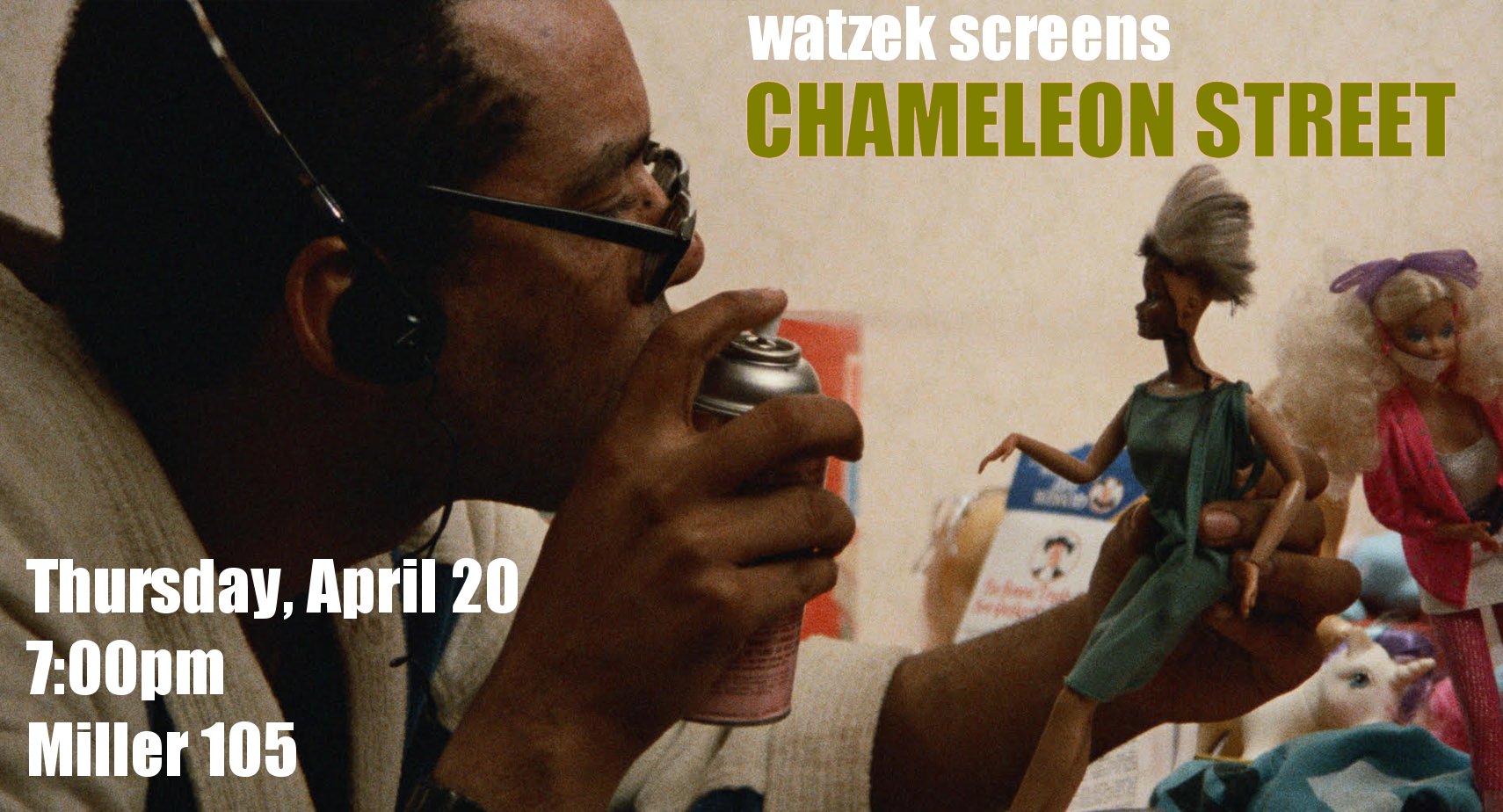
Perhaps Chameleon Street is most notorious for being a runaway success at the 1990 Sundance Film Festival, winning top prize, and then seemingly falling off the face of the earth, along with its director, Wendell Harris Jr. The film is based on true events, centering around infamous entrepreneur/conman Douglass Street Jr., who from 1971-85 impersonated a wide spectrum of people and professions in order to make a buck. The way the story is shot and told–fast-paced narration, filmed fake television broadcasts, etc.–still feels fresh and DIY today, unlike more polished indie films of that era that strove to mimic Hollywood production styles. Wendell Harris Jr., who started the project in 1985 after reading an article on Street in the Detroit Free Press two years prior, wrote, directed, and stars in the film, with the entire work narrated and told from Street’s perspective. Realizing that all this country cares about is money, Street sets out to get it with his greatest asset: deception. Along the way, he tends to blame the women in his life (mainly Angela Leslie, as wife Gabriella) for bringing him down and not understanding and supporting his true conning genius, a tired patriarchal trope that Harris said Street talked about at length in his letters and during prison interviews. According to Harris, these letters and interviews form the nucleus of his portrayal. In video interviews, Harris said he’d wanted to direct but not star, or maybe it was star but not direct. Either way, he ended up doing all of it, plus writing, out of necessity and lack of money. On rewatching it recently for the first time since 1992, there is a lot that is dated obviously, but much of it holds up. Harris does an excellent job portraying Street just as he presented himself, which is a brilliant deceiver, and also a smug, misogynistic prick. Still, the code-switching explosion might be the funniest few seconds in the movie.

Chameleon Street was part of a resurgence in black independent filmmaking that started at the tail end of the 1980s, with Julie Dash’s Daughters in the Dust and Matty Rich’s Straight Out of Brooklyn being two of its outstanding peers. The movement probably peaked with Deep Cover, Malcolm X, and Menace 2 Society, in 1992-93. Alongside this creative explosion was a reassessment of 1970s blaxploitation films, which up until then were typically viewed through a negative lens by critics like Stanley Crouch, who saw them as reinforcing negative stereotypes about black people as pimps, sex workers, and criminals. Also important was the insulting gesture of plantation throwback Driving Miss Daisy winning the Academy Award for Best Picture in 1990, while they failed to even nominate Do the Right Thing. It was an industry fuck-you to the black film community and meant to codify their place as cultural chauffeurs. Public Enemy answered appropriately with “Burn Hollywood Burn”.

Reading up on what happened to Harris after the film won Sundance is sad but enlightening. He thought he’d made it, that offers for distribution would arrive, that he could reimburse his parents for the life savings they’d invested. Instead, Warner Brothers bought the rights to a remake (not a sequel) for $250,000 and then canned it. Amazingly, they refused to distribute Chameleon Street at all. No other studios would either. Compare that to the lavish treatment lauded upon the previous year’s Sundance (white) winner Steven Soderberg, for Sex, Lies, and Videotape. After the suppression of his film, Harris says he wasted three years of his life pitching unpopular ideas in Hollywood to disinterested corporate hacks:

“I would go to people, and say, ‘Hey, I’ve got a great idea for a satirical comedy called Negropolis. It takes place in ancient Rome, except that black people are the upper class, including the Emperors and the ruling class. All the slaves are white.’ I would pitch that, and they would look at me like I had defecated on their carpet. . . . When you actually know that the house is stacked against you, then you don’t really bother going into the house, if you have any sense.”

Jim

The Joyless Street

joyless_alt

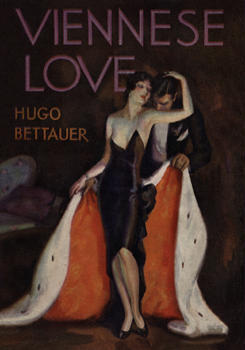
On March 10, 1925, Otto Rothstock, a 25-year old dental technician, entered the publishing offices of writer and social activist Hugo Bettauer. As a curious Bettauer watched on, Rothstock calmly locked the door behind him, turned to face the desk, and fired a revolver five times into Bettauer’s chest at point-blank range. Such was the harmonious union between politics and art in Germany’s Weimar Republic.

Okay, in all fairness, Austria. Bettauer was a well-known and publicly-despised left wing journalist and author who had managed to carve out some notoriety for himself via his scathing exposes of the Viennese bourgeoisie, his weekly publication credited with at least one corrupt official’s suicide. He called for legalizing abortions, advocated for married women to retain their maiden names, and railed against existing sexual mores, which he criticized as pious, patriarchal, and out of step with the new spirit of modernity. Rothstock was a budding Nazi, convinced that his impromptu assassination and subsequent surrender (he hung out on the office sofa and waited for the police to arrive) was a public service in the grand name of Austrian nationalism, to rid the state of at least one fly in its ointment. Bettaeur lingered on for a week or so. Rothstock was deemed “insane” and back on the street in 18 months. A small-yet-prescient window into the future.

Although popular in his day and publishing 3-4 novels per year, Bettauer’s literary legacy (if one could call it that, given his almost complete obscurity) rests on two works, both of which were serialized in Austrian newspapers. His most famous, Die Stadt ohne Juden from 1922, or City Without Jews, gained more of a reputation after the war, when it was reassessed as an ominous harbinger of things to come (the use of freight cars strikes a particularly eerie parallel.) In Bettauer’s alternate reality, however, the Viennese citizenry expel all Jews from the city only to realize that, without them, their capital is crumbling and culturally deficient, at which point the mayor welcomes them all back with open arms and much public pageantry. The fact that the author uses this mass expulsion as a comically-improbable extreme to heighten the novel’s satiric impact only reflects the pre-1933 limits many Europeans placed on state-sponsored antisemitism.

238
First and only English translation of Die freudlose Gasse

But oddly, it was Bettauer’s 1924 Die freudlose Gasse (The Joyless Street) that got him killed: an indictment of the corrupt Viennese establishment dressed up as a murder mystery. Like “crime” writer Horace McCoy’s They Shoot Horses Don’t They? or communist Guy Endore’s The Werewolf of Paris, Bettauer used the “penny-dreadful” genre as a vehicle to communicate broader universal truths to the masses, to pose uncomfortable questions and shed light on hypocrisies and social inequities. And purportedly, it was this that director and fellow Austrian G.W. Pabst saw in Bettauer’s novel as well.

For his film adaptation, Pabst ditches some of the novel’s more melodramatic elements and puts the transient presence of the “street” front and center, a dark and claustrophobic artery tenuously linking its disparate inhabitants. Pabst’s love of Bertolt Brecht is in evidence, with lives alternately shaped and destroyed by poverty and opportunity, struggles for simple sustenance juxtaposed with a crass, opulent hedonism. Greta Garbo gets her big non-Swedish break here, quickly snatched up by Hollywood shortly after the film’s release and hitting it big internationally. Even more impressive is the performance of screen veteran Asta Nielsen, who comes across as hauntingly ethereal in scenes, part mousy librarian, part powdered drag queen. Werner Krauss, who plays the butcher, is better known for being the sadistic doctor in The Cabinet of Dr. Caligari. His only requirement of Pabst was that his dog get good screen time as well. But of everyone, it’s the multi-faceted protopunk genius of dancer/actor Valeska Gert, as the owner of the brothel, that steals the show.

371c5169390deecd02824e694fb3b988
Valeska Gert

Very few of the silent films now considered masterpieces of the German Weimar era have the difficult history of The Joyless Street. Granted, it was not uncommon for international silent films to suffer at the hands of foreign editors. With no sound synchronization to worry about, editors and projectionists could (and did) butcher at will, deleting entire sections, rewriting intertitle cards between shots, or whatever was needed to “sanitize” a film and get it past local censors. In a couple of snips, brothels became orphanages and sex workers became volunteers for the Salvation Army (to cite two German examples, the latter from another Pabst film). The relative completeness of its German counterparts—Dr. Caligari, Nosferatu, Der Golem—reflects the fact that, much like today, horror is tolerated better than sex in the U.S. market, particularly in the 1920s when cinema was still a burgeoning industry and hypersensitive to any critiques of its morality. So a cheery Teutonic rumination on starvation, sexual degradation, and economic collapse was sure to bring the x-acto knives out in force. Almost immediately, 150 minutes became anywhere from 120 to 90 to 57. Some reviewers of the day could not even piece together the basic narrative. A second obstacle faced by the restorers was the lack of any existing intertitles in the original German. For the purposes of this restoration, Filmarchiv Austria painstakingly recreated these using a combination of a 1926 censorship report, an early draft of the shooting script, and foreign print intertitles retranslated back into German.

The result: as close to the original vision as we will ever see, and an incredible restoration achievement over ten years in the making.

The Cabinet of Dr. Caligari

CALIGARI2

On an October night in 1913, Czech poet Hans Janowitz was walking through Hamburg’s notorious Reeperbahn, looking for a girl “whose beauty and manner attracted him.” He followed her laugh into an adjacent park, where she vanished into the shrubbery with a man. The laugh abruptly stopped. Unnerved, Janowitz hung around and finally saw the shadow of a man emerge, his face like an “average bourgeois” as he passed. The headlines next morning read “Horrible sex crime on the Holstenwall!” Janowitz attended the girl’s funeral, convinced that he had witnessed the crime; and there he locked eyes again with the “average bourgeois,” who seemed to recognize him.

This incident served as the inspiration for Janowitz’s script, The Cabinet of Dr. Caligari, albeit abstracted through the prism of a shattered Imperialist Germany. It wouldn’t be an overstatement to say that German film starts with 1919’s Caligari, and while the term “Expressionism” is often applied loosely to all films from the period, Caligari is one of a handful that plays by the aesthetic rules of that movement, with its jagged set design, chiaroscuro lighting, and stilted, arrhythmic performances. The cinematic German Expressionists (the movement was already underway in drama and art) were not concerned with what they considered mundane reflections on nature or the recording of simple facts. It wasn’t destruction, death and totalitarianism they wanted to expose but the interior visions these things provoke, filtered through the senses and refracted back as a more accurate representation of human experience. Mind giving form to matter, not the other way around — the driving creative force of the writers and set designers.

But mind giving form to money was what the producers wanted. They brought in director Fritz Lang to help make the surreal story more palatable (and exportable) but, due to other commitments, he had to drop out of the project early on. Despite his short tenure, Lang’s one recommendation infuriated the writers by bookending the narrative with “lunatic asylum” segments that they felt undermined the script’s anti-authoritarian message. Thus, the murderous, sleepwalking “everyman” manipulated and controlled by the totalitarian master became a deus ex machina by a guy in a straight jacket. Both the producers and new-director Robert Weine loved the idea and felt it would give Caligari more international appeal, putting the upstart German film industry on the map.

Other events helped to do that. And after Hitler and what the West perceived as the complete acquiescence of the German citizenry to Nazi will, the film’s subtext was so undeniably clear that the framing device hardly mattered anymore. Instead of the first classic horror film, Caligari became a huge unheeded warning cry that things were still amiss in the collective German psyche, that the servant /master game was still brewing behind the scenes in the Weimar Republic, or so thought expatriates like Siegfried Kracauer, whose 1947 study From Caligari To Hitler: A Psychological History of the German Film set the scholarly debate framework for decades to come, until feminist film theory began to challenge some of those sacrosanct ideas. The film’s reputation continued to grow. Over the decades, it became an art house perennial, the iconic image of somnambulist Conrad Veidt (later the lead Nazi in Casablanca) cropping up on album covers, advertisements, and t-shirts. Of all the Weimar era films, only Lang’s Metropolis can claim such a lasting impact on our popular culture.