“Shepitko’s work is disturbing and, with each passing film, it becomes more disturbing, rather than affirming. Or if there is affirmation, it is of a strange and macabre sort – the eeriness with which her work points with increasing urgency, and seeming acceptance, to the death that befell her accidentally.” — Barbara Quart, Between Materialism and Mysticism: The Films of Larisa Shepitko
The German nazis’ genocidal war against the Slavic people lasted from June 1941 to May 1945. From the outset it was a racist war of extermination modeled on the U.S.’s genocide of Native Americans. By the time the Red Army reached Berlin and put an end to it, the nazis and their fascist collaborators had murdered around 25 million Soviet people, 18 million of those civilians. That’s roughly 17,000 people per day (or five “9/11″s), every day, for four years. Belarus in particular was a living hell. The 1976 book Out of the Fire, by Ales Adamovich, is a compendium of oral history transcripts given by those who survived, some of them the only living witnesses to the slaughter of their entire communities. Not surprisingly, nazis loved “big data” and used it to conserve killing resources and track progress towards their 75% depopulation goal. As one 1941 report from Borki states:
“705 persons were shot; 203 of them men, 372 women and 130 children. Expended during the operation: rifle cartridges — 786, cartridges for submachineguns — 2,496.”
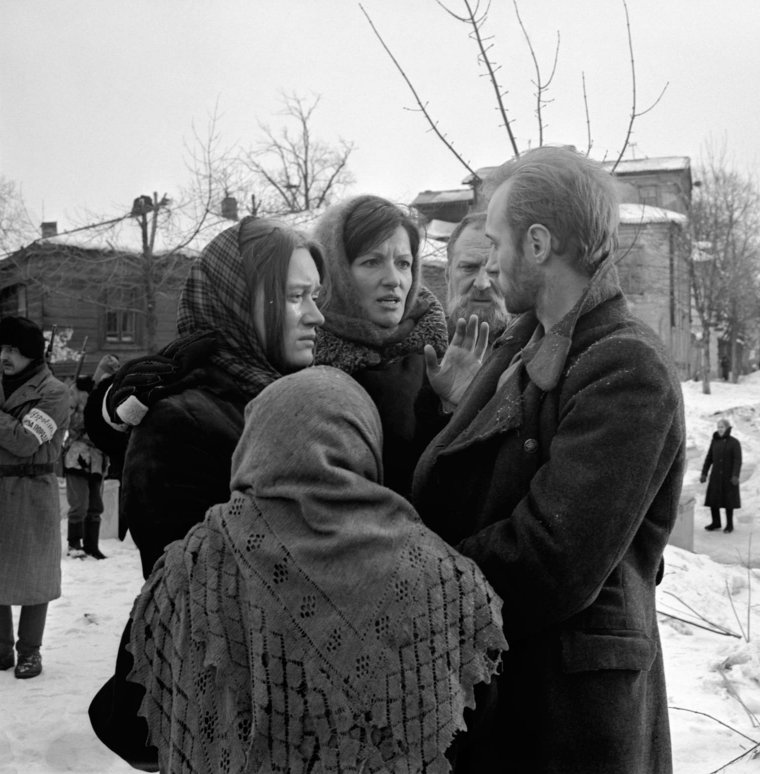
To save ammunition, hundreds at a time were locked in barns and schoolhouses and burned alive, with the bullets saved for those trying to escape. Other “resource friendly” killing methods included dumping people alive down wells and bayoneting babies; for the latter, Belarusians speak of S.S. soldiers wearing butcher smocks to keep their uniforms clean. Some “humanitarian” nazis actually felt they were considerate in their killing, letting family members decide among themselves who would be shot into the open pits of bodies first. The German army provided lots of alcohol for workday consumption to make shooting women and kids easier. In Out of the Fire, multiple survivors recall how much laughing some Germans did, sometimes turning up the music on truck radios to drown out the sounds. Over 550 Belarusian villages were destroyed and their inhabitants murdered, or sent back to Germany as slave labor. Those who could fled into the woods, grouping with others and forming partisan bands that conducted sabotage of enemy supply infrastructure, assassinations, and full-scale attacks when possible, tying down nazi manpower and resources that helped lead to their eventual defeat. This is the background for Larisa Shepitko’s dark masterpiece The Ascent, released by Mosfilm in 1977.
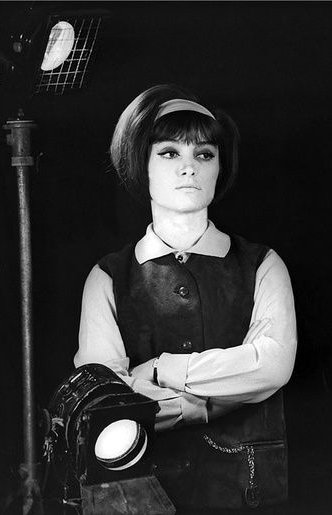
Larisa Shepitko, ’65-66 (pic: stuki-druki.com)
I say all this because the filmdoesn’t. Apart from one brief gunfire scene and the remains of a razed home (its clean laundry eerily blowing in the breeze), The Ascent is devoid of action sequences common to many war films. After all, Soviet audiences knew the gory details, and millions still had acute PTSD from their experiences. They didn’t need the adrenaline rush, they needed some added Dostoyevsky. Or, in the case of The Ascent, also some Christ.
Larisa Shepitko was raised by her mother in rural Ukraine and came to Moscow at 16 on her own accord to enroll at the Cinematography Institute, where she worked under one of her idols, the elderly Alexander Dovzhenko, best known for silent classics Arsenal and Earth. Her first film, the graduate project Heat, owed much to her mentor. Like him, she was concerned with landscape and natural surroundings, portraying those in ways that are mystical, unsettling and often dangerous. Scholar Jane Costlow says that, for Shepitko, “Dovzhenko represented integrity and allegiance to film as a vehicle for conscience; despite enormous ideological pressure in the 1930s and ’40s, he had continued making films of artistic value, many of which incorporated elements of visual lyricism and Ukrainian culture” (Costlow, 76). Scholar Barbara Quart says Shepitko’s work “aims for largeness, and her refusal of mediocrity, or ironic views of flawed human life, is what distinguishes her, both philosophically and professionally” (Quart, 11).
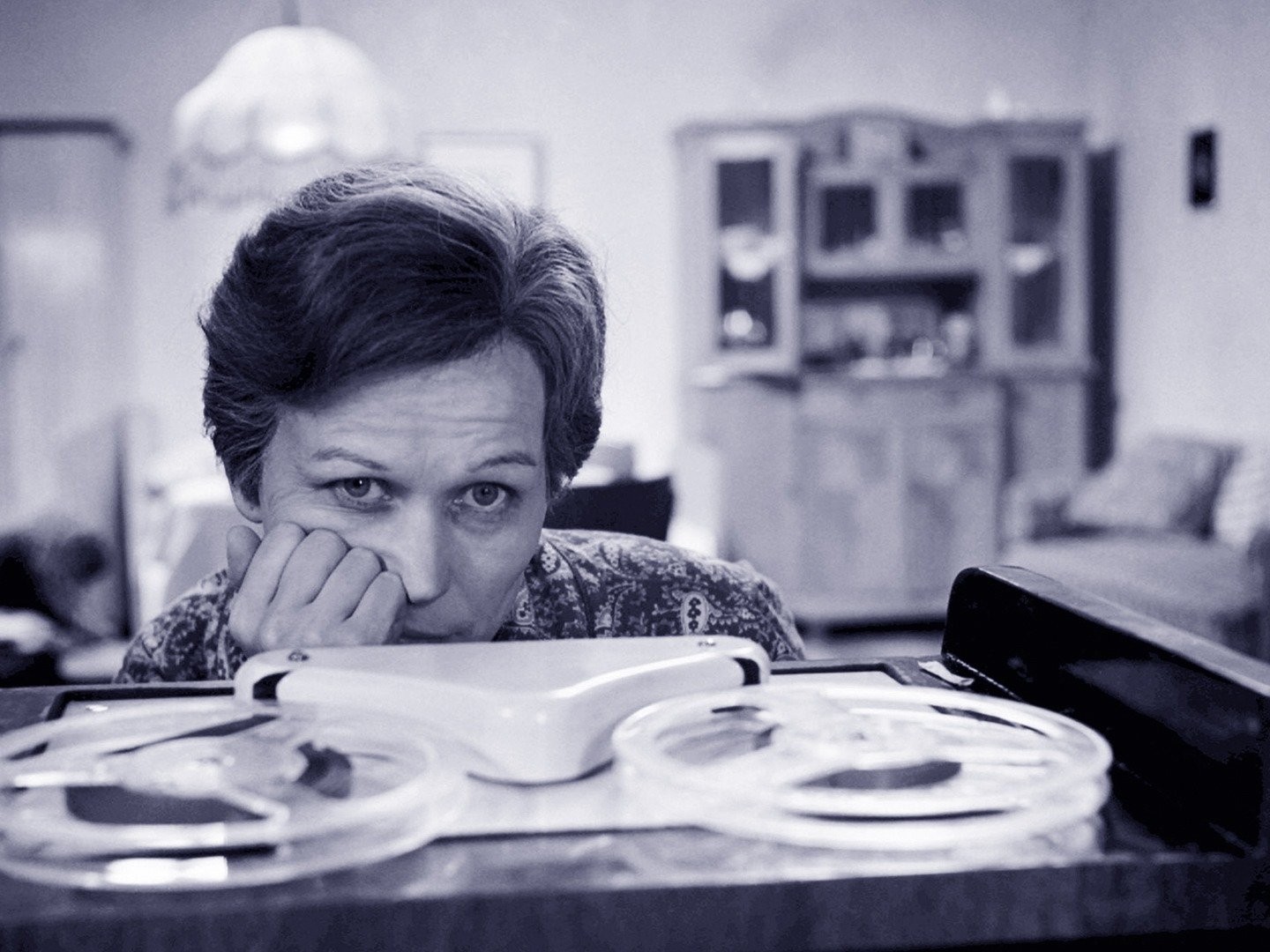
Maya Bulgakova in Wings, 1966
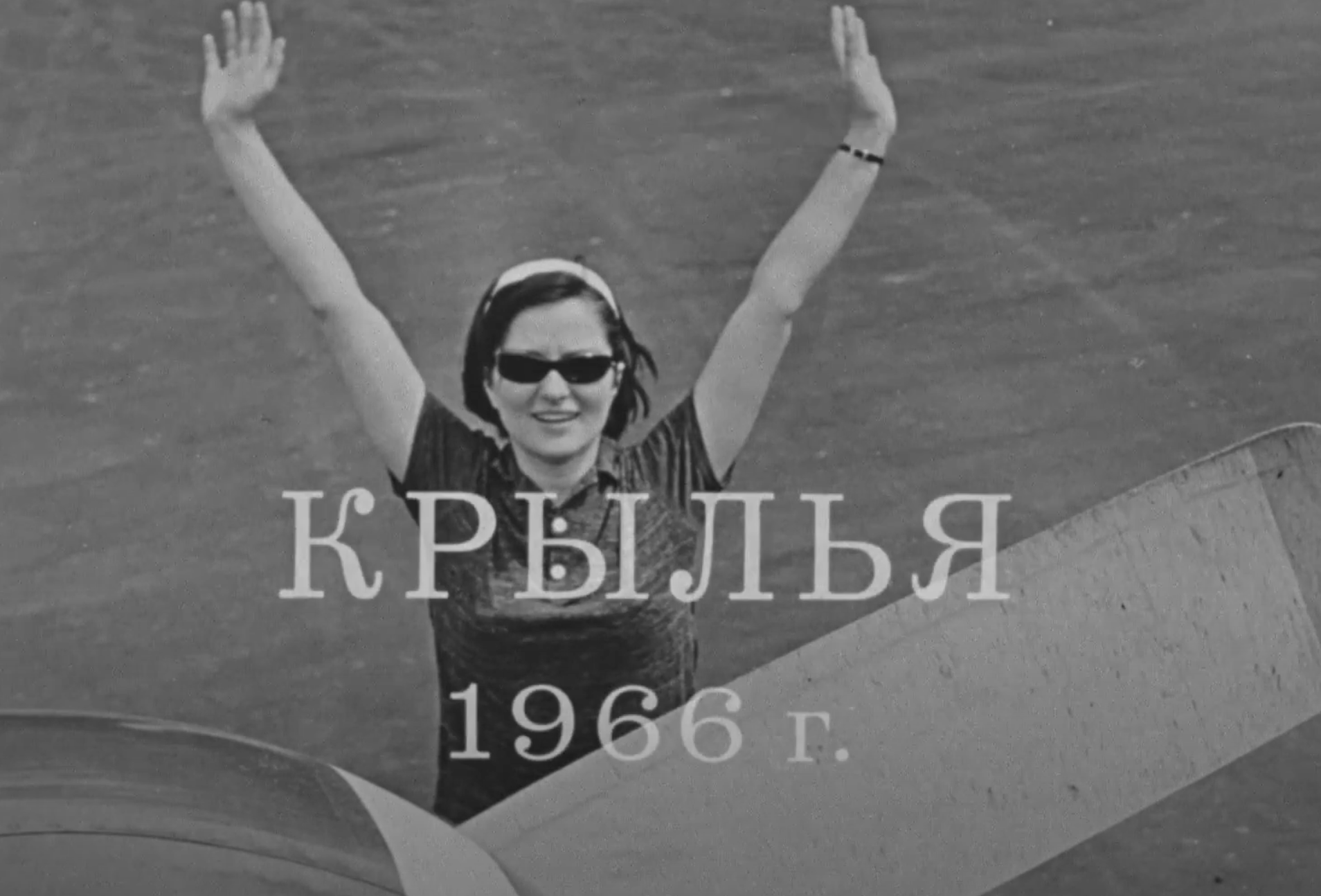
The excellent follow-up Wings (1966) becomes both an examination of generational conflict and a poignant look at the role of a woman veteran in postwar Soviet society. Russian women had a history with airplanes and flight; in 1938, a trans-Siberian distance record was set by pilots Marina Raskova, Polina Osipenko, and Valentina Grizodubova which made them national superstars and led to an influx of girls joining flight clubs. When war broke out, Raskova spearheaded the creation of fighter and bomber regiments for women, one of which was the infamous “Night Witches”, who made insanely dangerous bombing runs at night in obsolete biplanes. Shepitko’s Wings protagonist, a former pilot now stranded in an unfulfilling but comfortable Thaw-era educational bureaucracy, seems to long for those years and no longer fits into society. But resolutions are murky in Shepitko’s work, never maudlin and often confusing. The follow up, You and I, dealt with unhappy people abandoning their lives and searching for meaning elsewhere. It ran into problems with the censors and was heavily edited.
Her inspiration for The Ascent came during a seven-month hospital stay in 1973, from a spinal injury and concussion while pregnant. There, she read the novella “Sortinov” by Vasil Bykau and in its pages found key philosophical questions that went far beyond stereotypical war literature tropes about duty and sacrifice. Indeed, Bykau drew direct parallels between his partisan characters and the story of Jesus and Judas. Shepitko incorporates these elements into her film, albeit with some changes. Scholar Jason Merrill discusses these religious differences between book and film in a 2006 article, and he says these elements were toned down by Shepitko in her script. Rather than being a historical piece, he says that she wanted her film to “answer modern-day questions” and called the film “my Bible” and defined its genre as “neo-parable” (Merrill, 149). Shepitko felt it went “beyond a war picture” and that it was directed “at our own days” (Costlow, 87). Thus, The Ascent was a film that represented choices for this generation, for right now in 1970s Soviet society.
Maybe this was because she knew the young were growing increasingly disconnected from the “Great Patriotic War” and the scourge of fascism, or else were tired of hearing about it. In aforementioned Out of the Fire, as the old detail their horrible accounts, the young pace in the background, sighing heavily, bored or doing chores. In the book’s most surreal moment, one boy sits by an elderly relative and assembles a toy plastic model of nazi soldiers as she is speaking her genocide trauma story to the authors and their tape recorder:
“Is that your grandson?” we asked the old lady.
“No, Seryozha is my nephew from Grodno, he came for the summer.”
“Seryozha, can you model birds or animals, or ordinary people?”
The boy was silent.
The Ascent is a film about choices, and the more you parse them, the more complicated they become. Plotnikov’s “Jesus” doesn’t turn the other cheek, he strikes people and says his only regret is not killing more nazis. Gostyukhin’s “Judas” spends the first half of the film saving his ill-equipped comrade from death, dragging him with torturous effort through snowy underbrush. The tenderness of the “warming” sequence only amplifies the psychic break at film’s end, with its fourth-wall-busting snapshot of prolonged suffering and layers of dissonant Germanic and Russian voices (“I want to eat”) stacked upon Alfred Schnittke’s dark score.
In 1979, while shooting her follow up film Farewell to Matyora, Shepitko’s life ended tragically with a car wreck that also killed four of her crew. As she’d feared many years earlier in the hospital, The Ascent would indeed be her last film, a neo-parable testament to her Dostoyevskian worldview. The year before her death, it swept the 1978 Berlin International Film Festival, winning the Golden Bear top prize and other awards. The loss to Russian cinema was profound. Farewell would be finished by her widower Elem Klimov, who would soon dump his grief into the last great Soviet war film, Come and See (1985). He would champion her work for the remainder of his life, making the beautiful short documentary film Larisa (1980), in which she speaks frankly of the slippery, dead-end slope of selling out:
Every day, every second of our life prompts us to fulfill our everyday needs by making some kind of compromise, maneuvering, keeping silent, knuckling under just for now. One might say, well, we must be flexible. That’s what life demands of us. Everybody does it after all. But it turns out that while everyday life seems to let us cheat for five seconds and then make up for it, art punishes us for such things in the most cruel and irreversible way. You can’t make a film today just for the money. They say to themselves, “I’ll make a second-rate film. I’ll bend here. I’ll say something they want to hear. I’ll try to please these people. I will let it slide. I’ll tell a half-truth. I won’t speak up. But, in the next film, I’l make up for it. I’ll say anything and everything I want as a creative person, as an artist, as a citizen.” It’s a lie. It’s impossible. It’s pointless to deceive yourself with this illusion. Once you have stumbled, you will not find the same right road again. You’ll forget how to get there. Because, as it turned out, you can never step into the same river twice.
BIBLIOGRAPHY:
Adamovich/Bryl/Kolesnik. Out of the Fire (Я з вогненнай вёскі / Ia iz ognennoi derevni). Progress Publishers, Moscow, 1980.
Costlow, Jane. “Icons, Landscape, and the Boundaries of Good and Evil: Larisa Shepitko’s The Ascent (1977).” Border Visions, Scarecrow Press, Incorporated, 2013.
Merrill, Jason. “Religion, Politics, and Literature in Larisa Shepit’ko’s The Ascent.” Slovo (London, England), vol. 18, no. 2, 2006, pp. 147–62.
Quart, Barbara. “BETWEEN MATERIALISM AND MYSTICISM: The Films of Larissa Shepitko.” Cinéaste (New York, N.Y.), vol. 16, no. 3, Cineaste Publishers, Inc, 1988, pp. 4–11.
“The world is very ill. The world needs to heal the seas, the rivers, the environment, society, money. It must heal itself. We’re all ill. The artist must react. The artist must be a healer. Cinema must be some sort of revelation. Audiences should not identify with a hero who is generally a pervert. James Bond is a pervert. Superman is a pervert.” – A.Jodorowsky
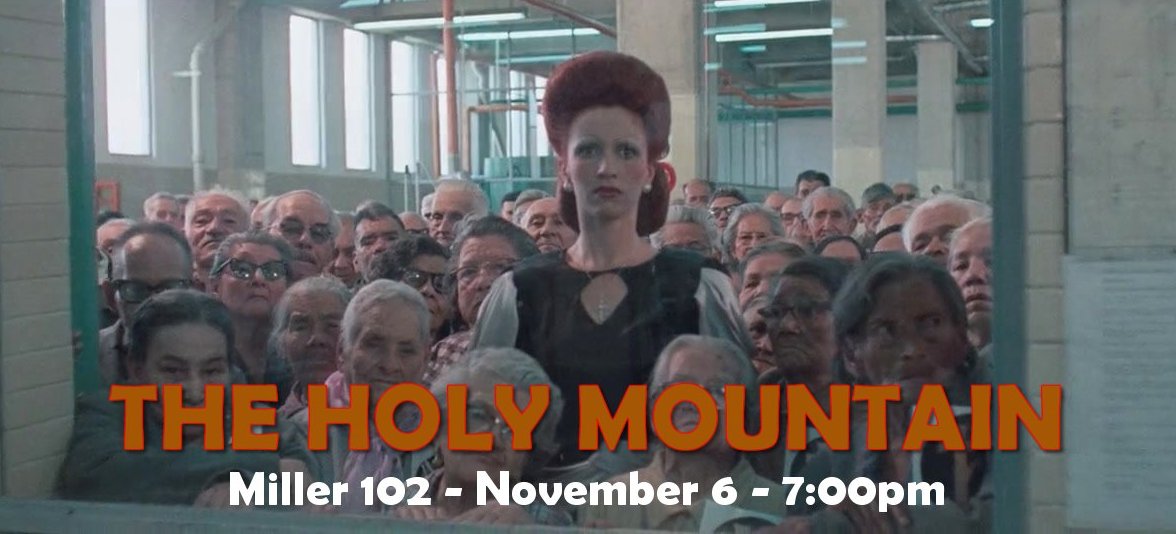
Since the Dune documentary came out in 2013, so much ink has been spilled on Jodorowsky that it is hard to remember a time when it was not so. Today The Holy Mountain is psychedelic canon, but in the pre-Internet era it was nearly impossible to find, at least in the U.S. The tape I saw in 1991 was bootlegged from a Japanese LaserDisc and sold by Video Search of Miami. They were a sort of renegade Facets (the more reputable rare video lifeline based in Chicago), specializing in Italian giallo and obscure spaghetti westerns, Soviet sci-fi, and Asian ghost stories. They’d send you a janky stapled catalog in the mail every few months. You picked your films and ordered by phone or snail mail, and then they dubbed them for you from their master copies onto a blank videocassette, for a $25 flat fee. The critical success of 1989’s Santa Sangre didn’t really improve things, and this dearth of legal availability would plague Jodorowsky’s back catalog for years. Even after DVDs came out, nothing saw a legit release early on except for Fando Y Lis. According to his new commentary, this was intentional, part of a lingering decades long beef between Jodorowsky and Holy Mountain rights-holder Allen Klein. Jodorowsky now admits to illegally distributing his own film during those years just to keep it alive, which resulted in legal action against him.
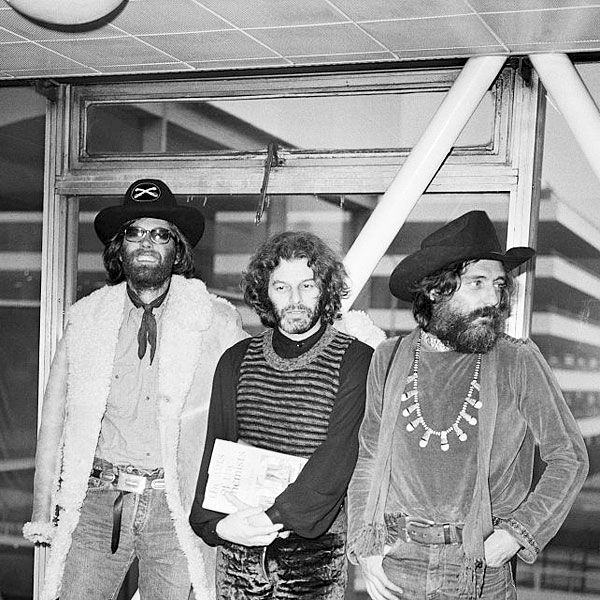
(L-R: P. Fonda, Jodorowsky, D. Hopper. The Last Movie set, 1971)
Most late-1960s U.S. counterculture films once lauded as milestones haven’t aged that well. There’s no Z or Weekend. Easy Rider in particular is more often discussed in terms of what it did for independent U.S. filmmakers, not for its content, which, for all its “we blew it” death trip fatalism, tends to reinforce Western expansionist worldviews and prioritize white male freedom fantasies. Jodorowsky, who was friends with director/star Dennis Hopper, hated conventional 3-act plots, and his feedback on the first cut of Easy Rider‘s follow-up The Last Movie resulted in Hopper making disjointed experimental edits that likely doomed the film commercially. For this time period, from 1970-71, Jodorowsky was a bit of a rock star in the U.S. and U.K. John Lennon and Yoko Ono saw El Topo on the advice of a friend and approached the director about financing for his next work, which would come via the bleeding cash cow of Apple Corps. George Harrison originally intended to play the part of the thief “Jesus figure” whose story starts off The Holy Mountain, but Jodorowsky refused to remove a nude scene so he withdrew. The fact that he prioritized a 5-second anus-washing scene over casting one of the biggest pop musicians on the planet does give credibility to the director’s claim that artistic vision is worth more to him than money.
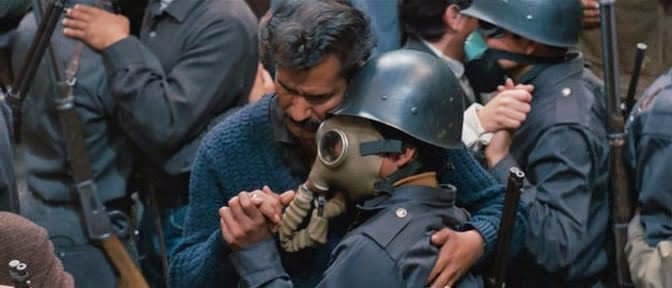
The films takes its visionary point of origin from the unfinished surrealist novel Mount Analogue by René Daumal. Jodorowsky, who did not drink, smoke, or do drugs, took LSD for the first time before filming began, under the advice and guidance of Oscar Ichazo, founder of Arica Training. In Mexico, he lived collectively with the cast in a house for two months before shooting started, sleeping four hours a day and doing exercises and hallucinogens. There was only one trained actor among them, Juan Ferrara. Jodorowsky does not elaborate on his casting decisions except that they were honest and true to life, thus the architect was an architect, the lesbian a lesbian, the millionaire a millionaire. The entire cast ate psilocybin mushrooms on camera for one scene where they needed to appear hyper-emotional. According to Jodorowsky’s commentary, two actors were trans, one of which later transitioned, Bobby Cameron from the San Francisco Cockettes, whom he calls “the most beautiful transvestite I’ve ever met.” Jodorowsky had befriended artist Nikki Nichols at Max’s Kansas City in New York; Nichols worked on the elaborate set design and acted as one of the eight seekers. On the topic of these sets: “My budget was low, but I wanted a grandiose film with grandiose sets. So I would film real locations and add something to make them a bit unreal.” Many of these impromptu stages were in public spaces in Mexico City; no permits were obtained, the cast and crew would quickly set up and shoot. Some of the extras they hired resisted what was being asked of them, and one man in the “gas-mask soldier dancing” sequence put a gun to Jodorowsky’s chest and threatened to kill him. These conflicts continued. Eventually, “two-thousand people marched and compared me to (Charles) Manson and said they wanted me out of Mexico. I fled to New York with the footage after a paramilitary group called The Hawks came to my house in the middle of the night and said they were going to kill me and my family.”
Not surprisingly, it is this same fascist militarism that is criticized within the film’s imagery. Above all, the 1968 Tlatelolco Massacre, where hundreds of students were murdered by the government while protesting the Olympics, still hangs heavy in the air throughout several surreal sequences, with birds flying from gunshot wounds and blood squirting through strange applied cranial tubes. Arms manufacturing and western cultural imperialism are skewered equally: the de-Marilyn Monroe-ing opening sequence; the horde of Minnie Mouse children; the body art assembly line and religious guns customizable with crosses, menorahs, and Buddha statues. The nine disciples themselves and their affiliated “planets” are open to many levels of interpretation, as is the abrupt ending that the cast apparently disliked (his idea to superimpose his actual home address for feedback on the film’s final shot was sadly discarded.) Mexican sculptor Felguerez created several amazing pieces, including a giant machine that births a baby machine. Like other elaborate constructions and detailed shot set-ups, all are given mere seconds of screen time. Cinematographer Rafael Corkidi, who’d collaborated with Jodorowsky on his previous works, created striking and studied compositions. His camera becomes less static and more handheld cinéma vérité for the final half, a switch Jodorwsky says was intentional and meant to signify the seekers’ shifting emotional states.
From 35 hours of footage shot, much of it was unusable. Famous Mexican editor Federico Landeros came to New York and created the final cut. Mexican sound artist Gavira improvised post-production effects, his work so impressing William Friedkin that he hired him for The Exorcist, for which Gavira won an Academy Award. Jodorowsky brought in Free Jazz trumpeter Don Cherry to compose the score. None of this helped its box office success. The Holy Mountain was a financial and critical disaster and went unclaimed by Mexico’s cultural ministry due to its objectionable content. This was fine and even expected by the vagabond Jodorowsky, who has been quoted as saying, “My country is my shoes.” It soured his relationship with Allen Klein and ultimately killed any chance for getting Dune made. He would not release another movie for which he had full creative control until Santa Sangre, some 15 years later. Today, at 94, the time that he was so ahead of has embraced him, and he has lived to see his reputation flourish among a generation who understands his philosophical ideas of filmmaking:
“When you go to the cinema and are treated like a 12-year-old child, you have a good time, but you come out more stupid each time. Cinema is making audiences stupid, it’s treating them like babies. I didn’t want to do that. I wanted to wake people up. I wanted to wake up a society that has been ill since the Middle Ages.”
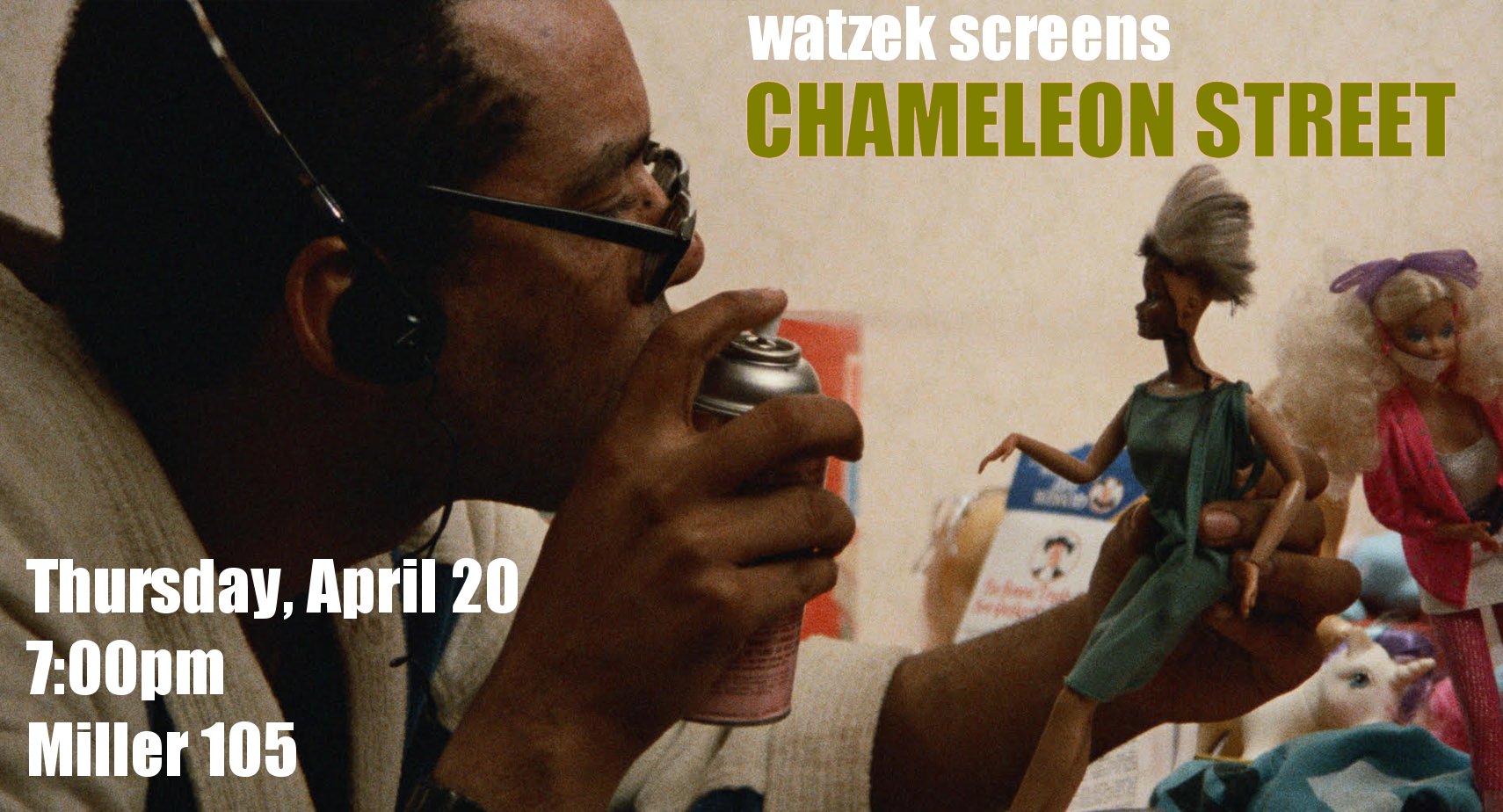
Perhaps Chameleon Street is most notorious for being a runaway success at the 1990 Sundance Film Festival, winning top prize, and then seemingly falling off the face of the earth, along with its director, Wendell Harris Jr. The film is based on true events, centering around infamous entrepreneur/conman Douglass Street Jr., who from 1971-85 impersonated a wide spectrum of people and professions in order to make a buck. The way the story is shot and told–fast-paced narration, filmed fake television broadcasts, etc.–still feels fresh and DIY today, unlike more polished indie films of that era that strove to mimic Hollywood production styles. Wendell Harris Jr., who started the project in 1985 after reading an article on Street in the Detroit Free Press two years prior, wrote, directed, and stars in the film, with the entire work narrated and told from Street’s perspective. Realizing that all this country cares about is money, Street sets out to get it with his greatest asset: deception. Along the way, he tends to blame the women in his life (mainly Angela Leslie, as wife Gabriella) for bringing him down and not understanding and supporting his true conning genius, a tired patriarchal trope that Harris said Street talked about at length in his letters and during prison interviews. According to Harris, these letters and interviews form the nucleus of his portrayal. In video interviews, Harris said he’d wanted to direct but not star, or maybe it was star but not direct. Either way, he ended up doing all of it, plus writing, out of necessity and lack of money. On rewatching it recently for the first time since 1992, there is a lot that is dated obviously, but much of it holds up. Harris does an excellent job portraying Street just as he presented himself, which is a brilliant deceiver, and also a smug, misogynistic prick. Still, the code-switching explosion might be the funniest few seconds in the movie.
Chameleon Street was part of a resurgence in black independent filmmaking that started at the tail end of the 1980s, with Julie Dash’s Daughters in the Dust and Matty Rich’s Straight Out of Brooklyn being two of its outstanding peers. The movement probably peaked with Deep Cover, Malcolm X, and Menace 2 Society, in 1992-93. Alongside this creative explosion was a reassessment of 1970s blaxploitation films, which up until then were typically viewed through a negative lens by critics like Stanley Crouch, who saw them as reinforcing negative stereotypes about black people as pimps, sex workers, and criminals. Also important was the insulting gesture of plantation throwback Driving Miss Daisy winning the Academy Award for Best Picture in 1990, while they failed to even nominate Do the Right Thing. It was an industry fuck-you to the black film community and meant to codify their place as cultural chauffeurs. Public Enemy answered appropriately with “Burn Hollywood Burn”.
Reading up on what happened to Harris after the film won Sundance is sad but enlightening. He thought he’d made it, that offers for distribution would arrive, that he could reimburse his parents for the life savings they’d invested. Instead, Warner Brothers bought the rights to a remake (not a sequel) for $250,000 and then canned it. Amazingly, they refused to distribute Chameleon Street at all. No other studios would either. Compare that to the lavish treatment lauded upon the previous year’s Sundance (white) winner Steven Soderberg, for Sex, Lies, and Videotape. After the suppression of his film, Harris says he wasted three years of his life pitching unpopular ideas in Hollywood to disinterested corporate hacks:
“I would go to people, and say, ‘Hey, I’ve got a great idea for a satirical comedy called Negropolis. It takes place in ancient Rome, except that black people are the upper class, including the Emperors and the ruling class. All the slaves are white.’ I would pitch that, and they would look at me like I had defecated on their carpet. . . . When you actually know that the house is stacked against you, then you don’t really bother going into the house, if you have any sense.”
“It is not something that is low class. It is a big thing and you can move it anywhere. For postwar Germans, the mobile home was almost a dream home.” – Werner Herzog
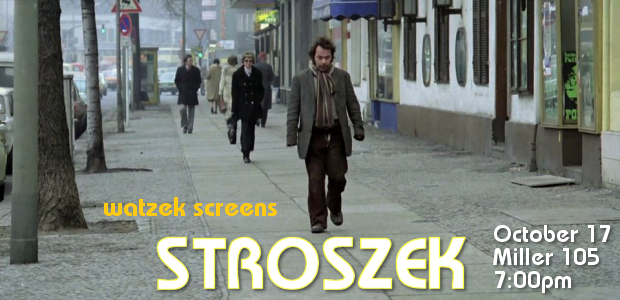
The script for Stroszek was drafted on a whim in just four days, a guilt-driven vehicle written specifically for Bruno S. after Herzog gave his promised lead in Woyzeck to Klaus Kinski. As ridiculous as that casting decision seems now, back then Kinski could pull a crowd, so it made financial sense, even if it was Bruno who really embodied Büchner’s expressionistic fragments. A couple of years before, in 1974, he had starred as the lead in Herzog’s Every Man For Himself And God Against All, a semi-fictionalized biopic about Kasper Hauser. Stroszek would be Bruno’s own biopic of sorts. It is hard to separate the background of Bruno Schleinstein from the backstory of Bruno Stroszek. According to Herzog, Bruno was abused so severely by his mother that he initially lost the capacity to speak at age 3. Abandoned by her, he spent the next 23 years of his life in a cycle of institutions, constantly escaping and being recaptured, each confinement worst than the last; literally mental health care administered by Nazis. Herzog first spotted him in a 1970 documentary on West German television on marginalized peoples, Bruno der Schwarze. For money, he drove a forklift at a steel factory. For leisure, he sang old arcane songs in public spaces accompanied by his accordion, xylophone, and bells. (The use of “S.” instead of “Schleinstein” derives from a common German newspaper practice of identifying juvenile delinquents by only their first letter to preserve anonymity.)
New York and L.A. viewers probably saw Stroszek as a German’s cynical dark view of working-class rural America, mocking its truck stops, trailer life, theme parks. But Herzog’s commentary in 2001 paints a different picture of his feelings towards Midwesterners, whom he called “genuine, with no bullshit.” He picked the area around Plainfield, Wisconsin because of the mystique given to the region by filmmaker and friend Errol Morris, who had been working there on a project about serial killer Ed Gein. Having an obsession with American auctioneers (“It is the last poetry possible, the poetry of capitalism”), Herzog had filmed a documentary in Pennsylvania for German television in 1975, called How Much Wood Would a Woodchuck Chuck. The master of ceremonies at that event was Scott McKain, who made a deep and profound impression on Herzog, calling him “a brilliant man, one out of thousands.” His role as the apologetic screw-turning banker in Stroszek is unmatched. Similarly, Herzog’s car had broken down during a trip to meet Morris in Wisconsin, and he was rescued via tow-truck by mechanic Clayton Szalpinski and his assistant Ely Rodriguez. Herzog said he stored them all away in his brain for later. Indeed, the casting remains the best of any of his films. Eva Mattes was the only professional actor, having been in several great Fassbinder movies, like The Bitter Tears of Perta Von Kant, and who would soon do Germany, Pale Mother with Helma Sanders-Brahms, one of the best German films on the war. The acting agency who represented the elderly Clemens Scheitz warned Herzog that he was “not quite right in the head anymore.” His mathematical equations on animal magnetism, which Herzog worked into an improvised scene with Wisconsin deer hunters, made him the perfect choice for Herr Scheitz. With Bruno, he had previously been in Every Man For Himself. The two German pimps from the film’s first half exude capitalist darkness, negotiating ownership rights to Eva’s body. Herzog had seen boxer/actor Norbert Grupe, a.k.a. Wilhelm von Homburg, in an infamous interview on a German broadcast in 1970, calling it the best thing he had ever seen on television. The other pimp actor, Burkhard Driest, was a writer and painter who had once served time for armed robbery when he was about to finish his law exams. The shoot was contentious behind the scenes but not too bad on-set. The biggest disruption was that the technical crew hated the film, hated the script, hated Bruno, hated Scheitz. They also hated the ending and flat-out refused to film it. Herzog did most of that alone, according to him, and with second-unit cameraman Ed Lachman, who seemed to be the only crew person having a good time. Lachman’s contributions to the work were huge, particularly his ability to improvise believable truck-stop dialogue and recruit unexpected strangers on-the-fly as actors.
Shooting in North Carolina (Kino Images)
Like Döblin’s Berlin Alexanderplatz, it begins with a prison release. And like Franz Biberkopf, Bruno is forever imprisoned: through the barred fingers he flashes in front of his face periodically, to the similar wooden schematic he builds for Eva to explain his interior self; the latter exposition shows Bruno taking off on an improvised autobiographical tangent, demonstrating how he was forced to hold urinated bed sheets over his head for hours in the rain after institutional beatings. But there is no exit, they are always shutting doors on Der Bruno, trapping him in a foreign landscape of rubber toy tomahawks and brainwashed barnyard animals. The pick-up circles, the lift circles, “Is This Really Me?” with his beloved mynah bird now a frozen turkey in this Appalachian abyss. “Look into the eyes of a chicken and you will see real stupidity,” Herzog has said. “It is a kind of bottomless stupidity, a fiendish stupidity. They are the most horrifying, cannibalistic and nightmarish creatures in the world.”
As his two film performances drifted into the past, Bruno S. continued making music and painting until his death in 2013, still living in the same Berlin apartment seen in Stroszek. When asked by the New York Times in 2008 about his movie star days, he answered, in typical third-person: “Everybody threw him away.” That may be, but a new generation of outsider artists, inspired by his genuineness, his brokenness, his humanity, would come to champion him as a beacon of authenticity in bullshit times.
Bruno S. is a man to me
You’re just some dude with a stilted attitude
That you learned from TV
“The theme of the picture By The Law is alien to our viewer in script and essence. Considering the instances of pathology and hysteria [in the film], it is a sick phenomenon in our cinematography which harmfully affects our Soviet screen.” — A.R.K. (Association of Revolutionary Cinematography), 1926.
“We may be accused of being morbid or misanthropic, but please do not forget that our film is about the modern English middle class–surely the most inhuman of all.” — Lev Kuleshov, 1926.
It feels weird when a 92-year-old Soviet film can say so much about the contemporary world. Class violence, retribution, environmental chaos–all are active ingredients in Lev Kuleshov’s “constructivist Western” By The Law (Po Zakonu). Viewing it today, from the Great Acceleration period of the Anthropocene, is like peeking into a creepy apocalyptic window of past and future. Like Marx, the Soviets believed that capitalism would destroy humanity; and lo and behold, here we are, on the way to our own Easter-Island party, with investors buying up escape-pod properties in New Zealand to ensure that this model survives for their entrepreneurial offspring, who will presumably sell shares in the Norwegian Seed Vault. /communist_rant
The coming of Russian film coincided with the creation of the U.S.S.R., the world’s first modern worker state. It provided the opportunity for a clean break from the literature and drama of the 19th-century, both of which the Soviet intellectuals rejected as bourgeois tools of domination controlled by the aristocracy. With 80% of the Russian population illiterate, it was believed that this new visual medium would usher in a transformative era of avant-garde modernity, offering a conduit through which the nascent nation could educate and galvanize the people. Like rail lines and power grids, film would connect the disparate corners of the Soviet together. It would create social cohesion between ethnic groups and help authorities overcome the huge communication hurdles of time and space.
But things got weird. The period of genuine openness and experimentation was over fast and in steep decline after Lenin’s death. Anything avant-garde suddenly became elite, epicurean and subject to suspicion. Film plots were required to be both entertaining (without being “too American”) and reflect deeper socialist worldviews, a concept called Socialist Realism. Many in the industry, particularly directors, screenwriters, and cinematographers, struggled between these two worlds. Their continued employment and access to funding meant keeping the cultural commissars satisfied with works that met this criteria. As if it wasn’t hard enough making wheat quota subplots stimulating, the films should also be exportable abroad and appeal to international audiences.
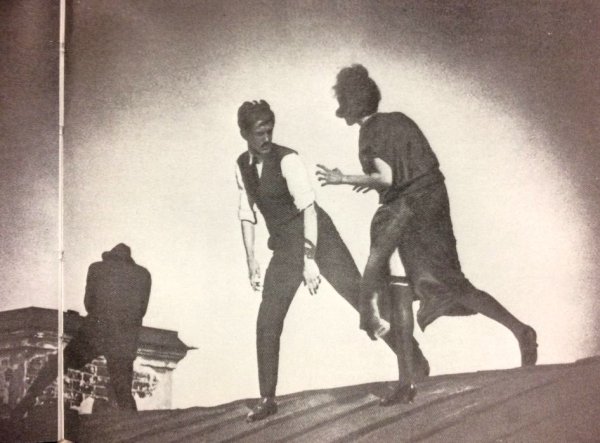
Kuleshov Collective practicing on a rooftop
It was within this confused climate that the Kuleshov Collective, a close-knit group of actors and technicians started by director Lev Kuleshov, set to work on a new project in 1926. (Kuleshov pioneered several techniques of early film montage theory that today would be taken for granted; one is called the Kuleshov Effect, which asserted that one shot placed beside a second can alter a human’s emotional interpretation.) The Collective’s biggest success thus far had been in 1924, with the brilliant satirical comedy The Adventures of Mr. West in the Land of the Bolsheviks, which lampooned both American and Soviet stereotypes equally. But the group was now on shaky ground after its disastrous follow-up, when a long and confusing sci-fi film called The Death Ray was thoroughly hated by everyone. Kuleshov knew that the collective’s next project had to come in on the cheap and be a hit. While it would have been easy to fall back on the safety of West’s comedic formula, he happened across a gloomy story by American socialist writer Jack London called “The Unexpected” and decided to adapt it with screenwriter Victor Shklovsky. Finishing the script in 12 hours, they started scouting locations outside Moscow that could serve as the Yukon. They spotted the “huge and forlorn” pine tree first, near the Tsaritsino ponds. Then the Collective built a small shack on the banks of the icy Moskva River. The majority of the film would be just three actors inside this claustrophobic interior. It would be the cheapest Russian production of all time.
Khokhlova
Fogel
Ultimately, it’s the performances of Aleksandra Khokhlova (as Edith) and Vladimir Fogel (as Dennin) that make By The Law so exceptional. Aleksandra Khokhlova was Kuleshov’s spouse and creative partner. Like the others in the Collective, she had starred in most of his previous films; but unlike the men, she was mercilessly mocked and insulted by critics for her angular looks and skinniness. Lev Kuleshov hit back, saying “The commercial pursuit of beauties and names is none other than hidden pornography or psycho-pathology for which there is absolutely no place in Soviet cinematography.” The best English write-up of the film belongs to American poet Hilda Doolittle, better known as “H.D.”, in the 1928 issue of the film journal Close-Up. Watching the German versionSöhne in a Switzerland theater, she described Khokhlova’s performance (taken from Ana Olenina’s incredible Khokhlova bio at the Women Film Pioneers Project):
The gestures of this woman are angular, bird-like, claw-like, skeleton-like and hideous. She has a way of standing against a sky line that makes a hieroglyph, that spells almost visibly some message of cryptic symbolism. Her gestures are magnificent. If this is Russian, then I am Russian. Beauty is too facile a word to describe this; this woman is a sort of bleak young sorceress…Her face can be termed beautiful in the same way that dawn can be termed beautiful rising across stench and fever of battle…This sort of raw picked beauty must of necessity destroy the wax and candy-box “realism” of the so much so-called film art. It must destroy in fact so much that perhaps it does “go”, as one of our party said, “too far”.
This notion of “too far”-ness echoes a similar comment made by Cinema Front critic Viktor Pertsov, as noted by scholar Denise Youngblood in her Soviet Cinema in the Silent Era 1918-1935, the authoritative Western text on this subject. Youngblood says Pertsov criticized Kuleshov for not guiding the viewer to moral judgment or providing a social key with which to decode the film, which he described as “hermetically sealed.” While meant negatively, today this hermetic sealing is precisely what makes this movie so radically accessible to new viewers. Unlike other Russian films from the period, it ties itself to no historical event or revolutionary act but merely works its way through its own myopic microcosm of greed and madness, close-up by close-up, breakdown by breakdown.
Aleksandra Khokhlova’s “hieroglyph”
Kuleshov was known for making dangerous physical demands on his actors, although the confined interior of By The Law theoretically made for safer working conditions. The shoot was carefully timed to overlap with a spring thaw and flood event. Actors would freeze, be submerged, and have off-screen airplane propellers blow snow and sleet into their faces. Kuleshov described the expereince in Fifty Years In Films:
Spring came, the ice on the river broke. We went on shooting, but suddenly it became apparent that we were having quite an unusual flood: the river water was inundating the cabin, its level steadily rising. The wet cables produced electric shocks whenever one inadvertently touched them, but Khokhlova affirmed that “electricity made her feel more intensely”. While a close shot was being made, Fogel lay bound on ice in the fire-hose rain and airplane wind for two and a half hours. (p.228-229)
Vladimir Fogel was better known for his comedic roles in hit films like Chess Fever, where his neurotic performance shows his gift for physical comedy. But today, it is his portrayal of the exploited and embittered Irishman in By The Law that stands as his highest achievement. Kuleshov wanted extreme states of being from the faces of his actors. This is why the Collective practiced incessantly using still photographs and études, trying to move beyond the cliched facial expressions so common to the stage. Truly extreme states of being, they believed, could never be attained through psychological immersion. In that sense, they rejected theater theorist Stanislavski’s approach as a mere dressing-up of canned Victorian melodrama. Actors were mechanical beings subject to the laws of science. Ana Olenina summarizes this well in her article “Engineering Performance: Lev Kuleshov, Soviet Reflexology, and Labor Efficiency Studies”:
Kuleshov’s explorations were driven by his conviction that the performer must exploit the abilities of his or her body to the maximum extent and create corporeal spectacles that would strike the audience with their unusualness, dynamism, and perfection in every detail. Thus, the acting études and films created by Kuleshov’s troupe in the 1920s were marked by a clear tendency on the one hand, toward tragicomic grotesque and buffoonery, and on the other hand, toward extreme physical performances (p.300).
Although the end product was criticized for its “Americanism,” it was a big enough hit to prove the end of the Kuleshov Collective, as Fogel and others departed for the stable paychecks offered by the larger Soviet film factories. Fogel would soon play the proletariat couchsurfing homewrecker in Bed & Sofa, followed by The House on Trubnaya. Tragically, he killed himself in 1929, although likely not for the reasons stated by Kuleshov in his memoirs (because of “uninteresting work”). On the other hand, his suicide did coincide with the coming of sound film, a difficult time for all actors but especially international ones. Aleksandra Khokhlova, failing to meet Soviet beauty standards, could only get work in Kuleshov projects. Soon, she would turn to directing films herself, including an adaptation of Maxim Gorky’s An Affair of the Clasps (1929), Sasha (1930), and a documentary called Toys (1931).
In closing, the score of this particular DVD restoration deserves mention. The majority of silent films have no remaining soundtrack notes with regard to what should be played during a screening. This is true for By The Law. Most restorations go the safe route and commission a solo piano score, or something orchestral from the time period that fits. Luckily, the Austrian Film Museum decided something different was needed and went with electronic composer Franz Reisecker, who had previously worked on a score for Eisenstein’s Battleship Potemkin restoration. His dissonant and fractured tones work brilliantly alongside Kuleshov’s images. “I was fascinated with actress Aleksandra Khokhlova, because of her very particular expressive style, and then with the montage and Kuleshov’s highly artificial visual language,” Reisecker said in an interview. “It reminded me of Spaghetti Westerns. I went back to Ennio Morricone’s music for Sergio Leone’s films and developed some sounds based on the bell motif. Then there is a sequence that almost has the character of a dance track when they find gold…and despite the groove there is a hint of threat in the sound.”
Cast/Crew shot from set of By The Law; Khokhlova in scarf, Fogel in glasses, Kuleshov center left.
SOURCES:
Kuleshov, L. V. (Lev Vladimirovich), et al. Fifty Years in Films : Selected Works. Raduga Publishers, 1987.
Youngblood, Denise J. (Denise Jeanne). Soviet Cinema in the Silent Era, 1918-1935. 1st University of Texas Press ed., University of Texas Press, 1991.
“It wasn’t me, pal, I ain’t hit no poison shops in years!” – Matt Dillon as Bob, Drugstore Cowboy: Workprint
No film ever shot in Portland has come to personify the city like Gus Van Sant’s 1989 breakthrough feature Drugstore Cowboy. In fact, it holds such a place of prominence that the impatient are already gearing up this month to celebrate its 30th anniversary based on production instead of release date, with screenings, walking tours of locations, etc. The only local screenings scheduled so far are for the normal 101-minute version. Van Sant seems to have little interest in re-visiting other cuts of the film, which is understandable. Editors exist for a reason. Anyone who has ever had to sit through an awful “restored” director’s cut understands this. Most works are harmed more than they are helped. In interviews, the sole editorial point of conflict mentioned by Van Sant was his unwillingness to cut William S. Burroughs from the film, as requested by the studio. There were also several moments in his commentary for the 1999 DVD release, done with Matt Dillon, in which he questioned the necessity of a few edits or changes to the shooting script. But overall, he sounded content with his first big-budget Hollywood experience and did not come across as having compromised his ideas for the sake of money.
While the original is wonderful, an alternate videocassette version exists. It was likely a “workprint” VHS transfer of an early proposed cut, intended for editing. Or maybe it was a rejected alternate version submitted to the studio for review. Whatever its function, it adds around 20 minutes to the film’s running time, while also eliminating or using alternate takes for some scenes that were included in the final Avenue Pictures release. The Workprint feels a lot more like Mala Noche–Van Sant’s previous feature, also shot in Portland–and makes for a way grittier experience than Hollywood’s version, with no special effects, no jazz score, no drug paraphernalia optics, no credits. Appropriately, the grainy print takes on the aesthetic characteristics of a darkly funny 16mm afterschool TV parable about the black hole of addiction.
Before I get into specific differences, a bit of background on the source material. James Fogle was an infamous Pacific-Northwest drug addict and pharmacy thief, and the shooting script was based on an unpublished manuscript of his, which was picked up by Delta only after the film’s success, in 1990. The book is loaded with dialogue, with some passages ridiculously long, stilted, and unnatural sounding. Van Sant and Dillon, in the original DVD commentary, discuss the copious amounts of colorful text written by Fogle and the attempts at condensing that into script form, while retaining some of his key phrases, like “poison shops,” “dope fiends,” and “T.V. babies.” I did a quick scan, and all of the removed major scenes–and most of the dialogue therein–are present in Fogle’s novel. With the Workprint just passing the 2-hour mark, in an era when films were rarely over 90 minutes, the cutting of entire sequences was likely to tighten the pace. The same can’t be said for the inclusion of alternate takes and the differences in tone created by those. It seems that at some stage in the editing process, Drugstore Cowboy began to drift from Van Sant’s darkly comedic leanings. These nuances can be subtle and hard to spot; for example, a line delivered by Matt Dillon in Workprint will be hilariously paranoid, while the Avenue cut would utilize an alternate take of the same scene, but with Dillon conveying anger or hostility. Overall, there is an increased 1st-person viewpoint for the Avenue cut, while the Workprint includes more scenes for which Bob’s character would not be present, such as conversations between pharmacists and supporting characters.
Second, there’s the music. Since the videotape lacks credits, for years I struggled to find out what the songs were, and there is still one Hawaiian slack-key guitar piece that I can’t figure out. It’s unclear why some of the Workprint songs were removed from the Avenue cut; probably licensing issues, or maybe they were always intended as placeholders for Elliot Goldenthal’s dissonant jazz cues, which comprised half of the original soundtrack. One sequence in particular deserves mention. It occurs halfway through the police’s duplex raid, as Detective Gentry and the cops hunt for the hidden dope stash. Instead of Bob answering Gentry’s question “What’s it gonna be?”–as in, “Will you give us the drugs or will we trash your place?”–there is a pause. Instead of an answer, Elis Regina’s voice drops in from nowhere with the opening line of “Águas de Março,” and her duet with Jobim then continues over a montage of furniture demolition, the knifing of sofas, the emptying of cereal boxes; there is a brief exterior shot of the shadows of axes coming down in the duplex windows, then a slow pan up a landscape of leftover debris: Coca-Cola bottles, Fidel Castro’s photo, furniture legs, insulation. In the Avenue cut, there is just a fade to black after Gentry’s question and a truncated debris shot, without music, ending with the cast sitting covered in blankets for reasons that are vague (since the preceding scene of cops shredding their clothing was removed.) Approaches like this epitomize the differences between the two versions. Maybe it was Hollywood, with one eye on the editing clock. Just as they wanted Burroughs removed, perhaps they trimmed all bits tangential to the storyline. But the “Águas de Março” sequence in Workprint is really exceptional and the film lacks without it. Desmond Dekker’s “Israelites” is still present but less prominent, being used as source music in the apartment’s interior, not an incidental cue.
Apart from music, there are several great added sequences from the novel. Diane’s sister comes by to bring clothes and belittle Bob, which explains their ill-fitting clothes in the Avenue cut. In two other missing scenes, Diane attempts to score drugs from a doctor, and Diane and Rick talk out a plan to continue stealing following Bob’s departure to rehab. Of the alternate takes, the one at the rehab clinic when Bob is being asked questions by the social worker (brilliantly played by Beah Richards) is altogether different, with a slow French New Wave-ish back-and-forth pan as he answers her questions. Another vastly improved sequence is when Nadine asks if the crew can get a dog, thus starting the hex spiral. Canned dramatic music is inserted here. “It’s over. We ain’t going to the coast. We ain’t going anywhere!” Bob mutters behind horns, strings, and crashing percussion that sounds like it’s ripped from a 70s TV crime procedural. It’s clear that many funny elements did not survive. Odd lines from the novel that are admiringly goofy in Workprint (“Hot dawg!” is a keeper) are gone from the final cut. It seems that at some point in the editing, the decision was made to emphasize Bob’s patriarchal toughness and redemption at the expense of junky weirdness and paranoid melodrama.
This shaky redemption is conveyed through the bookending device that begins and ends the original film. From the outset, in the ambulance, we hear Bob’s half-dead, mellowed-out opinions about everyone on his crew as we watch their home-movies running through his brain. We are not allowed to be introduced to the characters through their actions. We must first hear Bob’s impressions of them and how he has come to define their identities, assigning him an omnipotent God-like quality from the beginning. Conversely, the linear Workprint cut starts in a more egalitarian manner, loud and fast with aerial car shots of the crew en route to the “epilepsy routine”, using an anachronistic Skinny Puppy song that is very far in tone from Abbey Lincoln’s “For All We Know.” It ends cold-stop, in the ambulance, with the head-shot of Dillon said to be modeled on Warhol’s short film Blowjob. Unlike with the Avenue cut, there’s no rehash of the home-movie at the film’s credits, over a replay of “Israelites”, a sequence which always felt to me like a tired Hollywood trope, the equivalent of a blooper reel designed to uplift any audience members who may have become depressed after hours of addicts. Interestingly, according to Dillon and Van Sant, the handheld home-movie sequence was shot by the cast post-production and was designed to be used for promotional purposes. (A photo from that day, taken against the famous Lovejoy columns painted by Tom Stefopoulos, became the main image on the one-sheet poster) Which begs the question: if this was done post-production and intended for advertising, why was it edited into the final film? In Workprint, there is no nostalgia, no redemption, no resolution. The end is abrupt and arbitrary. In the book, Bob is dead-on-arrival. The TV Babies win. The hat hex is complete.
NOTE: DC:Workprint is not available in Watzek’s circulating collection. The screening is free and restricted to Lewis & Clark College community.
Portland might be at the forefront of progressive composting, but in terms of racism and police violence against people of color, it is no different than any other urban center in America. The incredible documentary Arresting Power begins with an excruciating play-by-play of the 911 calls leading up to the murder of Aaron Campbell, who, feared suicidal by his family after the death of his brother, was shot and killed as he attempted to defend himself from a police dog attack. It is only the beginning of a long string of examples, some discussed in depth (Kendra Jade, Rickie Johnson, Tony Stevenson, Keaton Otis), others noted in passing between sections, but all where police killed and attempted to justify the use of their excessive violence. As Walidah Imarisha has explored in her examination of Oregon’s racist beginnings, the state was founded as a white refuge and has a long history of exploiting minorities for labor, while not allowing them to settle permanently. The notorious Lash Law was technically on the books until 2001. In the 1920s, Oregon also had the highest per capita membership of the KKK in the nation (approximately 14,000).
In the wake of systemic police violence in Albina, a group of black activists in north Portland founded the NCCF, the National Committee to Combat Fascism, in 1967. Members of this organization (Kent Ford, Percy Hampton) went on to spearhead the Portland chapter of the Black Panther Party. Like the Oakland and Chicago chapters of the BPP, they emphasized community empowerment, self-sufficiency, and public safety within the black community, starting breakfast programs at Highland Community Church and a free health clinic on North Russell, named after Chicago BPP chairman Fred Hampton. The historical incidences described are beyond belief, but the unjustified killings all follow typical patterns of police violence: claims of non-existent weapons, fleeing black “suspects” defined as “threats”, racial profiling and the absolute debasement and lack of concern among white people in authority for black people’s lives. Great sets of interviews with Joann Hardesty (Albina Ministerial Alliance Coalition for Justice & Police Reform) and non-violent protesters attacked and arrested by police during marches for Kendra Jade in 2003 reflect a culture of intimidation and violence used to squelch public dissent.
The directors–Jodi Darby, Julie Perini, Erin Yanke–scratch 16mm film at the sites of the killings just as graphite rubbings are made from gravestones. These segments are used as segues, with names of the victims shown on screen. It is an unsettling and effective method of respectfully acknowledging a list of names so abhorrently long that no single documentary could adequately cover each story and give redress to the social injustices reflected in each. The fact that filmmakers would have to pick and choose from such a long list of “justified” killings is telling and only reinforces the fact that Portland is more concerned with fulfilling the state’s historical dreams of white capitalist enclave and gentrified hi-tech playground than investing in our increasingly displaced and struggling communities of color.
“For twelve centuries we fought against China. For 100 years we fought the French. Then came the American invasion–500,000 of them–and it became a war of genocide.” — Father Chan Tin
“The Oriental doesn’t put the same high price on life as does a Westerner. Life is cheap in the Orient.” — General William Westmoreland
Throughout the late 70s-80s, Vietnam became the focal point for a broad range of American films, some dealing with combat (Platoon, Full Metal Jacket), some with aftermath (Deer Hunter, Coming Home, Born On the Fourth of July), others using it as a setting for adaptations (Apocalypse Now asConrad’s Heart of Darkness). Then there was the deluge of POW films from 1983-86, with even Gene Hackman (Uncommon Valor) getting on the solider-of-fortune vigilante bandwagon. Within Reagan’s creepy and bankrupt culture of nationalism, the Vietnam “Prisoner of War” movement went into overdrive, fueled by a fervent anti-Communism permeating the mass media of 1984, the year of Reagan’s re-election. Newt Heisley’s flag image, created in the early 1970s, was suddenly plastered everywhere. In the midst of this, and perhaps as a reaction against it, new documentary forms were taking shape. These new filmmakers were social activists and balked at the notion of a so-called “balance” that they were constantly being accused of lacking. The first was Rafferty-Loader’s Atomic Cafe in 1982, an examination of Cold War hysteria told through an incredible collage of newsreels, educational films, and other “duck and cover” pop culture. The second was Michael Moore’s Roger & Me in 1989, his swan song to Ford and Flint. But both owe much to an earlier, lesser-known 1974 film that Moore has called “not only the best documentary I have ever seen, but maybe the best movie ever.” That film is Peter Davis’s Hearts & Minds.
The impact of the Vietnam War on U.S. policy is well known: it made conscription unsustainable, drafted soldiers being too much of a liability both on the battlefield and once returned home. Reagan’s administration realized indigenous mercenaries like the Contras could be financed, armed, and trained to terrorize their own pro-democratic activists without working-class American youth getting their hands dirty. Until the 1989 U.S. invasion of Panama, things went totally underground for the better part of a decade, public reaction to Vietnam being a prime reason for this shift in intervention. But until coming across Hearts & Minds, I had never seen Vietnamese citizens themselves speaking about what this war wasn’t (a fight against Communism) and was (the apex of an ongoing Western colonial war of genocide against a people fighting for independence and national unification.) Nor had I heard the view articulated so well by former-Sgt. William Marshall, who lost an arm and a leg and was furious for what his country had drafted him to do in the name of, well, access to markets and natural resources. In many ways, it reminds me of Studs Terkel’s book “The Good War”: An Oral History of World War II, which serves as a compendium of human experiences across the board, the quotations around “good war” intentionally ironic. In the same vein, Hearts & Minds could be nested in the same, this being the warm-and-cuddly Lyndon Johnson phrase used to discuss what needed to be done for victory.
The film, shot just as the war was winding down, is a fast-paced compilation of interviews without narration. This was a very rare approach for a documentary on war. Newsreel style was still the norm; think the BBC’s World at War series and Laurence Olivier’s refined narration. By contrast, Hearts & Minds was honest and matter-of-fact, attempting to soften the conflict for no one. It reminds the viewer that war is also about human remembrance and raw emotional experience, not large tactical arrows outlining which division went where and why. The participants run the gamut to policy makers to people on the street, both in America and Vietnam. Infamous “hawks” like Kennedy-aide Walt Rostow openly belittle and insult Davis when he asks for an honest accounting of the conflict’s origins, saying that rehashing that is “pretty goddamn pedestrian stuff at this stage of the game.” He is but one of several who openly assume that their version of the war is the only one in existence, the only one that matters, the only one scholars need concern themselves with for the historical record. Luckily, there are interviews with Daniel Ellsberg (leaker of the Pentagon Papers), Barton Osborn (CIA agent who quit and blew the whistle on covert operations), and a host of others who tossed their bureaucratic careers aside to speak out against the injustice they’d helped to sustain in some way. Alongside these are the stories of two U.S. servicemen: Randy Floyd, an air force pilot who flew 98 bombing missions; and Lt. George Coker, a returning POW who had just spent the majority of the war in captivity. Through great editing, their own perspectives unfold gradually, scene by scene, as do those of dozens of others, like Detroit-born William Marshall, and peace-activist Bobby Muller, who would go on to found the Vietnam Veterans of America.
Most intense are the scenes with the Vietnamese, all of whom spoke up despite very real dangers for doing so (the war was still going on during early filming.) There are the victims: the coffin maker, who looks over his shoulder while speaking; the two sisters, whose prolonged silence and sadness at the end of the scene pushes an intensity onto the viewer which is almost unbearable; the Catholic and the Buddhist, both aligned in their views on the Vietnamese struggle for independence; the angry, grieving father who demands an explanation of what he had ever done to Nixon for him to come there and murder his family; the man who says to a friend, after looking at the camera, “Look, they’re focusing on us now. First they bomb as much as they please, then they film.” Then, there is the lavish country club banquet of the South Vietnamese capitalist class, the recipients of the billions in American foreign aid pouring in, one of which makes the incredible admission that “We saw that peace was coming, whether we liked it or not.” The comment is astounding, delivered without a pause, and really says it all. U.S. corporations can be seen encroaching throughout Saigon: Sprite trucks, Coca-Cola plants, toothpaste billboards with smiling Western women, even the ridiculously out of place Bank of America. Eerily, CBS logos, intended to be a “ubiquitous eye that is watching all”, are ordered left on the bodies of Vietcong corpses by soldiers in the field as an ominous calling card.
In the end, what is so relevant and sad about Hearts & Minds today is the fact that little has changed. The fabrications for foreign invasion by American policy makers continues. Consecutive administrations still lie to keep up some modicum of popular support. The jingoistic hysteria following 9/11 was nothing new, nor was the xenophobic nationalism that accompanied it. Even General Westmoreland’s racist quote has now been uttered in a thousand variations over the past ten years, just replace “Oriental” with “Muslim.” But perhaps most telling are the prescient closing words of ex-bomber pilot and activist Randy Floyd when asked what was learned from it all: “Nothing. The military doesn’t realize that people fighting for their freedom are not going to be stopped by changing your tactics, by adding more sophisticated knowledge. Americans have worked extremely hard not to see the criminality that their officials and their power makers have exhibited.”
“We’re trying to regain what we had in the past, being human beings and being involved in human society.” – Stan Holder, Wichita AIM leader
During the height of its power and influence, the Black Panther Party was an important symbol to other oppressed people of color, both at home and abroad. Among these was AIM, the American Indian Movement, a group of radical Native American activists who drew inspiration from the BPP’s program of zero tolerance for America’s authoritarian power structures. Like the BPP, AIM had no shortage of historical grievances to add to its agenda. One of their earliest actions, in 1972, was partnering with other indigenous rights groups from the U.S. and Canada to trek cross-country, from California to Washington, D.C., in the Trail of Broken Treaties. Once there, Nixon refused to meet with them or acknowledge their lengthy list of demands but the protest established AIM as an important new grassroots movement and caught the FBI’s attention. It’s widely believed that the FBI did not discontinue their counterintelligence program following the outing of their murder of BPP leader Fred Hampton in Chicago. In fact, there is plenty of evidence to support the contention, made by Russell Means, Dennis Banks, Ward Churchill, and others in AIM, that the FBI ran the exact same counterintelligence program of informants, disinformation, and “bad jacketing” against the American Indian Movement, tactics employed with such effectiveness against the Black Panther Party in the years prior.
Corruption on reservations was first and foremost on AIM’s agenda. In the lead-up to the most famous AIM occupation, they accused the Bureau of Indian Affairs (BIA) of inciting violence and fostering an atmosphere of intimidation and fear on the Pine Ridge reservation as a means of social control, further asserting that this was all done in collusion with the FBI, whose agenda was the splintering and eradication of all radical minority organizations. There was a failed procedural attempt at removing the corrupt head of the BIA, Dick Wilson, who was believed to be responsible for many murders and mysterious disappearances at Pine Ridge, with the help of his security forces. Just like with the BPP takedown by the Chicago police, the BIA–specifically Dick Wilson and his self-proclaimed GOONs (“Guardians of the Oglala Nation”)–became the triggermen for the FBI, working to undermine and destroy efforts of indigenous independence and solidarity.
Things came to a head on February 27, 1973 with the famous Wounded Knee occupation. Incident at Oglala was the first (and only) mainstream documentary dealing with Native American radicalism in the 1970s. Its scope is focused primarily on the 1973 Wounded Knee occupation and the subsequent case of AIM-member Leonard Peltier and his alleged (and highly contested) involvement in the murder of two FBI agents injured and then killed execution-style in a firefight on Pine Ridge, a case for which he is still serving a life sentence in Canada.
Last week’s screening Black Power Mixtape provided an overview of some key players in the black power movement. This week, we will look specifically at the murder of two black activists by the State and the coordinated collusion between the FBI and the Chicago Police Dept. to eradicate the Chicago arm of the Black Panther Party through terror and violence.
On the night of March 8 1971, a handful of activists calling themselves the Citizens’ Commission to Investigate the FBI broke into the federal offices in Pennsylvania and raided file cabinets. The stolen documents they obtained confirmed earlier suspicions of how far the FBI was willing to go to infiltrate and destroy domestic organizations dedicated to issues of human rights and social justice. The FBI’s program went by the name COINTELPRO (for Counter Intelligence Program), and its main target was the Black Panther Party, which it deemed a terrorist organization and a threat to national security due to its calls for black empowerment and especially its anti-capitalism. The FBI used false communications, agent provocateurs, and, with the aid of local law enforcement, assassination to splinter and destroy the organization.
The Chicago chairman of the BPP was Fred Hampton, a charismatic leader whose first arrest in 1968 was for stealing $71 in ice cream and delivering it to children in the neighborhood. Above all, Hampton was a brilliant networker and speaker, a builder of bridges between groups with like social agendas, however tangential. Even among South Side’s apolitical gangs, he worked hard to push the Party’s message of empowerment and community control and actively sought their solidarity and support. Like the BPP more broadly, he saw Socialism as the only answer for working black people in America and championed international unity among oppressed people of color, promising solidarity with any group, black or white, that would align themselves with the BPP’s ideals of transnational liberation for all suffering under capitalism and colonialism.
The FBI decided Fred Hampton had to go. The State would not tolerate a supreme teacher in the mold of OAAU-era Malcolm X, delivering radical messages of global outreach and racial unity that transcend religious divides. Through a manipulative quid pro quo, they pressured a 19-year-old black man earlier arrested for car theft to act as an informant; William O’Neal gained access to the BPP’s brownstone headquarters and, even more effectively, became head of security and Hampton’s bodyguard. He provided floorplans of the apartment and flagged the location of Hampton’s bedroom.
On December 4, 1969, at 4:30 am, there was a knock on the door of the BPP apartment. Mark Clark, on security watch and armed, walked to the door and asked, without opening, who it was. “It’s Tommy,” a voice said. “Tommy who?” Clark asked. “Tommy gun” came the prearranged cue. Through the door, Mark Clark was shot in the heart and died instantly. As he body convulsed, he pulled the trigger of the gun he was holding as the Chicago Police fired 90 rounds into the apartment. Fred Hampton, who had been drugged earlier by informant O’Neal and possibly never regained consciousness, was badly injured on the mattress in his bedroom; a later autopsy showed that he was killed from two shots fired into his skull at close range, finished off by the cops once inside, who were overheard saying “He’s good and dead now.” With their main target dead, they continued to fire into the other rooms, later charging all of those shot and injured with attempted murder, including Deborah Johnson, Hampton’s 8-mo-pregnant fiancee.
Despite the falsified ballistics tests, Mark Clark’s reflex shot was the only bullet fired by the BPP. Hence, there was no “wild firefight” as reported by the Chicago Police, who quickly held press conferences to laud the great achievements of their officers and proclaim the community safe from the militancy of the Panthers and their dangerous breakfast program for children. Within hours of the assault, the Panthers called in the film crew who had been filming Hampton’s speaking engagements. This team began to make a documentary quite unlike the one they started out to shoot. Their footage, which contradicted accounts given by the CPD and FBI, would further open up massive holes and inconsistencies in the State’s official version of events. Crucially, the Panthers also opened up the crime scene to the public, and over 25,000 Chicagoans filed through to see the blood-stained execution space for themselves, to see the nails in the wall the CPD attempted to falsify as bullet slugs fired from BPP guns. The Chicago Tribune, initially supportive of the police’s version of events, changed their coverage when the amount of contradictory evidence became clear, and their reporting added to the damning documentation already gathered by the BPP and the photographic evidence taken by the filmmakers.
The civil case would drag on until 1982, as the FBI and CPD worked hard to stall the proceedings of the Hampton and Clark families. Two FBI documents obtained in that 1971 classified file theft, including O’Neal’s map of the apartment, revealed his role, and the feds involvement and attempted cover up. In the end, “justice” (if one could call it that) prevailed in the form of a monetary settlement of 2 million. None of the police officers, nor Cook County/State’s Attorney Edward Hanrahan, and obviously none of the FBI agents, were ever indicted in the murders. The ensuing public scandal did cut short Hanrahan’s political ambitions and facilitated increased black activism within the city, but the Chicago BPP never fully recovered from the blow. It says volumes about America’s political class and the mainstream media’s subservience to it that Watergate became the historic benchmark for the abuse of State power and not COINTELPRO. It seems the state-sanctioned murder of leftist black activists always takes a backseat to hotel break-ins and tape recordings if the political elite are the ones being wiretapped.
I would never say that Fred Hampton is currently in the national spotlight because he is a revolutionary person of color buried and obscured by the white power structures of our nation, his execution a footnote at best within our so-called institutions of higher learning. But the number of times I have seen this documentary and this case mentioned over social media in the past 12 months is more than I have seen in the past 20+ years combined. A new generation of people of color are keeping Hampton’s memory and message alive, screening this documentary in communities, engaging in important conversations, and exposing the continuum of white supremacy and violence that is still a hallmark of American capitalism.






 “It goes in circles.” – Bruno S.







 Center For Cassette Studies