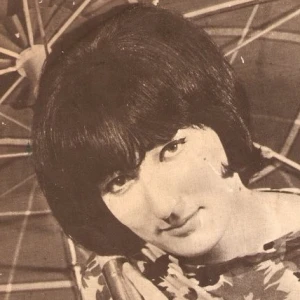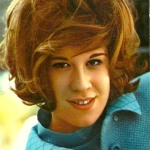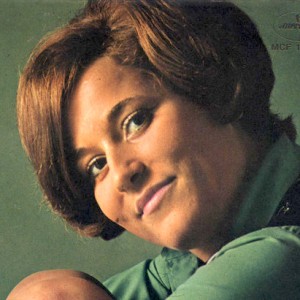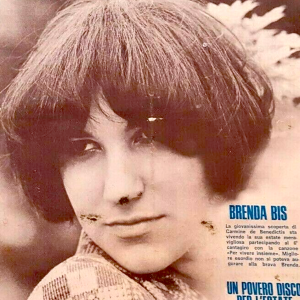
Category: Music

Janet Reno: Miami Bass and African-American Advocate

by Karen Lee

Janet Reno (July 21, 1938-Nov 7, 2016) was the first woman to serve as US Attorney General (AG) under the Clinton administration. Some key events that occurred under her tenure as AG were: 1) authorizing immigration officers to remove 5-year-old Cuban boy Elian Gonzalez, by gunpoint, from his Cuban-American family to return him to his biological father in Cuba; 2) the FBI siege and subsequent assault on David Koresh’s Branch Davidian compound, resulting in 76 deaths, 25 of which were children; and 3) and the capture and convictions of “Unabomber” Ted Kaczynski, and Oklahoma City terrorists Timothy McVeigh and Terry Nichols. 

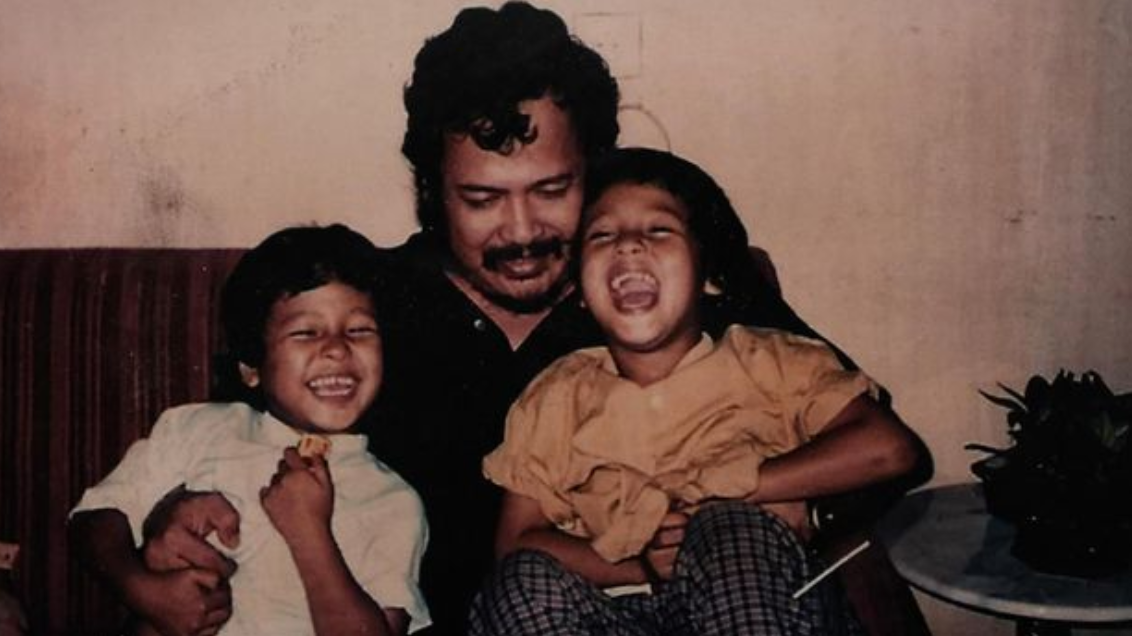
Jane and Janet Reno in their family home. Photo courtesy of Flashback Miami

Reno was born in Miami, Florida to Henry Reno, a police reporter in Dade county, and Jane Reno, a naturalist who wrestled small alligators. Reno grew up as the oldest of four siblings, living on twenty-one acres bordering the Everglades, where her mother constructed their family home, despite having no building experience and digging the foundation with her hands and a shovel. Her mother’s strength and independence had a huge impact on the persona of Janet, who roamed the property with peacocks, alligators and other flora and fauna in their Everglade home. After graduating high school in Miami, Reno attended Cornell University and graduated in 1960 with a degree in chemistry. She applied to Harvard Law School and was admitted, graduating in 1963, one of a small cadre of women within a class of 500 men (Hulse, 2016). 

Miami Herald Front page of newspaper 1980

Reno began serving in government as general counsel to the Judiciary Committee of the Florida House of Representatives in 1971. Her focus was to help overhaul the Florida court system which inspired her to campaign for her own state legislative seat. Unfortunately she lost to a Republican candidate due in part to the reelection win of President Richard Nixon. Richard Gerstein, then state attorney for Dade county, offered Reno employment on his staff, and within a few years she was Gerstein’s chief assistant. Gerstein resigned in 1978 after serving 21 years, and Gov. Rubin Askew made Reno interim state attorney. She was the first female to hold that office in Florida, maintaining stewardship of a large jurisdiction. Reno persevered through many murder, drug and corruption cases. She was accused of being “anti police” in 1980 after she prosecuted five Miami police officers in the fatal beating of a black insurance executive, Arthur McDuffie, after a traffic stop. She asserted that the officers tried to make his death look like an accident. Unfortunately the officers were acquitted by an all-white jury, which led to four days of rioting in Liberty City, Miami’s predominantly black neighborhood (Hulse, 2016).   

When Liberty Burns (2020) Documentary directed by Dudley Alexis

After the rioting started, Reno immediately began outreach efforts into Miami‘s black neighborhoods to help quell racial anger from yet another police lynching. The riot in Liberty City was the first racially motivated riot since the Civil Rights era and was the most destructive up to that point. The unrest claimed 18 lives and the damages incurred totalled eighty million dollars. The National Guard were called in to restore order.

Reno experienced conflicting responses from Miami’s African-American community after the police acquittal, with many accusing her of having a bias against the black community because of the exoneration. Many African-American leaders asked for her resignation, and Jesse Jackson went to Miami to advocate for her to step down from her position as state attorney. The repercussions from the acquittal inspired Reno to speak more directly to Miami’s black communities, and she dedicated more time to understanding the concerns of Miami’s black citizens. A noteworthy issue Reno was passionate about was the large number of “deadbeat dads.” This issue moved her to delegate special departments in her office to provide justice for single mothers and by the next election cycle in the mid 80s, Reno’s credibility in the Dade County black communities was redeemed and she ran without any opposition (Sarig, 2007).

Luther Campbell, aka Luke Skyywalker, could not recall if he took part in the Liberty City riot, or if he was a looter. The Miami Bass sound was popular in Miami, stemming from 1979 when Luke Skyywalker started the genre with his group, Ghetto Style DJs. In the 1980s, 2 Live Crew, produced by Luke Skyywalker, led Miami Bass into national mainstream culture (Sarig, 2007).  

The 2 Live Crew and Anquette. Photo courtesy of SPIN magazine

Reno’s popularity among black women was especially high. Luther Campbell supported Reno by running a voter drive during the election season. Campbell’s cousin Anquette Allen came onto the scene with a “beef” track to 2 Live Crew’s “Throw the D,” with “Throw the P.” She was the leader of an all-female Miami Bass trio named Anquette, along with rappers Keia Red and Ray Ray. Following their early singles in 1986, they released an LP called Ghetto Style the following year, along with their Liberty City anthem, “Shake it – Do the 61st.” Anquette then came out with “Janet Reno” on Luke Skyywalker records in 1988. 

In “Janet Reno” Anquette raps about Reno when she was Florida State Attorney as a heroine fighting for single mothers’ rights. She was an advocate taking from child support evading deadbeat dads and giving back to hard working single mothers in Miami. Anquette reminds ladies to, “Make sure that you got some protection; think twice the next time before you jump right in the bed; take a minute out to put a rubber on your head.” Anquette’s advocacy aimed to protect the “P” and their song “Janet Reno” empowered single mothers along with Reno’s child support policies. The chorus was to the tune of “Yankee Doodle Dandy,” sung “Janet Reno comes to town collecting all the money; you stayed one day then ran away and started actin’ funny; she caught you down on 15th Ave, you tried to hide your trail; she found your ass and locked you up, now who can’t post no bail.” 

The song debuted during the November 1988 election cycle. After Reno heard the song she was interviewed by the Miami Herald. She explains that she “did not understand all of it but it says we all have to take care of our own, if you bring a child into the world, you have to be prepared to face up to the responsibilities.” Reno clearly had no intention of dancing to “Janet Reno” (Tomb, 2016).

In the next election cycle a conservative Christian lawyer, Jack Thompson, who was involved with the religious right in Dade County from Coral Gables, posed to de-seat Reno from her ten year appointment. Thompson’s campaign attacked Reno, openly questioning Reno’s sexual orientation and trying to “out” her publicly. In Washington DC, congress members contested and surmised Reno was a Clinton flunky, and adversary. Heteronoramtive bigotry attempted to shame her and labeled her as a drag queen, a lesbian or a queer. Reno’s sister, Maggie stated she was a “large person with boots on.” (Paterniti, 2016) Reno was again re-elected by a large margin but neither Thompson nor his followers stopped their campaign against Reno after their defeat. 

The 2 Live Crew – As Nasty As They Wanna Be cassette cover 1989

In 1989, 2 Live Crew, on Luke Skyywalker Records, released one of the most sexually explicit recordings ever sold. As Nasty As They Wanna Be offered listeners the dirtiest, nastiest most depraved songs depicting sexual aggression and XXX-rated racist humor. One track above all became a cultural flashpoint: “Me So Horny,” with its Vietnamese vocal sample from Stanley Kubrick’s Full Metal Jacket, still makes Asian women cringe, wince, and experience homicidal ideation when strangers say that catch phrase to them in a “Vietnamese” accent. “Me So Horny,” one of the tamer songs on the record, went to No.1 on the Billboard Hot Rap Singles chart. 2 Live Crew became national news, even appearing on the popular nationally syndicated Arsenio Hall Show. They were targeted by Tipper Gore’s Parent Music Resource Center (PMRC), As Nasty As They Wanna Be responsible for corrupting American youth morals. If only they’d had warning stickers to inform their children’s purchasing decisions. In the end, Tipper Gore was the best marketer of As Nasty As They Wanna Be and likely broadened its appeal exponentially, especially among white Christian teenage boys. Christopher Won Wong, cofounder of the band, was the first prominent Asian-American rapper, he was Trinidadian and Cantonese. Other musicians in the group were DJ Mister Mix (David Hobbs), Amazing Vee (Yuri Vielot), Luther Campbell (Luke Skyywalker) and Brother Marquis (Mark Ross). 

2 Live Crew were used to controversy from their previous releases, 2 Live is What We Are (1986) and Move Somethin’ (1988). These albums were so nasty record store clerks of the big chains began to experience parental backlash. Jack Thompson, the guy who’d just lost to Reno, took it upon himself to join with the American Family Association to use his political connections to target and ban As Nasty As They Wanna Be. Thompson worked with Florida’s Governor Bob Martinez in a campaign to ban the album statewide. Martinez advised Thompson to obtain an obscenity level for the album in local jurisdictions, so Thompson enacted Sheriff Navarro in Broward County, neighboring Dade, which enabled a ruling from County Court Judge Mel Grossman, to terminate sales of As Nasty in Broward county. 2 Live Crew countered with a censorship suit filed against Navarro for violation of their first amendment rights. 2 Live Crew went to court in June, supported by intellectual giants like African-American scholar Henry Louis Gates, who taught at Yale and Cambridge. Gates testified 2 Live Crew’s songs were versed in the African American oral tradition of parody, perhaps being explicit but not obscene. Unfortunately U.S. District Judge Jose Gonzalez ruled As Nasty was obscene, and 2 Live Crew was the first band in U.S. history to have a popular recording banned (Sarig, 2007).

The 2 Live Crew. Photo courtesy of NPR

2 Live Crew, now nationally infamous, continued to play shows. Led by Luke Skyywalker, the rap group played shows at adults-only clubs which ended in their arrest. Road managers posted their bail immediately and the band was off to the next venue. Record stores continued to sell As Nasty under the table and undercover police officers would arrest and fine record store owners who sold the album in Broward County. As Nasty, sold more than 2 million copies worldwide but touring became increasingly more difficult for the band due to insurance costs because of liability from harassment from local law enforcement wherever they performed. 

Photo courtesy of Liberty City Optimist Club

Luther Campbell credits Reno in being the only state prosecutor who chose not to come after 2 Live Crew because of obscenity laws. At the height of their fame in 1990, Campbell explains, “In fact she defended our right to be as nasty as we wanted to be.” Campbell formed a youth program, The Liberty City Optimist Club, and Reno was the first person to donate to the program. Reno was loved in the Miami black communities because of her advocacy in standing up for African Americans when no other politician would. Campbell states, “As Miami-Dade County State Attorney and the first woman U.S. Attorney General, Reno handled her high profile jobs with professionalism,” Campbell wrote. “She never allowed politics to dictate her decisions. Reno was a true Florida icon.” (Respers, 2016).

References

Hulse, C. (2016). Janet Reno, first woman to serve as U.S Attorney General dies at 78

Paterniti, M. (2016). Janet Reno : What you learn when you ride shotgun with the former attorney general. 

Respers France, L. (2016). ‘Uncle Luke’ Campbell pens tribute to Janet Reno. https://www.cnn.com/2016/11/07/entertainment/luther-campbell-janet-reno/index.html

Sarig, R. (2007). Third Coast: Outkast, Timbaland, and How Hip Hop Became a Southern Thing

Tomb, G. (2016) Feel the beat? It’s the Janet Reno rap song  https://www.miamiherald.com/news/local/community/miami-dade/article113017273.html

Indonesian Pop Women: 1960s-70s

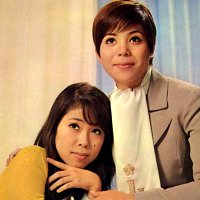
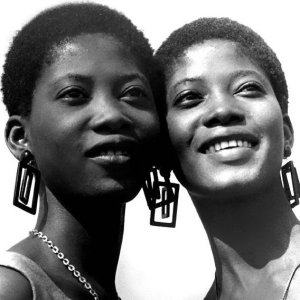
Silvy (L) and Nina (R) of Pattie Bersaudara, front cover of Nusa Ina, Indonesia 1970

Midcentury communists, always such wet blankets about pop music. In the 1960s, Indonesia’s communist party, the PKI, was the biggest in South Asia, surpassing even Vietnam’s. Along with religious conservatives, they opposed the importing of western pop, arguing that its spreading success in the market left little room for the promotion of indigenous styles of music. The exploding Malaysian “Pop Yeh-Yeh” scene to the north also caused friction and was criticized by the same as a social threat that needed to be countered. Panic ensued when local teenage bands started imitating Elvis and Bill Haley. Watching their children abducted by the trappings of crass white carnival singers was too much for the middle-class to bear. President Sukarno’s government passed laws outlawing rock music and its fashion in 1964, a move that didn’t go over well with the entertainment industries in Jakarta and Medan who wanted to market movies, music, and rock lifestyle to kids. From their view, nationalist Sukarno, and the communists with which he sympathized, were standing in the way of increased western corporate investment. Many know of the Koes Bersaudara incident (“bersaudara” is a gender-neutral word akin to “siblings”) where they were briefly jailed for singing “I Saw Her Standing There” at a private party. The crime was quaint compared to what followed.
On the night of Sept. 30, 1965, several right-wing Army generals were murdered by a clique of the PKI, in a terribly planned coup, or a coup designed to be terrible. Those responsible were quickly arrested. President Sukarno tried to restore calm but he was sidelined by an opportunistic general named Suharto. In retaliation for seven dead military personnel, Suharto would oversee the killing of nearly 500,000 unarmed innocent people by the Indonesian Army (with U.S. equipment and C.I.A. training), aided by vigilante mobs with machetes who openly modeled themselves on nazi death squads; of these, Nahdlatul Ulama and its Ansor Youth Movement were the worst, particularly AYM’s Banser wing (taking its name from “panzer”, a nazi tank designation.) To give a sense of scale, the numbers of slain were so high that sanitation and disease became a municipal concern due to the number of corpses clogging Indonesian waterways. In addition to these mass killings, thousands of women suffered imprisonment and sexual violence. Many were members of Gerwani, a forward-thinking feminist political organization that advocated for gender and class equality, land rights for the poor, and an end to patriarchal polygamy. Although it was more broadly politicide, the Army concocted a special gendered narrative–spread widely via radio stations and newspapers–about these “communist witch whores” castrating the captured generals and dumping them alive down a well, called the “crocodile pit”, or Lubang Baya. Autopsy reports that showed otherwise went intentionally unreported. This misogynistic propaganda poisoned the population against Gerwani and socially ostracized their extended kin. Many who survived the mass killing then spent decades in prison for their political beliefs.

By late 1966, as the killing wound down, the murderers’ teenagers wanted to dance. Suharto sought to solidify his power by unifying all of the islands under one fascio-colonialist ideology called “Pancasila”, which seems like a sort of corporate welfare state for western rubber and rare mineral industries. It also involved establishing one national language from all the archipelago’s dialects. Suharto invested heavily in broadcasting and recording infrastructure, and western media technologies spread like a savior and a plague across the land. Television was still cost prohibitive for most, but transistor radios were common. Cassettes arrived in Indonesia by the early 70s, and, like in India, they had a liberating impact on music consumption and distribution. Bootleg record plants existed in the 60s, but vinyl pressing was cumbersome and static compared to cassette re-production, which could be done on the fly, with minimal workers and portable equipment. As a result, the 70s-80s saw an explosion in bootleg cassette entrepreneurship across South Asia (for the 80s Indian market, the study Cassette Culture: Popular Music and Technology in North India cites a 4:1 ratio for bootleg to corporate/”legit”, and they admit that’s likely lowballing it).

Jeremy Wallach, in his 2002 Ethnomusicology article “Exploring Class, Nation, and Xenocentrism in Indonesian Cassette Retail Outlets”, examines class divides and the widespread perception among middle and upper-class consumers that western music was far superior to working-class Indonesian forms like dangdut. He paints a great contrast between the posh “Tower Music” in a Menteng mall (a Tower Records knock-off), with its posters of western rock icons and expensive compact discs, and the warung kaset (cassette stall) vendors, who tend to offer high-quality bootlegs that were in some ways superior: “One advantage the pirated compilations have over legitimate hits collections is that they can combine songs released by different recording companies, since they are not bound by copyright restrictions. Thus, pirated hits compilations are not only cheaper, but also more likely to contain all the current hit songs.”

Mesra Recording Studio. Photo: Komunitas Aleut

This list is biased towards my favorites. I’m skipping Dara Puspita since they are well covered elsewhere. See the books Dance of Life, Banal Beats/Muted Histories, and Sonic Modernities in the Malay World for scholarly info on this scene. Dance is older and a bit more dismissive of pop culture in that way that 80s Marxist boomer scholars could be. But it is still indispensable and was the sole English language work on this topic for decades, also covering Thailand and the Philippines. While these books don’t specifically discuss the singers below, they are great for getting a feel for the social politics of the region and for textual lyric meaning.

Many thanks to Algerian singer Sofiane Saidi, proprietor of Groovyrecord, for his awesome curation of Indo/Malay vocalists over the years. His great 2020 reissue of Yanti Bersaudara’s rare first album, released in conjunction with La Munai, is a must-have. – Jim Bunnelle


Pattie Bersaudara

The hook heavy catalog of Nina and Silvy Pattie is rivaled by few. They brought a beach party vibe that screamed Indo-teen modernity, with phrasing that was heavy on harmony and light on vibrato. They started soon after the genocide, with the Mutiara 7″ EP Rajuanku which has shades of Lilis Surjani. Several 10″ releases followed, along with appearances on Remaco’s pop samplers. Of the early 10″ EPs, Menanti Surat Balasan is the best, containing country twanger “Semoga Djadi Kenangan”, sad harpsichordfest “Kusesalkan Di Kau Pergi”, and Dutch hit “Ik Hield Van Jou”, where their nasally tones in the chorus remind me of Mina Mazzini. The 1969 album Soul is super solid, with Sjafei Glimboh’s arrangements, Pantja Nada’s manic fuzz, and the Patties’ staccato voices soaring and hammering over horn accents and tight backbeats. The “Hippy” album with wah-wah guitar-god Enteng Tanamal is also good, containing “Pesta Ku”, “Rulie Ku”, and “Aku Lupa”. A 1971 self-titled album with The Comets has a great “Mande Mande” (with Be-My-Baby drumming) and the Jakarta-Valley-PTA jammer “Senjum Bahagia”. Their 4 Nada output is not quite as good, recycling western melodies instead of originals. Two exceptions are “Aku Muak Padamu” (“I Am Sick of You”; melody of “Honky Tonk Women”) and a fuzzy raver called “Pesta Meriah”, both from 1970’s Nusa Ina. Also great are two Warna Warni English-language cuts from the year prior, “What Am I Suppose” and “By the Time I Get to Phoenix”, the latter shifting perspective to 3rd person. The latest album of theirs I’ve heard is from 1975, again with Pantja Nada, this time bringing the synth for “Bila Hatiku Rindu” and “Relakan”.

Inneke Kusumawati

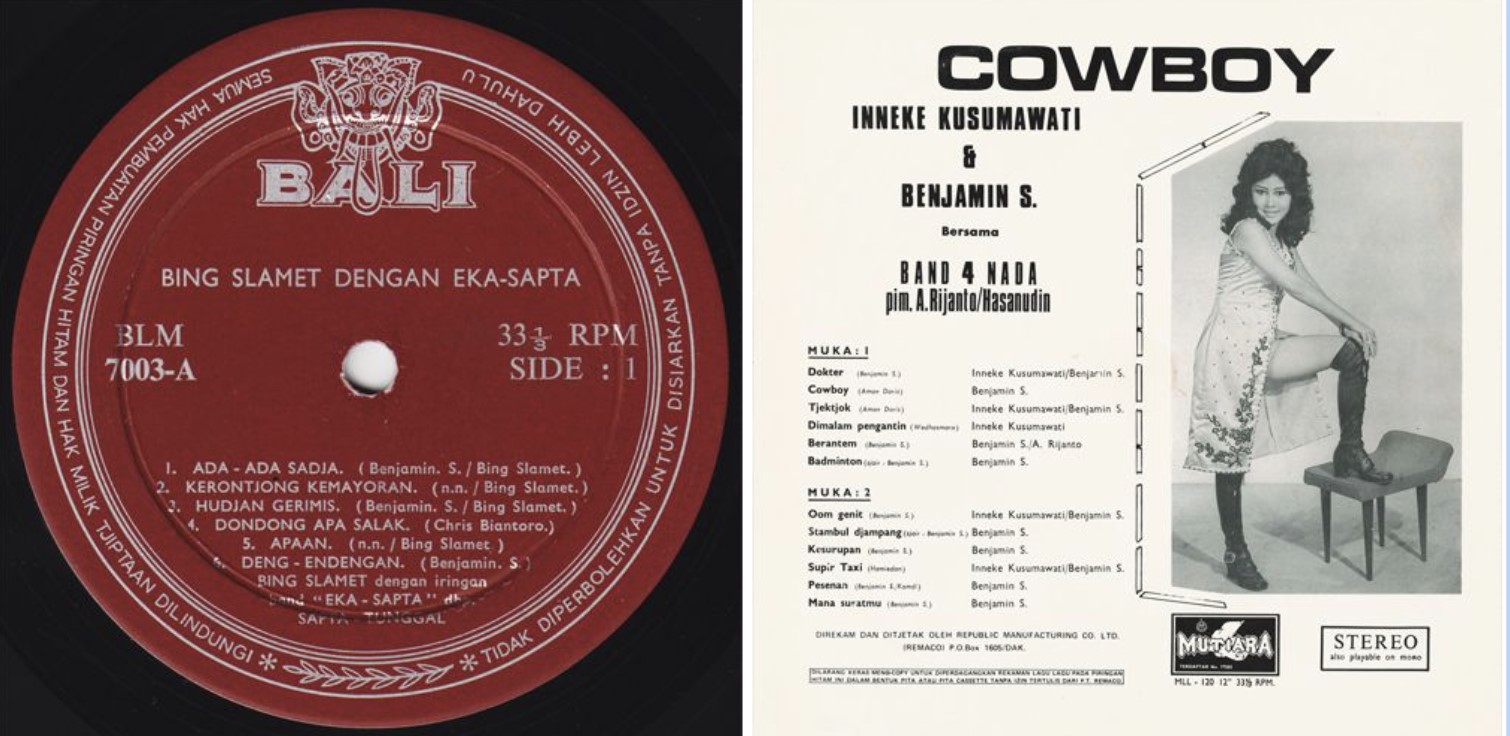
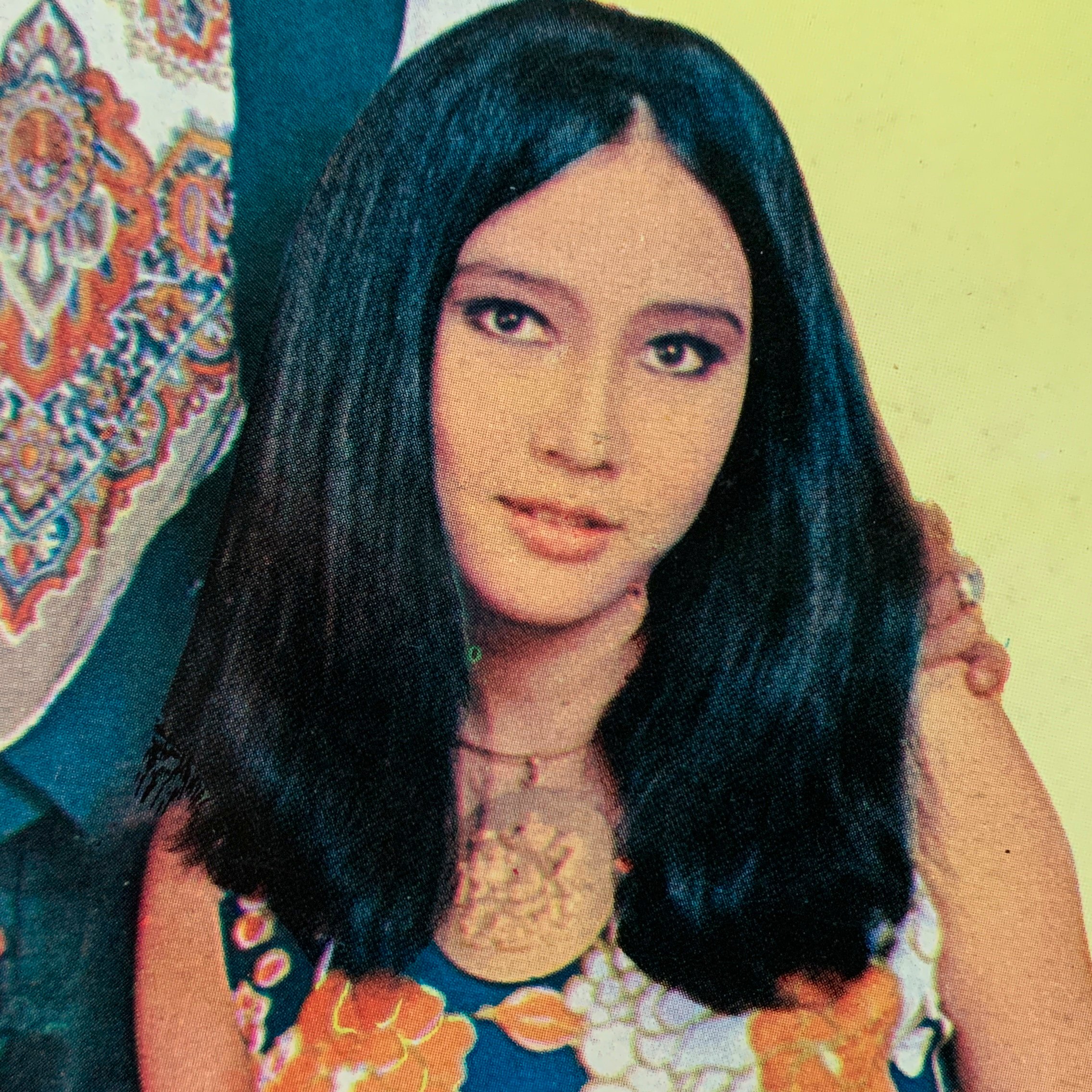
Inneke Kusumawati could be psychy and spacey, with a pulsating vibrato on her sustains similar to Malaysian singer Helen Velu. Her best work came out on the short-lived Malaysian label Canary, which had an artist roster heavy in girl singers. Like Lesley Gore, her greatest recordings were done while she was still in high school. The 1971 album Pengen Kenal, recorded with Jopie Item’s The Galaxies, is her masterpiece, a non-stop shimmering soundscape of voice, reverb, fuzz, flute, and organ; check out “Tak Berguna”, “Kau Dusta” (whose vocal intro quotes “Somewhere Over the Rainbow”), and the countrified space ballad “Menangis Lagi”. Side-closer “Rudjak Rudjak” lays down a psychedelic helicoptery drum outro that is somewhat ominous given Indonesia’s 1970s militancy. The album’s predecessor Naik Kuda, done with Eka Sapta supporting, also has many great moments, like “Meidi Addiku” and “Djaket Tua.” The latest record of hers I’ve seen is from 1973 where she is singing Koes songs with them backing, called Top Hits. It stands out due to some phenomenal vocal double-tracking, a technique Kusumawati seldom used (Pengen Kenal is all single-tracked voice, with the exception of one song). She also did one keroncong record with Benjamin S. and two LPs with Oma Irama, as well as a 10″ on Mutiara with 4 Nada. She seems to disappear from the music scene around the mid 70s, at least in Aktuil journal coverage. Like Vivi Sumanti and others on this list, I think she also worked in film or television.


Elly Kasim

Like many Indonesian women singers, Kasim dabbled in a variety of sounds, from Minang to jukebox dance songs. She started in the late 50s, as a singer in a relative’s touring band. The earliest record of hers I’ve seen is from 1966 on the Irama label, backed by the Arsianti Orchestra, who, on standard “Lazuardi”, merge a West-Coast Byrdsy jangle with South Asian sounds. Her best pop records were done with May Sumarna and The Steps: Suara Minang and Elly Kasim di Hong Kong, both from around ‘69. From Suara, “Ayam Den Lapeh” is great, a Minang standard recorded multiple times in her career. Most Indonesian solo women single-tracked their voices or added echo or reverb for depth. Vocal double-tracking, as employed by U.S./U.K. Girl Groups, was rare. But several songs on Elly Kasim di Hong Kong use it to great effect, particularly “Tam Oi”, with its synchronized twin vocals and horn blasts mimicking traffic sounds. Starting in the mid 70s, she shifted away from the pop music scene and focused her time on Minangkabau cultural programs with her partner.

Ernie Djohan

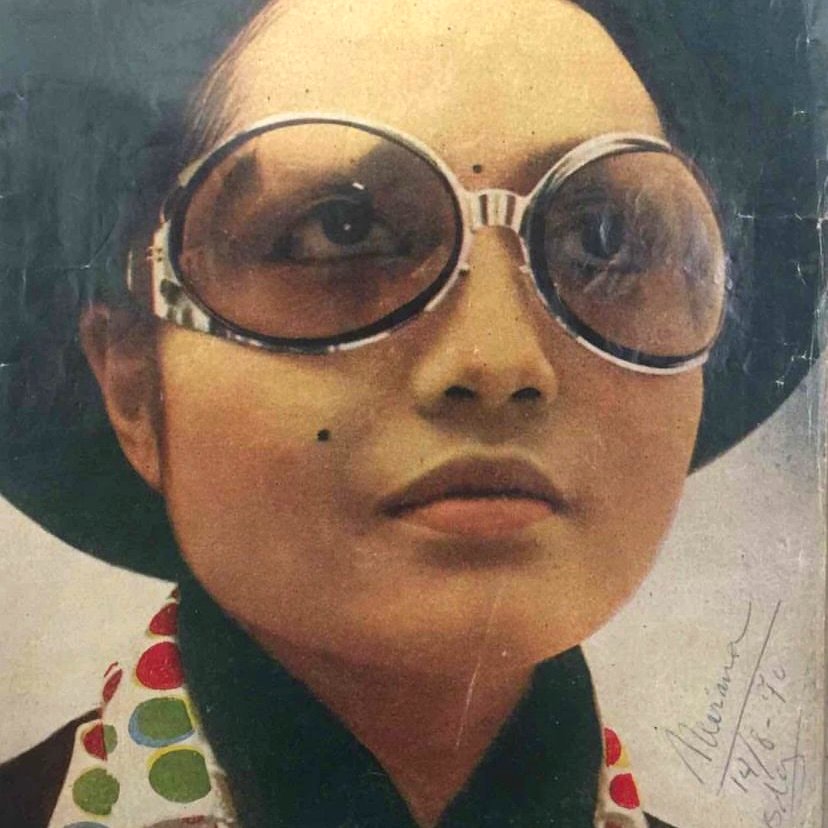
Ernie Djohan released many covers of western hits–“San Francisco”, “Let’s Pretend”, “To Sir With Love”–with phrasing and arrangements that didn’t deviate much from the western versions. Her best records were original melodies recorded with Indonesian lyrics, most on Remaco and Canary. The 10″ EP Semau Guè is a standout, backed by Electrika and issued sometime in the late 60s. Two other exceptional Canary releases were her duet album with Ban Oslein and Aku Sudah Dewasa, where she is supported by psychy outfit The Galaxies, who’d just backed Inneke Kusumawati on Canary’s Pengen Kenal. Its title track is a great example of how international pop songs would sometimes start with a known pop-song hook before switching to a different melody altogether, in this case swiping the intro of “Honky Tonk Women” (another example is the “Hold On, I’m Coming” guitar riff in the fade-out to Pattie Bersaudara’s “Siapa Ikut”). Dewasa also contains cool double-tracking and country reverb. A funky jam from the same record called “Commercial” is also excellent.


Wirdaningsih

Wirdaningsih was the sister of another famous Indonesian girl singer named Irni Yusnita, who recorded some great sides with The Commandos for Singapore-based Panda and other regional labels. There isn’t much info out there on Wirdaningsih; I went through Museum Indonesia Music’s digital archive of the journal Aktuil from 1968-78 and saw maybe one or two nondescript mentions, and zero pics. Her warm tone and lower register were uncommon in this scene, perhaps most closely aligned with peers Norma and Sandra Sanger, or the Malay singer Yetty Jalil. The greatest recording I’ve heard is a song called “Adaik Bachinto”, where she is backed by a fuzzed-out band called El Dorado. I have never seen nor heard any of her LPs.


Norma and Sandra Sanger

I think Norma and Sandra (pictured) were siblings but I’m not sure. They never recorded jointly that I can tell. Norma was older and likely more square by Indonesian teen pop standards. The best record I have of hers is a 7″ EP done with The Steps that has a great version of “We Could Learn Together” that sounds like a long lost drag classic. It also has a song that uses a popular Luigi Tenco melody, also recorded by Wilma Goich. The earliest records of Sandra seem to date from the late 60s. Her must-hear vocal performance is the soaring “Haus” (“Thirsty”), recorded with The Steps and included on an album shared with Marini and issued on PopSound, Semula Di Singapura, around 1970. In it, her deep bone-shaking sustains soar between fuzz blasts, swirling organ, and surf-psych drumming. She continued recording with Marini and The Steps on and off into the mid 70s, including several disco records.


Ervinna

Ervinna came from Surabaya and was maybe the most prolific artist on this list, making tons of records in several languages. She covered hit songs from both East and West, in styles that incorporated pop, keroncong, reggae, disco, and mandopop. Most of her releases came out on the Singapore-based label White Cloud, home of Judy Teng and other greats. Her first volume of Top Hits from 1976 with The Stylers is solid straight through, with seminal versions of “It Never Rains in Southern California”, “You’re So Vain”, “I’d Love You to Want Me”, “Witch Queen of New Orleans”, and “Mrs. Seelo”. Until the end of the decade, she was paired with a variety of different bands, including The Dusk, The Glass Onion, and Charlie & His Boys. Other wonderful covers on these latter albums include “Jolene”, “Daddy Cool”, “Band on the Run”, “Sundown”, “One of These Nights”, “Silly Love Songs”, and “You Don’t Have to Be a Star.”
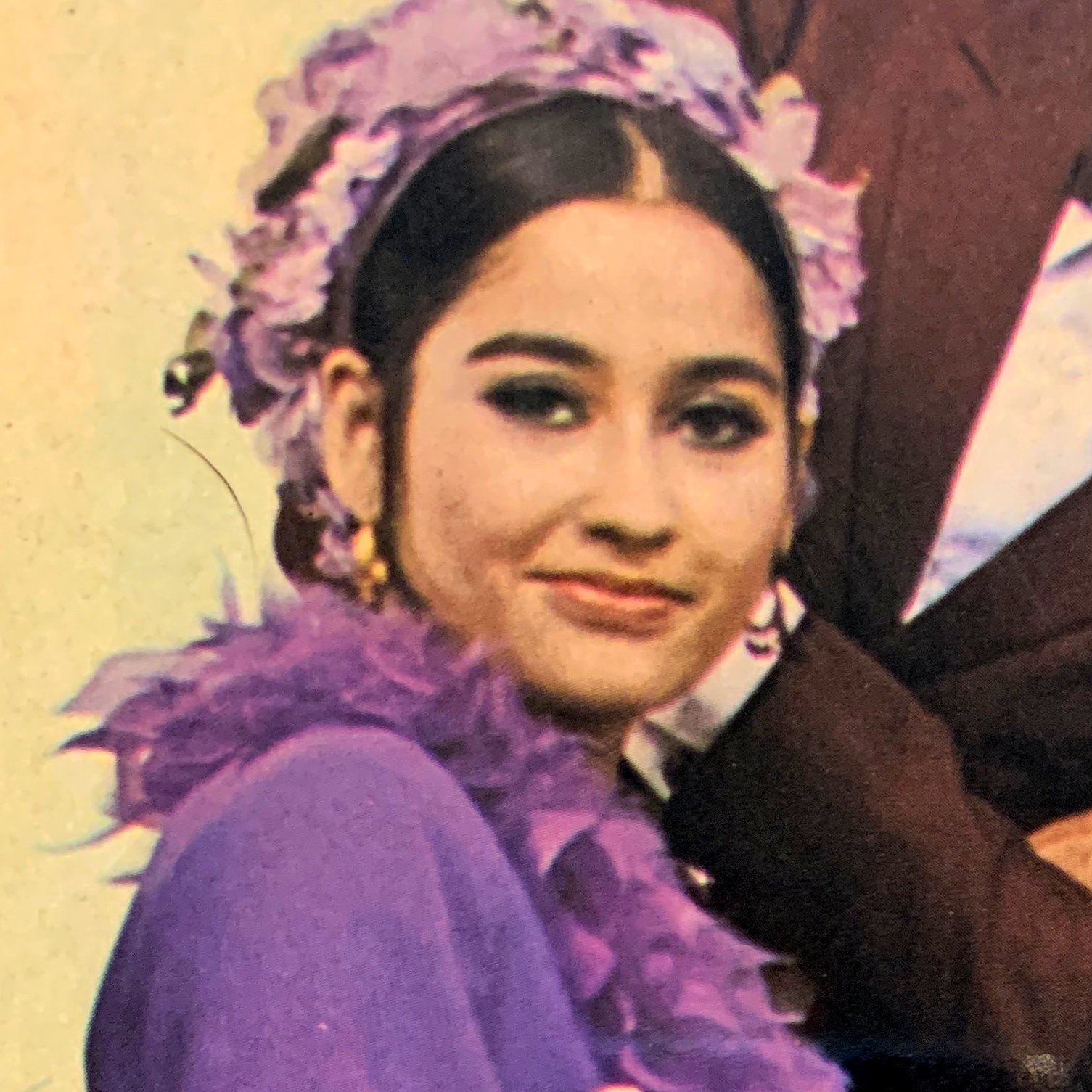

Marini

Marini started off with several 7″ EPs on the Irama label, one featuring a cover of Ricky Nelson’s “Gypsy Woman”. After that, she released several stellar collaborations with Sandra Sanger and The Steps. The first, Semula Di Singapura, features her standout jammer “Buka Pintu”. The second, called simply Sandra and Marini, has many great covers, including “A Simple Song”, “Yester-Me, Yester-You, Yesterday”, and “Uptight”. But it’s definitely Marini’s blazing version of “Rubberneckin'” that steals the show. In the mid/late 70s, she continued working with the Steps on several disco records, all called Pop Disco/Disko. The one on EMI Malaysia from 1978 has a song that uses the melody of “Lady Bump”, while another on Irama Tara borrows Abba’s “Dancing Queen” tune for the song “Ratu Disco”.


Dina Mariana

Mariana was a huge Indonesian superstar in the 1980s. Her first two Pop Remaja albums came out at the tail end of the 70s and both have some wonderful synth and double-tracked vocals, with mad swinging jams like “Mari Bergoyang”, the lead track on Pop Remaja Vol. 1, on Yukawi from 1977. Several of her slow songs on these albums are also remarkable, with the tempo and piano accents of one reminding me a little of “Moonlight Mile” by the Rolling Stones. She moved more into dance pop in the 1980s.


H. Nur Asiah Jamil

One traditional 20th century genre important to Indonesia’s large Muslim community was called Qasidah. It combined choir with Islamic poetry. In the 1960s, this genre evolved into Qasidah Modern, which replaced classic poetry with modern lyrics reflecting more contemporary concerns. H. Nur Asiah Jamil was one of the most important artists working in Qasidah Modern throughout the 1960s and 70s. She recorded hundreds of songs with her all-women choir. Our favorite is the haunting “Demi Masa”, which can be found on several of her 70s releases on the Musica and Life labels.
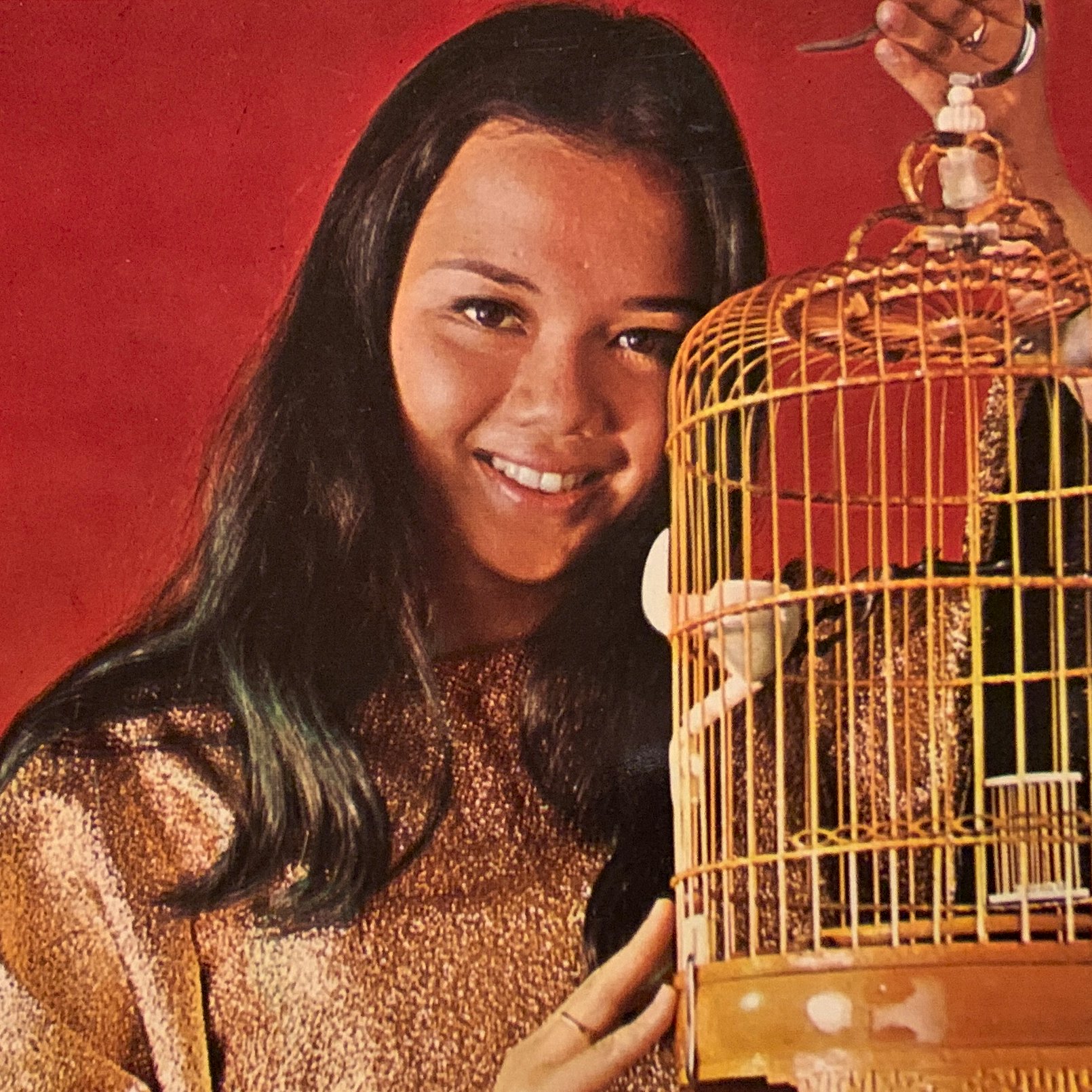

Ira Puspita

Ira Puspita released two albums in the early 70s, only one of which is pop. Both were recorded with Marjono & His Boys backing. Dendang Si Dendang came out on PopSound around 1971 and contains several highlights: “1000th Ku Nantikan”, later recorded by Mahani Mohd; a smoking cover of the Carla Thomas song “He’s Beating Your Time”; and her best track, a sauntering slice of vocal huskiness called “Kuingin Kaupun Datang”. The tone of her voice on the latter song reminds me a lot of an Italian singer named Brenda Bis.


Titiek Sandhora

Titiek Sandhora started off doing solo records for Mutiara around 1968 but moved over into duets with fellow singing star, and later spouse, Munchin. Of those I have heard, her solo albums are far better than the Munchin collaborations, with “Mimpi Diraju” (using Birkin-Gainsbourgh’s “Je t’aime… moi non plus” melody”) and “Djangan Pilih-Pilih” being the two standouts, along with a song that steals “Hey Jude” melody. There is also a great country track on her Sayonara album, a superb song called “Djangan Kau Ulangi”.


Yanti Bersaudara

There were several exceptional vocal trios in the Indonesian Pop scene–Sitompul Sisters, Trio Visca–but none of them sounded as trippy and layered as the Yantis. Their records are very hard to find at a reasonable price. Thankfully, Groovyrecord and LaMunai reissued their wonderful first album in 2020, which originally came out on Polydor in the early 1970s and is one of the finest releases of that decade. They were active until the mid 70s, sometimes appearing as guest vocalists with folk outfit Bimbo. One of my favorite tracks of theirs is on one of these albums from around 1975, a beautiful minor key ballad called “Balada Orang Minta Minta”, which features a prominent mellotron throughout.


Andrianie

Andrianie recorded often with D’Strangers backing, with most releases on Diamond and Remaco. The best that I’ve heard is an album called Belajar, which is also the name of the excellent title song and features impressive double-tracked vocals, cool tempo changes, and surprising turns. Beladjar Sepeda is also good, particularly her duet with Jessy Robot on Side 1, a track called “Kedjam”.


Lily Junaedhy & Lanny Sukowati

Two separate singers I am combining because their collaborative album, Dua Gadis Remadja with Discotique backing, is a twangy Indonesian truck stop classic, with arrangement and production that mimics super warm 1970s Nashville country. It was issued on the Bali label. Both of these artists had solo careers, with Lanny being one half of the teen duo Lanny Sisters, whose Bertamasja LP contained the hit “Pagi-Pagi”. Sukowati’s solo records are hard to find. Junaedhy recorded one solo album on Canary called Pergi Tanpa Kata and several other collaborations with singer/actor Vivi Sumanti, only one of which I have heard, Adikku Baladhar Menjanji on Canary Records.
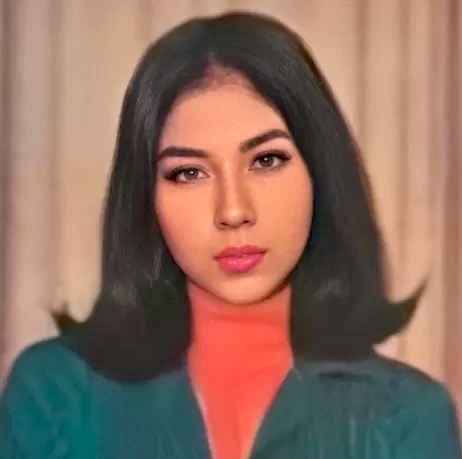

Titiek Puspa

Unlike others on this list, Titiek Puspa wrote many of her own songs and also had them covered by other women singers. She had a deep amazing register similar to Wirdaningsih, with a voice like a jazz singer. I only have a couple of her records so can’t comment much on her extensive catalog of recordings. An entire chapter is dedicated to her in the 2017 book Vamping the Stage, with superfan Bart Barendregt discussing her career at length. Of the few songs I have of hers, my favorite is on a 7″ EP from 1969, a swinging percussive samba she penned called “Ice Cream Ting-Ting”.


Grace Simon

Grace Simon became an Indonesian pop music sensation in 1976, after she won a popular song competition, which landed her on the front cover of Aktuil. I have only heard one of her albums, called Bing and released that same year. It contains one of her best songs, the fantastic synthy track “Hanya Semalam”. She continued recording into the 1980s, releasing a lot of LPs on the Life label, primarily ballads.


Sources for Intro and Recommended Reading:

Barendregt, Bart A., et al. Popular Music in Southeast Asia: Banal Beats, Muted Histories. Amsterdam University Press, 2017.

Barendregt, Bart A., and Philip Yampolsky. Sonic Modernities in the Malay World: a History of Popular Music, Social Distinction and Novel Lifestyles. Edited by Bart A. Barendregt, Brill, 2014.

Griswold, Deirdre. Indonesia: the Bloodbath That Was. World View Publishers, 1975.

Kolimon, Mery, et al. Forbidden Memories: Women’s Experiences of 1965 in Eastern Indonesia. Edited by Mery Kolimon et al., Translated by Jennifer Lindsay, Monash University Publishing, 2015.

Lockard, Craig A. Dance of Life: Popular Music and Politics in Southeast Asia. University of Hawaii Press, 1998.

Manuel, Peter. Cassette Culture: Popular Music and Technology in North India. University of Chicago Press, 1993.

Marching, Soe Tjen, et al. The End of Silence: Accounts of the 1965 Genocide in Indonesia. Amsterdam University Press, 2017.

Wallach, Jeremy. “Exploring Class, Nation, and Xenocentrism in Indonesian Cassette Retail Outlets.” Indonesia, no. 74, 2002, pp. 79–102. JSTOR, https://doi.org/10.2307/3351527. 

Wieringa, Saskia, and Nursyahbani Katjasungkana. Propaganda and the Genocide in Indonesia: Imagined Evil. Routledge, 2019.

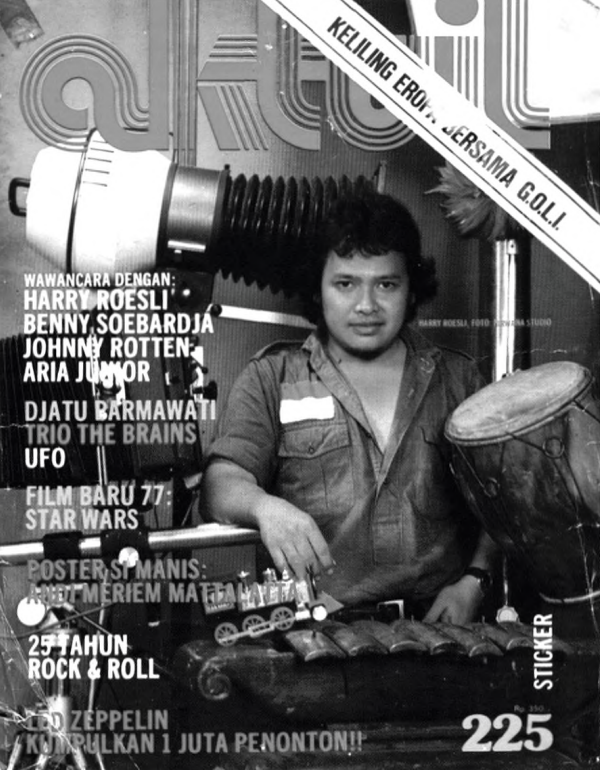
Join the Harry Roesli Gang

by Karen Lee

Djauhar Zaharsjah Fachruddin Roesli (Sept 10, 1951 – Dec 11, 2004), aka Harry Roesli was born in Bandung, West Java. Roesli was raised in a privileged family, being the fourth son to parents of a father who was an army major general and his mother being a doctor. In middle school, Roesli was taught the basis of gamelan music using metallophones played by mallets and a set of hand drums called kendhang used to register a beat. As a teenager he was exposed to music by The Beatles, The Rolling Stones, Frank Zappa and Gentle Giant, resourced from Hidayat record store on Jalan Sumatra, pirate radio, and from reading Aktuil magazine (Irfani, 2020). He later expanded his listening to encompass avant garde composers such as John Cage, Iannis Xenakis and Karlheinz Stockhasuen and mixed in poetry to avant garde compositions (wiki).

Roesli’s early compositional works were a blend of psychedelic rock music, blues, funk, jazz,  Sudanese gamelan and avant garde played with bands that mirrored Roesli’s personalities. He called himself a “janus-headed” man who upheld positive social Indonesian identity, plus Christian moral citizenry which included opening his home to street kids. He also was a radical who rejected authoritative regimes (Lamunai, 2019). Roesli lived in Indonesia during the fascist Suharto regime where free thinking ideals and protest music was mostly censored by the Suharto government’s New Order policies that were enforced to maintain political order, keep economic gains and constrict peoples’ participation in Indonesia’s political process. 

New Order policies infiltrated the arts by promoting beliefs for Indonesians to become participants in the future of the country which supported artists to use satire and mock politicians who were corrupt, had operations tied to drug abuse, crime, poverty, population illiteracy plus idolisation of famous figures, based on New Order standards. Roesli’s musical experimental and antithetical performances often divulged opposition to dominant state ideals to keep order and enforce hegemonic rules to include what Indonesians should like, how they think and behave. Roesli became infamous through musical parody, combining rock operas and lyrical satire, targeting Suharto and his predecessors. Roesli confronted Suharto’s nationalistic ideology, New Order patriot songs and verses, and called out Suharto’s lead government for maintaining institutionalized oppression, murder of communists, continued poverty for poor people, assault on free speech and persisting moral decay (Tyson, 2011).

Roesli started his first band, Batu Karang in high school. After graduating from high school, Roesli studied electrical engineering at the Bandung Institute of Technology. While attending university he started a band for fun in 1971 called Harry Roesli and His Gang with friends and band members, Hari Pochang, Indra Rivai, Albert Warnein, Janto Soedjono and Dadang Latiev. At this time, Roesli was also musically influenced by Remy Sylado who was popular in younger Indonesian culture. Sylyado was a prominent author, actor and musician who promoted his own California hippie philosophy as well as freedom from Suharto standards. Harry Roesli and His Gang released their first protest album inspired by Bob Dylan, Philosophy Gang in 1973. The album is an enticing blend of blues, funk and jazz bossanova with proggy variations as heard in, “Don’t Talk About Freedom” and “Peacock Dog,” featured on the album (Irfani, 2020). 

Harry and His Gang played at a music festival in Ragunan, Pasar Minggu, Jakarta August 1973. Their performance appealed to music critics and they received a review in the national Kompas (Compass) newspaper praising Roesli’s vocals for “Peacock Dog” and “Nyamuk Malaria.” In 1975 Harry and His Gang broke through to Indonesia stardom adapting an East Javanese legend, Ken Arok to an operatic “shock rock gamelan” performance, inspired by Andrew Lloyd Weber’s Jesus Christ Superstar (1970) and the work of Orexas. Orexas is an acronym for the Free Sex Organisation led by Remy Sylado. Harry and His Gang’s first show was held at the Badung’s Gedung Merdeka (Independence Building). They continued performing for several months at various large sold out venues in Bandung and Jakarta, playing to sometimes 800+ people. Ken Arok was an opera of protest satire where musical pitch and tone were composed to make listeners feel on edge, much like their response to the everyday environment which was saturated by government corruption. Dancers, wayang puppets, and clowns interacted with the audiences along with draped long curtains and stage lights beaming into audiences’ eyes to intensify a shared mania between musicians, performers and audiences, mirroring living in the New Order environment (Tyson, 2011).

The opening act of Ken Arok featured a demented clown explaining to audiences in technical terms how the show will unfold. After the clown followed a friendly bum rush to the stage, of dancers and musicians, followed by Roesli who was conducting. The stage was unlit and dark with eerie music intertwined with coins jingling and intersecting with picking of guitar strings and pleasant ringing of Chinese bells. Giant fabric curtains were suddenly released from the ceiling and dangled above audiences’ heads invading their personal space bubble. High pitch reverberations suddenly were amplified out of the venue’s 4,000 watt sound system which fused Sudanese instruments, wayang golek (wooden puppet theater), godang (drum and dance) with modern rock, blues and cabaret. Typical instruments including guitar, bass, keyboards and drums were played with Sudanese instruments synthesizing traditional sounds and expanding the musical ear stock of Indonesian audiences. Roesli described Ken Arok as contemporary wayang, electronic gondang or electric ludruk (Javanese folk theater). His objective was to overwhelm the audience into submission, to enforce a collective self consciousness and ensure no distractions or sense of security. Roesli’s ultimate goal was to receive no applause from audiences but his goal was never achieved (Tyson, 2011). 

Harry and His Gang released Ken Arok on cassette by P.T Eterna in 1977. It has since been reissued by Lamunai (2018) on LP limited to 333 pressings, remastered at Carvery Cuts, London. His album Titik Api (1976) has also been reissued by Lamunai/Groovyrecord (2019). The reissue of Titik Api is a double LP gatefold release with information about Roesli, rare pictures of the Harry and His Gang performances and pressed on quality thick vinyl. Titik Api is a dynamic recording that displays Roesli’s diverse compositions combining gamelan with guitars, organs, early synthesizers with Western tempered scales of funk, folk, rock, blues, prog, jazz, avant garde and psychedelic compositions. 

The opening song “Sekar Jepun” is a traditional gamelan piece or kreasi baru, that is played at all parties. The piece is played in Balinese kebyar style and composed in Jaraaga/North Bali but later identified as a South Bali composition (Lamunai, 2019). Heavy western drums, guitar, bass, choral chanting and early synthesizer drives traditional gamelan instrumentation that exhumes listeners with pentatonic scales and ostinato power, giving listeners’ ears delight from the full range of uniquely arranged sounds. Titik Api is a true masterpiece. 

Roesli lost interest in engineering between 1970-1975 and decided to study music composition at Institut Kesenian Jakarta. He was then awarded a scholarship to continue his studies in Holland. There is also another story: Roesli became involved with a student political group participating in events asking for the resignation of Suharto. All the students who were in the political group, including Roesli were imprisoned. A Dutch member of Amnesty International was the person who awarded Roesli with a scholarship to study percussion in Rotterdam until 1978, to escape the Suharto’s regimes’ punishment (Lumanai, 2019). 

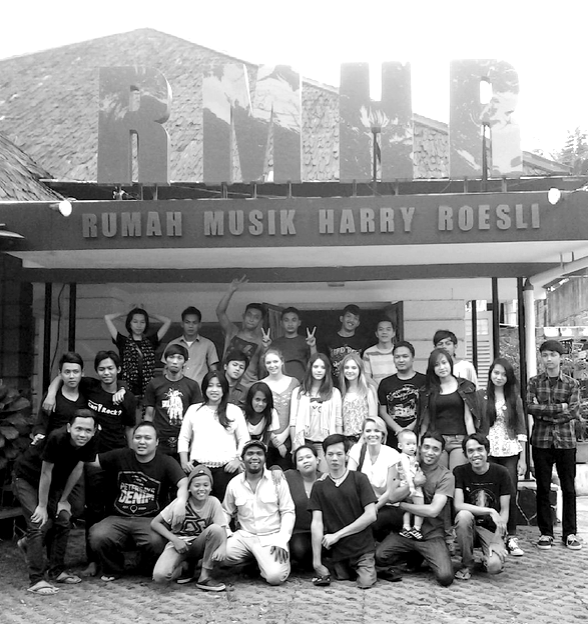
After completing his studies in Rotterdam in 1981, Roesli came back to Indonesia and organized a musical association named the Bandung Creative Arts Center (Depot Kreasi Seni Bandung) DKSB, now Rumah Musik Harry Roesli (RMHR). DKSB was run out of his studio on Jalan Supratman (Tyson, 2011). His association enticed talented Indonesian musicians to gather, socialize, collaborate and perform at DKSB. Roesli continued to perform electronic rock operas, teach, record, perform, compose music and vocalize political reform until the end of his life. Captivating large audiences with his sometimes a circus of 250 performers, musicians, dancers providing a provocative, overwhelming audible and visual show of the senses. 

His studio was also a refuge for young musicians and artists who were houseless, struggling with substance abuse and sex work violence, and DKSB was also known as a shelter. Roesli often provided meals and therapeutic assistance to underprivileged youth who were struggling with poverty and the intersectional stressors attached. Roesli passed away at the age of 53, his demise increased by multiple comorbidities. Before his passing he experienced a ‘lucid interval’ awaking and pleading with his family; jangan matikan lampu di meja kerja saya (don’t turn off the lamp on my work desk). His family continues to run RMHR and advocate to support houseless youth of Bandung (Tyson, 2011). 

Bibliography:

Tyson, Adam D. “Titik Api:Harry Roesli, Music, and Politics in Bandung, Indonesia.” Indonesia (Ithaca), vol. 91, no. 91, 2011, pp. 1–34, https://doi.org/10.5728/indonesia.91.0001.

Reissue liner notes. Titik Api. Groovyrecord/Lumunai, 2023.

Temi Kogbe Interview: Odion Livingstone

By Karen Lee

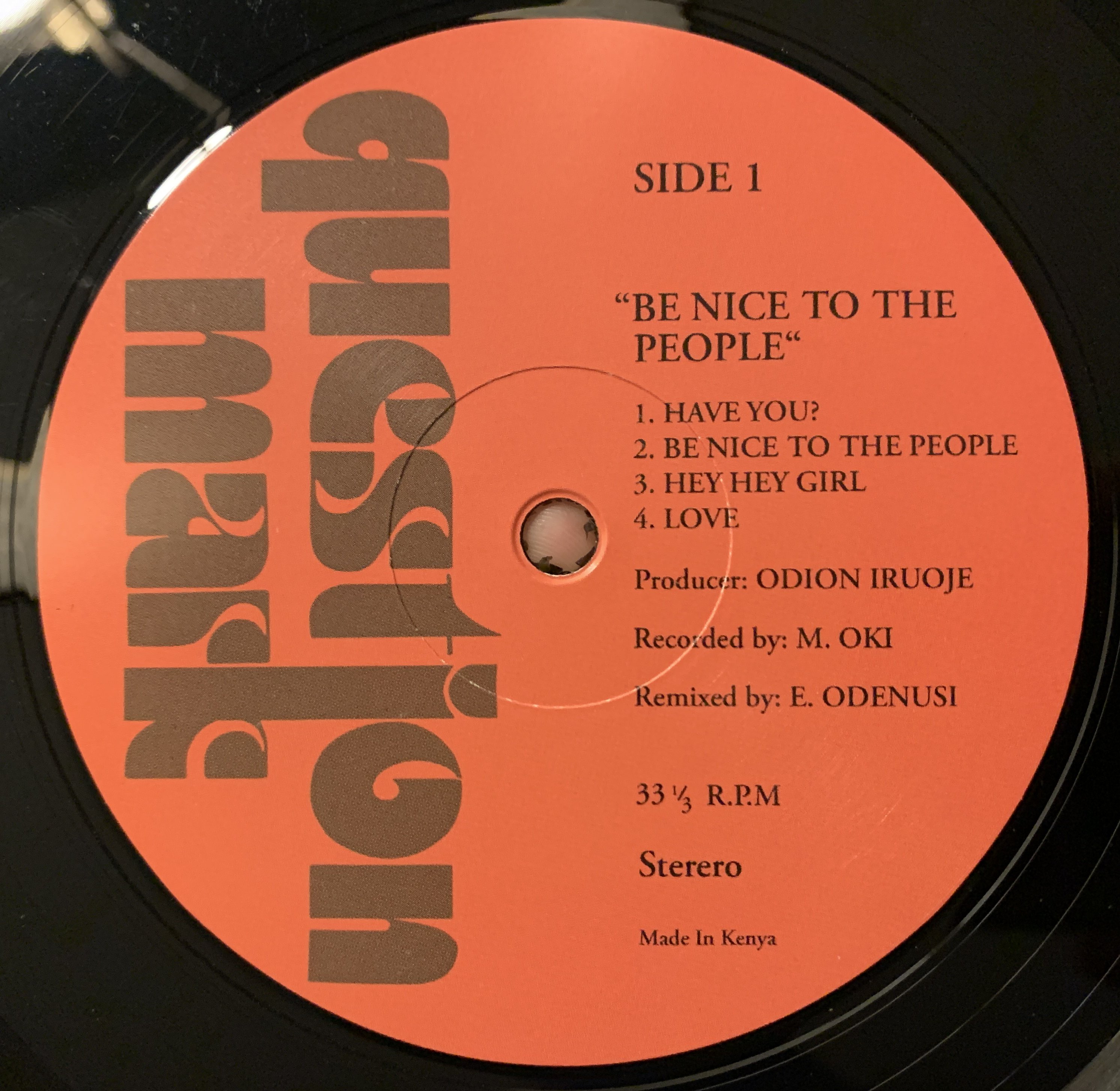
On Dec, 14 2019, Jim and I had the privilege of interviewing Temi Kogbe on Freeform Portland, Weekend Family Hour (WFMH). Kogbe is a cofounder of Odion Livingstone Records, curator, African music archivist and collector. He operates Odion Livingstone with former heavyweight EMI-Nigeria producer and musician, Odion Iruoje. Odion Livingstone Records was founded in 2017 and is the only vinyl reissue label operating in Nigeria today. Their recordings are deeply based in African groove heavy tempos, soulful boogie, disco, synth, funk and electro psychedelic tones.       

We are sincerely appreciative to Temi for the opportunity in conversing with us from the Ivory Coast. The following is a partial transcription of the interview. The full show is archived at https://www.mixcloud.com/karen-lee3/interview-with-temi-kogbe-co-founder-of-odion-livingstone-records/

K&J– Can you please tell me how you got started as a deejay and what stood out for you with Odion Iruoje productions and being a co-owner of the Odion Livingstone label?

TK– First of all, I’m not a deejay but that’s a secret between us. I’ve had opportunities to play out but I don’t really care about deejaying. I’m basically a collector and someone who is interested in the history of the music, culture plus the context the music was created. So that’s my primary interest. I got into the music late. I used to read a music blog called Voodoo Funk by Frank Gossner. He wrote about amazing trips through Africa, about African music which got me interested. I thought, how can I live here and not even try to find records? I spoke to Frank and he told me to not even try to find the music because there was nothing left, not to bother. But I stumbled on some people, found some stuff, and then I found some other stuff. Nigeria is a big country where there is a lot of music. There is music that is undiscovered, there is music that the Western guys are not looking for because it’s not their taste. But to me it’s still relevant. So I became a digger; I would go on the radio, find heirlooms, and stumble on gems. 

K&J-Whenever we try to find African records they are sometimes not in good shape because the African climate is not record friendly.

TK– The environment is not conducive to records. It’s a whole bunch of factors, and if you look at records, they are just a medium to listen to music. People live poor lives in general. If you look at life constraints and having records, there are no turntables to play records anymore. They probably thought this record doesn’t have any value anymore and CDs had taken over and people stopped buying records. You could find records in chicken coops, exposed to elements like water. However some records survived, and you can maybe meet the artists who have five copies at their mother’s house, or find a distributor who still has stock because a lot of records were flops at the time. First off, they didn’t make many of them, and secondly, few survived. So they are rare. That’s why the prices are high. You can compare African records to jazz collector records where the market is very high. I think they’re well priced, to be honest.

K&J-The Odion reissues are the best price. When Odion Livingstone started reissuing records we flipped out! We’re your biggest fans and we appreciate your label so much.

TK– Thank you. The label is 100% African but the records are made in Germany. We wanted them to sound like Soundway records which are high quality. We have to use mixers and producers that everybody uses. We found our own guy in Australia who’s a genius, I’ll give you his name before the show is up. We have to keep the original quality of the record we reissue.

K&J– We love the quality of Odion Livingstone records. Exampling Livy Ekemezie, the first reissue you put out. Keeping the original artwork from the first press, keeping the blue vinyl and creating the labels looking similar to original releases. 

TK– We put out Livy Ekemezie with Strut, Quinton Scott. So basically, I asked him if we could put it out on blue vinyl like the original record. He also wanted to keep it close to the original which was pressed at William Onyeabor’s record plant, whose entire catalogue had been reissued by Luaka Bop. So originally Livy went up there and got his record pressed, and William Onyeabor asked him if he wanted it on blue vinyl for the same cost. Livy told him yes. A fun fact: Livy gave me the studio photo he used on the cover so we didn’t have to scan the cover of the original album. We had the original studio photo that he took for the reissue of the record.

K&J– Did that record do well when it came out, was it a private press originally?

TK– Everything was pretty much private press, apart from EMI stuff. Mostly, artists found someone to sponsor them. The Livy Ekemezie was a private press, and it did not do well so he went back to school after that. His parents gave him permission to be a musician for a few months and get it out of his system. He made an amazing record and our mixer who did the pre-production was Frank at The Carvery, he did a fantastic job on that. Dan Elson is the genius Australian who’s produced our fourth release to the seventh. Frank produced the first three. 

Going back to Livy, he took the masters of Friday Night to EMI and wanted to meet with Odion. This was 1979-1980. And Odion wouldn’t see him because Odion was the biggest producer at the time. Someone else looked at the record and told him EMI was not interested, so Livy put it out himself. It was arranged by (Livy) and Julius Elong who is Cameroonian, a keyboard player. The album has a different sound when it was produced. It’s super dense, hyper funky, it’s focused funk.

K&J– We love that record and play it out all the time.

TK– It’s actually our biggest seller and shows another side of Nigeria that people don’t expect to hear from Africa. It sounds like New York.

K&J– How hard was it to track down Odion Irojue and involve him in the label, did you have records by him you wanted to release?

TK– To be honest, I just wanted to meet the guy. You can compare him to Phil Spector. Odion is an enigmatic genius. I wasn’t sure how to go about licensing, so I found I had to track down the artists first. Odion Irojue’s name opens doors, and he agreed to reissue records with me. I approached artists on a record-by-record basis. Some artists are hard to find, some artists disappeared, some had stage names, some are not on Facebook. So you find a guy, then they want too much money, or you can’t find them. So some records are not released because of licensing. 

K&J– It’s great you’re being ethically correct and trying to find artists to ask for consent. 

TK– It’s the minimum we have to do. Livy didn’t believe it until he got the money for the reissue. He couldn’t understand how we knew about his record. He was actually scared and thought we were kidnappers. He couldn’t believe we wanted licensing to reissue his record. He was shocked! It was a short chapter in his life, he did the record at 18 or 19 years old and that was it, he wasn’t a musician but really into music. It is very Nigerian to reinvent yourself and when he made the record he moved on. Livy did some studies in Marketing, he worked for an oil company; when he got the check from the record he said, “Look, I never expected this”. He was really happy. When Strut got the record, it sold out like hotcakes and they asked us if he can talk or do some appearances. I talked to him about it and he laughed, it was too far away from his experience for him. He is older and in his 60s, he has eyesight problems. It’s the strangest story for him he can imagine. I think the internet has a big part in this. 

K&J– It’s a great story for him, it’s nice how artists can be remembered and highlighted for their musical accomplishments when they were younger. There are musicians that are having a resurgence such as Ata Kak who’s touring with Awesome Tapes from Africa. Like Livy, he is able now to make a living off his music because of reissue labels.  

K&J– What’s the story with the two Grotto records?

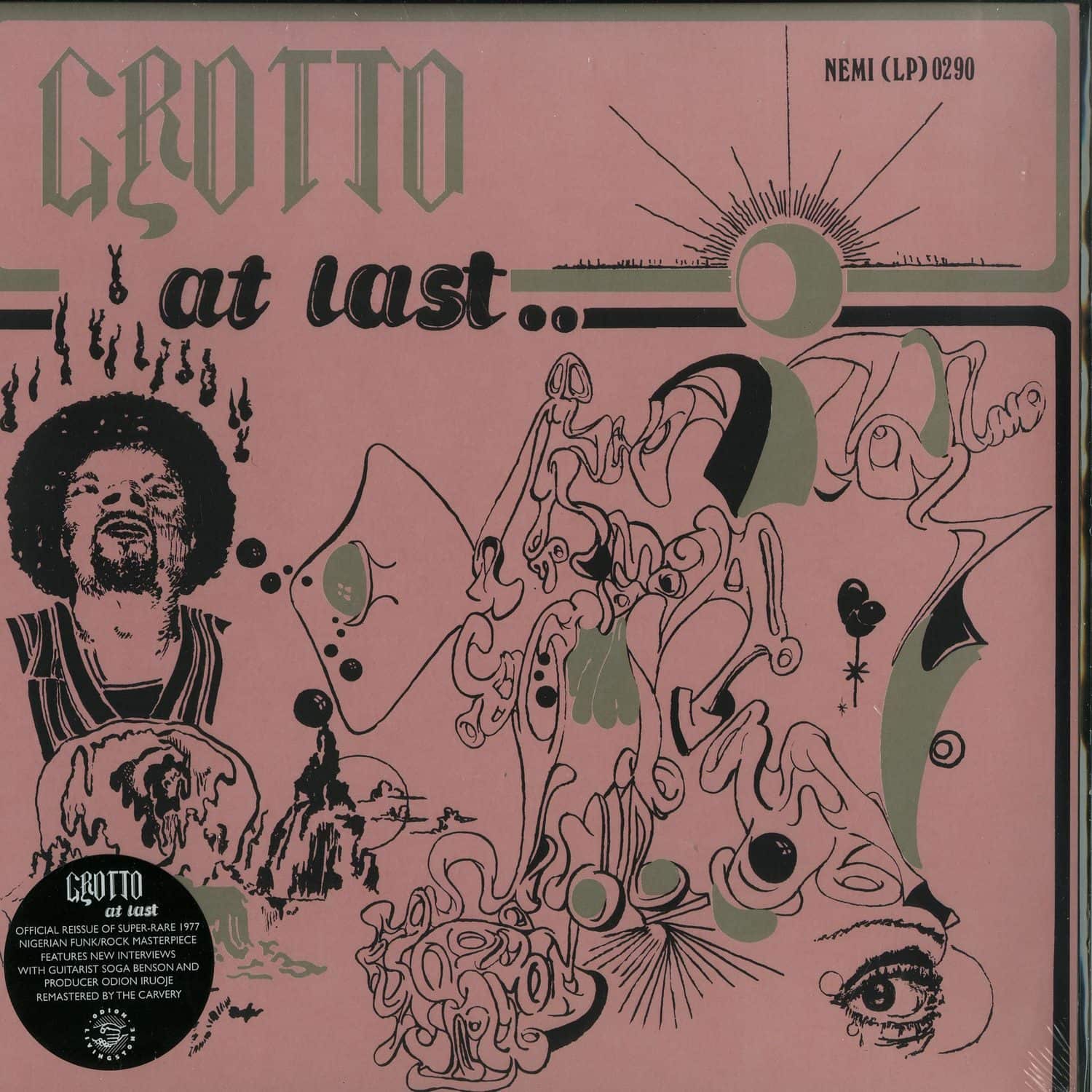
TK– The two Grotto records were EMI releases at the time. EMI had just come from the Ofege madness which was a very successful release. So Ofege came out as a monumental hit and they couldn’t press the records fast enough. So Odion tried more boy bands, he was experimenting with a lot of boy bands.

K&J– Was C.S Crew one of those? 

TK– No, they were older. Odion used to go to schools and listen to talent shows. So Grotto was one of those bands. I met the lead guitarist and worked a deal with him.

K&J– I love the female vocalists on the first record…

TK– I met them after the record and they told me about their experiences, Ukay and Bola. The first record is very sought after in the rock collector world. The second record is more straight ahead funky stuff. I am fortunate enough to be able to sell some Grotto originals, and I have sold the first Grotto record to rock guys who really like it. But the second Grotto record was a more successful release because it’s easy to dance to. The first Grotto record is like a unicorn, the rock guys really like it, similar to Hendrix, maybe Sly Stone. It sounded interesting. They went to Saint Gregs College and were members of a school band. Similar to the whole Ofege thing, Grotto did not do as well as Ofege but they were very interesting. 

K&J– Did those bands play live at hotels in the 70s?

TK– They played at hotels, universities, stadiums, there were a lot of live shows in the 70s and early 80s.

K&J– Manford Best from the Wings wrote in his book there were many Nigerian bands playing at different hotels. He explained how rival bands, such as Wings and Super Wings, played at different hotels on the same day. It’s a very interesting book about the Nigerian music scene in the 70s and 80s. Did you read it?

TK– Yeah, I read that book. One of my diggers introduced me to Manford Best. I spoke to him and told him “I love your stuff”. I told my guy to buy his book and send it to me. We need more of those books. I wish Jake Sollo had a book, or Nkono Teles. There are guys who had incredible careers in Nigeria who played amazing music and no one knows anything about them. This music was on the radio, this music was the soundtrack to Africa at the time. Some of the songs were really big hits, the songs on the radio people would sing along with. But nobody knows anything about them. 

K&J– Well you’re such a good writer, Temi, so maybe you can start another career documenting biographies and start Odion Livingstone books…

TK– Nah, Uchenna (Ikonne) does a good job.

K&J– Your liner notes for the N’Draman Blintch Cosmic Sounds reissue are great.

TK– One of my good friends was involved with that reissue, and I always wanted to put that record out but I couldn’t find N’Draman Blintch. He is one of the biggest enigmas in the Afro Music collecting world. Blintch is originally from the Ivory Coast. He recorded the music in Nigeria, and then Harry Mosco took it to England and laid some voices over the tracks, post production. I found out there was Blintch and then some session men from Cameroon. Session musicians from Cameroon were more versatile and easier to work with. So they did a three or four day recording at Decca studios, recorded the material, got paid, and left. Decca gave it to Harry Mosco to go to London to lay over voices, and they basically made two records out of the material. There’s Cosmic Sounds, which is also the name of the record, and Passport. Those two albums came out of one session. But the guys never listened to the final product, so they never really knew what Harry Mosco did. The bass player thought he produced Cosmic Sounds, but he said there was no girl in the studio, even though there was a girl on the record. It was very common to start a record in Nigeria and then take them to London to finish. Odion did it a lot, Jake Sollo and Harry Mosco also.

N’Draman Blintch is from the Ivory Coast where they speak French, so he speaks English with a French African accent. Harry Mosco made the girls sing with a French African accent, so the whole record has these weird French African intonations. It’s such a beautiful album. 

K&J– Are you planning to release Passport?

TK– Yeah, I have no idea about that. 

K&J– What inspired you to reissue Apples?

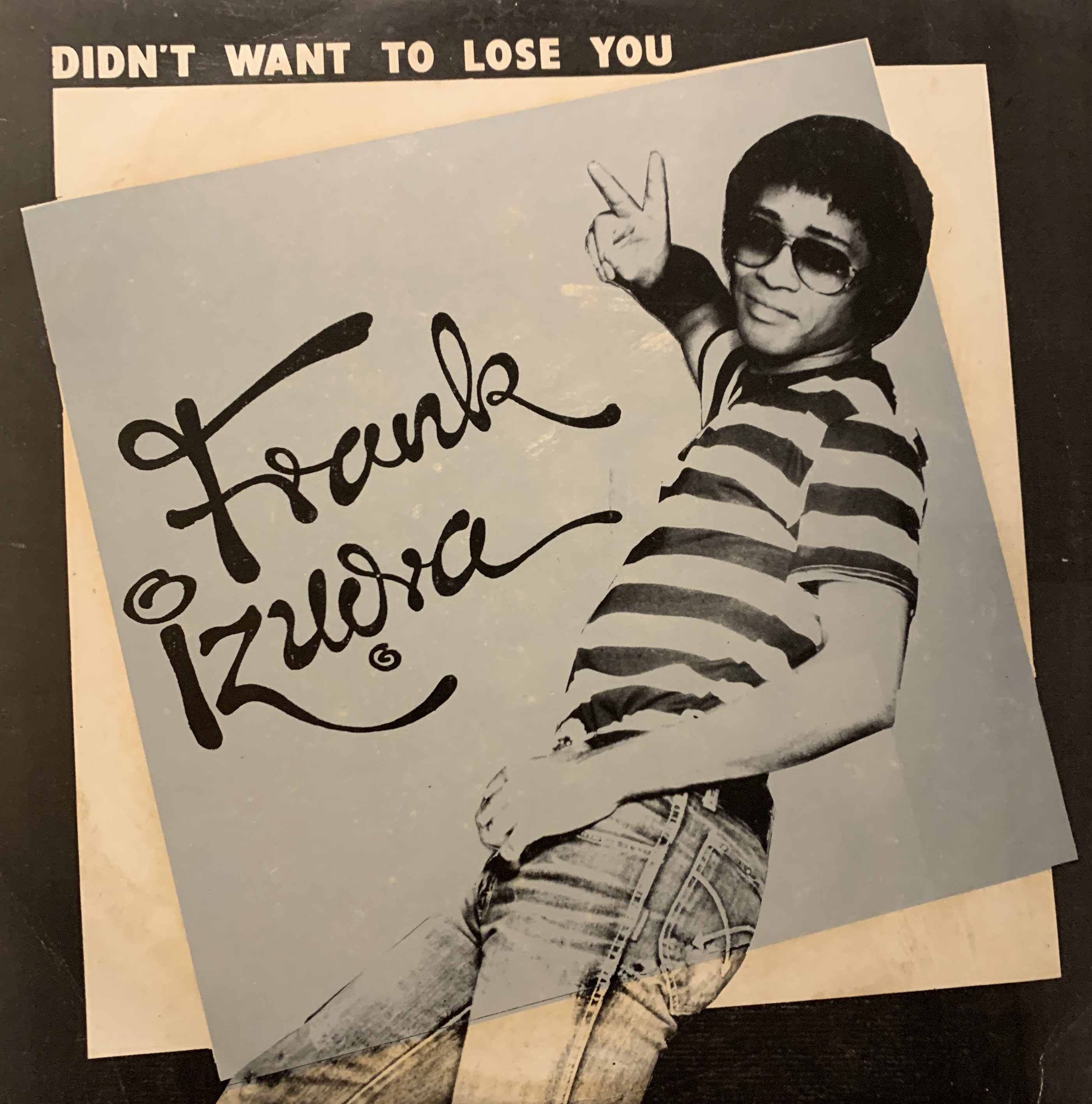
TK– Apples was another Odion Irojue boy band made up of two half Swiss guys from either the Ivory Coast or Dakar whose dad was a diplomat. They were in Nigeria at the time and they were part of the Ofege wave. Frank was the drummer and the leader of the band who was older. I like Apples because they remind me of Shuggie Otis. I thought they were special and had a laid back soul sound. I met Frank and licensed the music from him. Mind Twister is a special album because the tracks were recorded in Lagos, Nigeria and then Odion took the tapes to London and mixed them at Abbey Road because he had access to EMI studios. He worked with a session keyboard player called Monkman who added keyboards to it. It took the music to another level. You would never guess the record was recorded in two sessions because of the layering and sounds. If you listen to the lyrics you can hear English is not the singers first language but it adds to the charm of the record. It’s beautiful. Most albums I put out I have an emotional attachment to the record, I’m not in business to make profit. It’s music I like, I find different. Nigerian music is not just this or that, it is “this.” Music has certain qualities, feelings.

K&J– How has the response been locally for Odion Livingstone records?

TK– I think it’s mostly Western taste driven. I have to struggle sometimes to listen to music outside of that spectrum. There’s no music scene in Nigeria per se. I have played music out when people invite me to play. I have guys who like the music we release, but I have more guys asking me about music from Russia, Japan, guys from all over the world. There are guys in Japan who know much more about music than I do, they come with information. Some guys relate to Nigerian music on levels that I cannot even imagine, it’s crazy. Music is international and universal.

K&J– What about the Willy Nfor double reissue?

TK– He came to Nigeria at 19 with his bass guitar. He lost his mum at some point and wasn’t getting along with his dad. He became a session guy for EMI and formed a band called The Mighty Flames. They put out some great music. He was one of the biggest bass players around at the time. He played with the biggest musicians such as, Sonny Okosun, Bongos Ikwue, they were the big guys at the time. He was very busy in the 70s and 80s, and then ended up in Paris and died very young. He played with Manu Dibango and made a name for himself but he passed from cancer. I love the guy, his feeling with the bass. He is on another level of music. I was happy to find his wife, his last partner, so I licensed the music from her.

K&J– It’s a great compilation.

TK– I’m glad you like it. It’s a great album, I love the album. I love his music.

K&J– It’s a beautiful release with the liner notes and the photos especially.

TK– We tried to keep the quality, it’s not easy. If you’re going to do something, do it well.

K&J– Can you talk about the Duomo label and how the Duomo compilation came about?

TK– Duomo was a fascinating label in the 80s with an amazing catalogue.

K&J– Mike Umoh is one of my favorite artists on that compilation, he drummed on some records that I also love. I also found out Christy Ogbah was a police officer after reading the liner notes on the record.

TK– I think the Advice album she (Christy Ogbah) released should be reissued as well, it deserves a merit. She was an amazing singer. 

Duomo was run by this guy Humphrey, who was a producer. He ran Duomo like a proper label, and I think Mike Umoh was his music director. The first record they released was Bassie Black, which was a huge hit. They used EMI studios and paid the EMI engineer to put out tapes after mastering. I knew straight away after collecting Iruoje that there are more highly sought after records. I thought the common thread was the record label, so if I can do a deal with this guy who lives on the Ivory Coast, I could put out all this music. So I went after him through a Nigerian friend I knew from the record collecting world who said he knew this guy from the 80s and knows how to get in touch with him. And the rest is history. It came out after Soundway’s Doing It In Lagos comp but it didn’t hurt record sales because it was a different curation. It wasn’t just disco, it was more rural and pointed in another direction which was interesting. I didn’t want to do another boogie comp, I wanted something with a bit more variety.

K&J– The Johnny Obazz song “Xmas Eve” is a good song.

TK– Yes! “Xmas Eve”. That was the only song on the comp I did not have an original of so I had to get that from a friend. Once I heard it, I knew I had to put it on.

K&J– How many records do you think Odion Iruoje has produced in his lifetime?

TK– Probably close to 1000 records, I’d say. Not all of them were released, including singles. 

K&J– We follow you on instagram and we recently saw some pictures of Irojue, perhaps sitting in a sauna, were you sitting in the sauna with him? 

TK– Actually, Lagos is a sauna right now. And I popped over to his house, he was sitting on his terrace. He’s been there, done that. It’s impossible to quantify the amount of what he’s done. Nigeria is a fast life, there’s the now and no one remembers someone who’s done so much, so much good stuff, amazing mind boggling stuff. I don’t want it to waste away. I’ve at least got him to release records again. It goes both ways because it’s been a blessing for me too.

K&J– Thank you for joining us today and nerding out with us. Are there any sneak previews you would like to talk about?

TK– Thank you for having us. I’m glad I’m not the only nerd here. There are some ideas, working with stuff that’s already licensed for next year. I would say just hold tight and keep watching. 

Italian Women Singers in the Beat Era

Screen Shot 2019-09-27 at 10.33.20 AM

For those accustomed to the lushness of 60s French pop, Italian can take some getting used to. Its screeching string accents, midrange vibratos and operatic brain-piercing can feel more Wall of Shrill than Wall of Sound. Still, there is something in its assertiveness and power lacking in ye-ye or schlager, two other European pop movements where women played critical roles. In his capacity as a staff arranger at labels ARC, RCA Italiana, and Ricordi, Ennio Morricone worked on many of these sessions, with the voices of Edda Dell’Orso and her Cantori Moderni, along with Alessandroni’s guitar, audible throughout. For teens, 7″ singles were the order of the day. Italian LPs were expensive deluxe products aimed more at the adult market. This list is biased and attempts to highlight a few lesser known Italian women singers at the expense of some very famous ones, such as Patty Pravo, Rita Pavone, Caterina Caselli, Wilma Goich, Gigliola Cinquetti, Isabella Iannetti, Ornella Vanoni, and Nada. Some of their best songs can be found on Ace’s Ciao Bella! compilation for those interested, which also contains many artists below. I’ve linked out to YouTube clips when possible.  —  Jim Bunnelle


Mina053b0a0c1e914880501459b06ea1ceb1--s-vintage-beauty

Sarah Vaughn once said that if she did not have her voice, she would like to have that of “a young Italian girl named Mina.” Louis Armstrong referenced her in interviews as well, calling her the best white singer in the world. Today she remains obscure to US audiences but is well-known in Europe and Japan. As a teenager, she started her career on the Italdisc label, recording rhythmic rock hits like “Renato,” “Tintarella Di Luna,” and “Una Zebra Pois,” along with ballads like “Il Cielo In Una Stanza,” and jazzy mashups like “La Notte.” She moved to RiFi Records in 1964, where she shifted into the second stage of her career, working with Italy’s biggest orchestras and arrangers. She recorded and performed constantly during this period, making promotional films for her singles with pasta company Barilla. In these, her pale angularity, modernist fashion, and alien-like shaved eyebrow look would serve to inspire David Bowie among others (see her telephone-cable outfit in this Barilla film for “Se Telefonando”). Her vocal range was so incredible that songs like “Brava” were written specifically for her as tongue-in-cheek scale exercises, which she soared through effortlessly, sometimes while smoking. Mina was radical in other ways, mocking the Pope’s “banning” of her music after having a baby from an affair, which only increased her popularity and record sales among Rome’s godless youth. Her fame was such that, by the release of the 1965 single “L’Ultima Occasione,” her name was not even printed on the sleeve. After leaving RiFi, she started her own label, PDU, working with superstars like Lucio Battisti and songwriter Mogol. The Morricone-penned “Se Telefonando,” with its swirling choir, deep trombones, and siren-inspired 3-note structure, is a great starting point for delving into her massive catalogue. I’m linking to her famous RAI premiere of the song from a Studio Uno broadcast in 1966. Its pounding B-side “No” is equally accomplished, with nice multi-tracking of vocals and echoey, high-in-the-mix acoustic guitars. LISTEN


MilvaScreen Shot 2019-09-20 at 10.58.18 AM

The Italian media loved to play up the great diva rivalry between Mina and Milva but it’s unclear how much of that was journalistic fantasy. Milva was dubbed “La Rossa” both because of her red hair and her outspoken socialist beliefs (a big fan of Brecht, she has performed his work regularly throughout her career.) Her first fame came covering Edith Piaf’s “Milord.” She then went on to release tons of albums and singles between 1960-65, mainly on the Fonit Cetra label, in a variety of musical styles and in multiple languages. Among her great Italian songs from this early period are “Tango Italiano,” “Flamenco Rock,” “Una Storia Cosi,” “Nessuno Di Voi,” and Morricone’s “Quattro Vestiti.” One of her Spanish 7″ 45 EPs also includes a gloomy take on Agnes Varda’s “Cleo Dalle 5 Alle 7.” In 1967, she would move towards a heavier orchestral beat sound for a few singles, the best being “Uno Come Noi,” a smoking A-side on Ricordi that is a favorite (a lamer version of this song, by guy band Los Bravos, beat her at San Remo.) That same year saw “Dipingi Un Mondo Per Me” b/w “Io Non So Cos’È,” the latter using Nora Orlandi and her 4+4 ensemble to great effect. Among her LPs, the only one I have heard is her Ricordi collaboration with Morricone from 1972, called Dedicato A Milva Da Ennio Morricone, with “Metti Una Sera A Cena” being one of many standouts found there. LISTEN


Rita MonicoScreen Shot 2019-07-15 at 1.01.19 PM

Although far less popular than Mina or Milva at the time, Rita Monico was one of the best. She began performing as a child, cutting songs for labels Cricket and Red Record. In 1964, Fonola signed her for a couple of shared split 7″ sides, released to coincide with San Remo. Her greatest works came on the ARC label, starting that same year, with “Se Tu Non Mi Vuoi” b/w “Di Sera.” The A-side showed a new explosive range and experimentation with multi-tracked vocals while the B was a study in meticulous phrasing that used the melody of Elvis Presley’s “It Hurts.” She collaborated with Ennio Morricone, then staff arranger at ARC, three times in her career. The first was the stunner “Thrilling (La Regola Del Gioco)” in 1965, full of great nasally sustains and powerful vibratos that propel the track forward. Next came “Non È Mai Tardi” b/w “Gocce Di Mare, Gocce Di Sole.” In “Tardi,” reworking the Shangri-Las “Dressed in Black” melody, Morricone and Monico shift from near silence and whispers to piano-pounding, choir-fueled angst. “Gocce” is a classic summer beach song; Cantori Moderni with sea strings and horn blasts of sun. Although she had no Italian albums, RCA France issued a 7″ 45 in September 1966 that compiled her best ARC sides onto a four-song EP. She simultaneously branched out into the Spanish market with two singles, including the standout “Puede Ser” b/w “Lo Que Me Pasa A Mi”; her English language versions of these tracks remained in the vaults until a few years ago. In 1966 and 1968, she cut two more 45s for ARC, “Nata Per Amare Te” and “Tu Perdi Tempo.” She subsequently moved to European United Record for three final releases, only one of which I have heard, “La Pace Nel Cuore.” After a long hiatus, she appeared briefly in 1975 for one final 7″ outing with Morricone, the proto-disco wah-wah jammer “Sono Mia,” for television show Pianeta Donna. LISTEN


DomingaScreen Shot 2019-09-20 at 11.03.44 AM

Dominga started on New Star in the mid 60s with a 3-songer 7″ 45, “Ho Dimenticato Per Te.” The switch to Decca in 1969 brought a new look and sound, with a Brooksian helmet bob, black boots, and better material. Dominga’s best record that I’ve heard is 1970’s “Dimmi Cosa Aspetti Ancora” b/w “Cieli Azzurri Sul Tuo Viso,” the A-side sporting a melody by Daniela Casa whose chorus, a chiming synthesis of voice, piano, acoustic guitar, and percussion, embodies all the best earwormy elements of orchestral Italo-pop; an uptempo Migliacci composition with staccato strings is on the B-side. She then put out “Sto Con Te” b/w “Una Ragazza Sola,” again backed by Piero Pintucci’s orchestra. Her subsequent Decca singles are a mixed bag and a bit on the schlagery side. LISTEN


Mara Brunetta PaciniScreen Shot 2019-09-20 at 9.43.05 AM 2

Using just Brunetta for most of her career, she started as a teen singer for Ricordi in the early 60s, backed by I Cavalieri (whose lineup included a young Luigi Tenco.) She then moved to RiFi-subsidiary Primary and recorded in a similar style, using Mara Pacini. Her fame today rests on a recording session she did in 1966 with backing band The Balubas from which two RiFi singles were culled, the most popular being the A-side “Baluba Shake,” which, while a cool beat, does reek of racist Euro-colonialist “African exoticism” in much the same way as Janko Nilovic’s “Mao Mao,” Sladana’s “Das Licht Von Kairo,” or Louiselle’s “Cammelli E Scorpioni.” The double-sider and strongest single of her career “Solo Per Poco Tempo” b/w “Dove Vai?” followed, the B-side featuring a superb use of the “Summer Wine” melody for solo voice. In March 1968, she recorded her last RiFi 45, pairing with The Sounds for “Felicità Felicità” b/w “Il Nuovo Tema Dell’Amore.” Her final two 7″ releases, “Ti Costa Così Poco” and “Senza Te,” were ballads which she also co-wrote. The B-side of the latter, a track called “Grazie Amore,” is probably the best song from this later period. (FYI: as of this writing, all versions of “Solo Per Poco Tempo” on YouTube and Spotify are really her song “Perdono”.) LISTEN


Daniela CasaA-659169-1417224235-7806.jpeg

Today, Casa is primarily remembered for her groundbreaking experimental LPs, including America Giovane N. 2, Società Malata, and Arte Moderna, recorded for a variety of Italian labels in the mid 70s. Some of these were compiled by Finders Keepers on the compilation Sovrapposizione Di Immagini, in 2014. She had periodic stints as a pop singer, releasing the single “L’Amore Estivo” b/w “Beati Voi” in 1964, on Fonit. Later on came the wonderful A-side “Uomo” on the Mimo label, its entire chorus consisting of the word “No!” sang about thirty or forty times. She then shifted strictly into prog and electronic music. Her pop songwriting credits for others include two classic 7″ melodies by women artists on this list: the A-side “Dimmi Cosa Aspetti Ancora” by Dominga, and the B-side “Ci Vuole Coraggio” by Peggy March. She continued working into the 80s, releasing one LP, Breeze, under the name Elageron in 1983. Her premature death from cancer in 1986 was a huge blow to Italian music. LISTEN


Donatella Morettidonatella-moretti2OG

Published women songwriters in the 60s Italian pop market were rare. Casa was one, Loredana Ognibene was another. Her only release was a renowned collaboration with Donatella Moretti called Diario Di Una Sedicenne (Diary of a 16-Year Old Girl), on RCA Italiana in 1964. It was an early concept album, with actress Valeria Ciangottini, from La Dolce Vita, journaling on the front cover and elaborate gatefold photo montage, “cast” as the physical container for Donatella Moretti’s voice. Moretti penned a lengthy dedication of sorts inside, purposefully forging bonds with teen girls, whom she listed among the project’s active participants (“This record therefore is ours: yours, mine, Loredana’s, and Valeria’s.”) The exterior packaging highlights this, with Loredana Ognibene adorning the entire back cover, in a moody “writing music” pose lit low-key; there are no track listings or any words at all, apart from her name, which is unusual for LP paratext from this era. Arrangements are by Morricone, with one track flagged by R.A.I. for controversial content, called “Matrimonio D’Interesse” (“Marriage of Interest”). A second great song, the album’s opener, “Mille Gocce Piccoline,” apparently also generated some controversy. Throughout the 60s, Moretti continued to work with RCA and Morricone on singles. Her best two were B-sides: 1966’s “Era Più Di Un Anno” and 1965’s “Non M’Importa Più.” She later moved to Parade. She had a resurgence in the disco years as the powerhouse voice behind D.M. System Orchestra.  LISTEN


Nancy CuomoR-8695248-1542484035-7556.jpeg

Cuomo’s first two 7″s came out under her real name, Maria Cuomo, on a small label called KappaO. In 1966, she had her big break, signing to Parade to record a song for a Bruno Nicolai score, released as the A-side “Love Love Bang Bang.” In 1968, “Chiedi E Ti Darò” b/w “Ieri” was released on Cetra, the latter being one of her best tracks. The only other single of hers I have is an unreleased promo on a label called Hello Records from the early 70s, where she records in English under the name Mary Featt, “It Takes Too Long To Learn To Live Alone”. It was penned by African-American songwriter Leon Carr and was first recorded in the U.S. by Alice Clark. Cuomo’s take is less soulful and sounds more like a suicidal version of ABBA’s “If It Wasn’t For The Nights”. LISTEN


Maria Luigia Bis / Brenda Bis / Maria LuigiaScreen Shot 2019-09-23 at 11.53.56 AM

Another confusing artist who recorded using three names. Her first release was on CBS circa 1964, under Maria Luigia Bis, “Siamo Al Mare” b/w “A Chi Dai Il Bacio Della Buonanotte?” and was possibly part of a promotional swimsuit tie-in. Three years brought a dramatic Dusty-sized drop in vocal register for 1967, when Brenda Bis came out with a 7″ on the CBD label, “Per Vivere Insieme” b/w “Hold On! I’m Coming,” the A-side using the melody of “Happy Together.” Starting in 1968, Maria Luigia appears at the new indie Clan Celentano label, releasing two singles. Of these, “Ai Quattro Venti” b/w “Sento Una Canzone” is maybe the better of them. LISTEN


Rosy (Rosanna Negri)IMG_5123-1

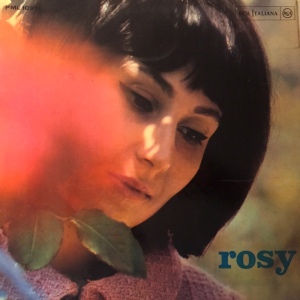
Rosy’s first recording session for RCA was in 1963 with Morricone arranging. The resulting self-titled LP, issued in 1964, contains many great tracks, several of which were released as singles, including “La Prima Festa Che Darò” and “Tutto L’amore Del Mondo.” “Ti Voglio Come Sei” uses the melody of “I Can’t Stay Mad At You” by Skeeter Davis. Also of note is a Jenny Luna cover, “Chiodo Scaccia Chiodo.” My favorite record of hers came out in 1965, the A-side “L’amore Gira,” which has this great descending choir signature throughout and is a precursor to where Cantori Moderni and Mina would go the following year with “Se Telefonando.” LISTEN


Ambra BorelliR-3275698-1557586884-1985.jpeg

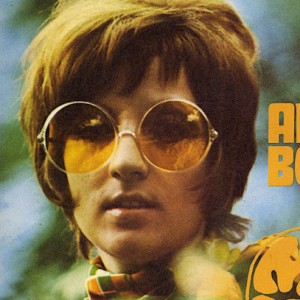
Borelli recorded under her own name and also La Ragazza 77. Her first two singles were on King Universal, from 1964-65; “In Questo Momento” features some splattery guitar accents, but otherwise, they are somewhat flat. Her best work came after she moved to Ricordi in 1967, starting with the A-sides “Il Beat Cos’è” and “Il Paradiso Della Vita,” credited to La Ragazza 77. The classic A-side groover “Mela Acerba” (Bad Apple), released on Ricordi in 1969, is probably her finest song. (Super rare promotional video, but with damaged audio, can be seen here.)  LISTEN


Lisa Gastonilisa-gastoni-photo_150288_27814

Mainly an actor, Gastoni released two singles that I know of, both of which were tied to films. The best is her gloomy minor-key A-side “Una Stanza Vuota” from the crime drama Svegliati E Uccidi, which features a signature piano riff from Morricone, over Allesandroni’s guitar, that would pop up elsewhere in his soundtracks. A few years later she appeared in another film called Maddalena, releasing “Chi Mai…” in support. LISTEN


MaritaScreen Shot 2019-09-24 at 11.42.36 AM 2

Marita released three 45s, all on a small subsidiary of Durium, called Sun. The best is from 1968, the double-sider “Pata Pata” b/w “I Primi Minuti.” The Miriam Makeba cover is explosive, with an Augusto Martelli orchestral arrangement that puts voice, choir, piano, and horns over a drum beat that never deviates. The latter incorporates the melody of “I Say A Little Prayer.” Her other two releases are from around the same year but not quite as catchy, “Non Ti Credo” and “Torna Questa Estate.” LISTEN


ChristyScreen Shot 2019-09-24 at 11.31.38 AM

Christy’s subacquatic masterpiece “Deep Down” is from the Danger: Diabolik soundtrack. I think her film version featured English dubbing for the lyrics used in its cues, which might have also used a slightly different backing track. Regardless, the Italian-language version is the stellar B-side of a 1968 Parade single that pairs Piccioni and Morricone film songs, both sung by Christy, the A-side being “Amore Amore Amore Amore.” Another single side of hers, “Run Man Run,” is also great and, like Rita Monico’s “Non È Mai Tardi,” runs the scales of silence and scream. It was recorded for La Resa Dei Conti in 1966 and released on the Eureka imprint of Parade the following year, as an A-side. Later on, in 1968-9, she would release another great Morricone melody, the ballad “Al Messico Che Vorrei.” She continued to release 45s on Parade, RCA, and Carosello throughout the late 1960s. LISTEN


Dora MusumeciImg_511S6D

Primarily a jazz pianist and vocalist, Dora Musumeci recorded one excellent pop single for RCA Italiana, with Morricone arranging: 1961’s “Qualcuno Ha Chiesto Di Me” b/w “Caffe E Camomilla.” Although its ballad A-side is more accomplished or “adult,” featuring Musumeci on voice and piano track, it is probably most known for its phenomenal B-side, with its string plucks, gravelly vocal shouts, and catchy harpsichord, which Musumeci might have played as well. It seems to have been a one-off for her, perhaps even a novelty side at the time. Nevertheless, its sound has endured, being included on several Morricone pop music compilations over the past twenty plus years. LISTEN


Louiselle5951495409_a211de8e89_b

Most of Louiselle’s best 7″ singles can be found on ARC, taken from sessions she did with Morricone throughout 1964-65. The best of these is probably “La Mia Vita” b/w “Sorridono,” although “Quello Che C’È Fra Me E Te” b/w “Anche Se Mi Fai Paura” is a close runner-up. A move to the Parade label saw her paired with different backing bands with mixed results. The most interesting of these is her collaboration on the psychy A-side “Cammelli E Scorpioni” from a 1966 single, which is credited to Louiselle E I Suoi Arcieri (or “Her Archers”). LISTEN


Anna IndenticiScreen Shot 2019-09-20 at 9.43.28 AM

Indentici has a few great singles and a lot that I have never heard. Among her early sides on Ariston is a rare cover version of Ginny Arnell’s classic “I Wish I Knew What Dress to Wear,” called “Lo Stile Adatto A Me.” 1967’s “Tanto Tanto Caro” b/w “Una Stretta Di Mano” and 1968’s “Non Calpestate I Fiori” (Don’t Trample the Flowers) b/w “Non Mi Cambierai” are her finest releases, with strong A/B sides on each. Her massive double-tracked vocals on “Tanto” might make it the loudest Italian vocal 45 ever.  LISTEN


Peggy MarchScreen Shot 2019-06-27 at 12.31.07 PM

Italian-American Margaret “Peggy March” Battavio recorded several sessions for RCA in Italy that deserve mention. Her first release was in 1963, “Te Ne Vai” b/w “Così.” The A-side is an Italian rewrite of her hit “Hello Heartache, Goodbye Love” and uses the same Sammy Lowe Orchestra backing track as that song, with new vocal overdubs. The B-side was the first song released from new sessions she’d just recorded in Rome with Morricone, material that would comprise her next two singles: “Passo Su Passo” b/w “Carillon” and “Gli Occhi Tuoi Sono Blu” b/w “Eh, Bravo.” In 1964, the Italian album version of Little Peggy March was released, with roughly half being new tracks with Morricone and half being Italian-language overdubs onto the Lowe masters. Apart from the singles, her best two songs from the record are called “Ora Che Sai” and “Cielo.” Later on in the decade, she had two more 7″s on RCA Italiana: 1966’s “Che Cosa Fa Una Ragazza” and 1969’s “Che Figura Ci Farei,” whose B-side contains a great Daniela Casa melody. LISTEN

Japanese Kayōkyoku Women Vocalists 1960s-70s

dd8bb6f2f8406dac4c175757966da1af

In Tokyo Boogie-Woogie: Japan’s Pop Era and Its Discontents, Hiromu Nagahara talks about western influences in Japanese pop music emerging 100 years ago. Jazz journeyed back over the Pacific on steamers by citizens traveling abroad, first in sheet music form, and then as 78s. It was a woman singer named Sumako Matsui who got it all going, in 1914, with a shellac side called “Katyûsya No Uta” which sold an unheard-of 20,000 copies. It was the beginning of a genre called ryûkôka (‘fashionable songs’). The trend continued into the 1920s as the recording industry matured and began cross-marketing music and cinema, with Chiyako Sato’s title track from the film “Tokyo March” so successful, it caused one critic to worry that “the taste of the citizens of Tokyo will become depraved beyond salvation.” As in the West, patriarchal fears of feminine empowerment were palpable as modernity and capitalism upended traditional gender roles. Japan’s militarist expansion from 1936-45 resulted in the banning of western music, but America’s postwar occupation brought Kasagi Sizuko’s runaway hit “Tôkyô Boogie-Woogie” whose lyrics incorporated words like ukiuki (‘buoyant’) and zukizuki (‘throbbing’) to rhyme with boogie-woogie.

Television and radio were key to the dissemination of imported rockabilly and surf music. The Ventures visit in 1962 is often referenced as a key moment in Japan on par with The Beatles landing at JFK in America. Japanese kids went wild for this new sound, dubbed ereki bûmu (‘elec boom’). Post-British Invasion, it became gurûpu saunzu (‘group sounds’), with vocal harmony and beats taking center stage. Although women were largely absent from these bands, they continued to be driving forces in enka and kayōkyoku, the two genres that had diverged from ryûkôka. Enka was ballad-centric, traditionalist, and has been compared to the Blues due to its melancholic tone. Kayōkyoku (‘pop songs’) borrowed heavily from western melody. Just as in the West, masculine attitudes surrounding rock music continued to dominate the discourse and define the parameters of what was worthy or authentic. As much as it was used to describe, Kayōkyoku was used to deride those who sang commercialized material written by others.

The Girl Group explosion that peaked in 1963 in the U.S. never really caught on in Japan. There were a few duet teams–The Peanuts, Jun & Nene–but most women artists were solo acts until the early J-pop era. Oddly, very few covered any of the U.S. Girl Group hits so common in other Asian states, like Indonesia, Malaysia, and Singapore; Japanese teen women singers were more likely to cover white adult-pop-market acts like Connie Francis than black teenagers like The Chiffons. Almost all of the top artists worked with original material, written for them by songwriting teams, much like a Brill-Building arrangement. Western covers were often album filler, with few appearing as 7″ releases. One exception to this is Italian singer Mina, who was hugely influential among artists like The Peanuts, Kayoko Moriyama, Maria Anzai, and Mieko Hirota, all of whom recorded and released Japanese-language versions of her songs as singles.

Biographical information in English is limited. Japanese name order has been flipped to reflect Western conventions. Anyone wanting to know more on the above period should check out Hiromu Nagahara’s book.   —   Jim Bunnelle

(Soundcloud yanked most of my uploads mentioned below, sorry. Most are on YT ripped by others.)


1269209

Hibari Misora

Without question, Misora is the most famous woman singer in the history of postwar Japanese pop music. Due to the fact that she was a child star, had yakuza mob connections, and embraced kitschy stage attire, writer Hiromu Nagahara called her the Japanese equivalent of Judy Garland, Frank Sinatra, and Elvis Presley. Her first recordings mimicked rival Shizuko Kasagi’s colonialist boogie music, but the 1950 release of “Echigo Shishi No Uta” introduced a new synthesis of East and West that silenced her early critics and put her on the path to superstardom. She recorded thousands of songs in a variety of genres, mainly in the enka style. Her biggest kayōkyoku hit came out on Columbia in 1967, an A-side called “Makkana Taiyō” (Deep Red Sun), where she is backed by Jacky Yoshikawa & His Blue Comets, one of the best Group Sounds bands.


yuz

Jun Mayuzumi

That’s Mayuzumi in tears as our profile pic, getting the news over the telephone that she had just won a prestigious music award in 1968. She was massively famous and had a great vocal range and dynamic stage presence, spending the majority of her career recording for Capitol Japan. Her debut 7″ release “Hallelujah” from 1967 started a long string of great songs: “Otome No Inori”; “Angel Love” b/w “Black Room”; “Something’s Happening And It’s Saturday Night”; “First Heartache”; and “Among The Clouds” b/w “Dreaming,” a B-side that starts ingeniously with a fake skip. Few kayōkyoku house bands could compare to Mayuzumi’s lineup, as exemplified by this rare live TV performance of “Angel Love”. In 1971 she switched to the Philips label, her best single release being the sitar-tinged “Totemo Fukouna Asa Ga Kita”. She gradually shifted her sound towards ballads as the decade wore on. Since most are already familiar with the brilliant “Black Room,” listen to what she does with this traditional Japanese song “Yagi Bushi” from her 1969 album Recital, recorded live at Tokyo’s Sankei Hall, with the great Akira Ishikawa on drums. LISTEN


R-12259971-1531620371-9845.jpeg

Akiko Wada

Another Japanese superstar of mixed Korean ancestry (like Hibari Misora), Wada’s deep bluesy sound is immediately distinguishable from all of her kayōkyoku peers. In terms of her chesty voice, and also being embraced early on by the LGBTQ drag community, she could be called Japan’s equivalent of Britain’s Dusty Springfield or Yugoslavia’s Beti Đorđević. Like them, Wada excelled at big power ballad numbers and could easily match the volume of her supporting orchestras, while always managing to swing her phrasing in a soulful way. Like many here, she also starred in films, famously playing a biker gang girl, along with Meiko Kaji, in Stray Cat Rock: Delinquent Girl Boss, from 1970, in which she sings a portion of her famed flip-side to “In The Pouring Rain,” a B-side jammer called “Boy & Girl.” Also wonderful are the subsonic trombones and fuzz accents featured on the 1971 single on RCA, “Sotsugyou Sasete Yo.”


peanuts

Yumi & Emi Ito (The Peanuts)

Twin sisters Yumi and Emi Ito are best known in the U.S. for their groundbreaking role in the 1961 Toho film Mothra, where they play humanoid anti-nuclear activist fairies who can communicate telepathically with a giant radioactive moth through song. Their repertoire is more varied and international than most singers on this list. Attempts at U.S. marketing fell flat, but they were popular in Germany and Austria’s schlager scene. As for their LPs, 1970’s Feelin’ Good: New Dimension of the Peanuts is their pop-psych songbook album, with superior covers of “Spinning Wheel,” “And I Love Her,” and “Moanin’.” They appeared constantly on Japanese television variety shows until their early retirement from the industry in 1975. Although many solo singers double-tracked their voices, the Itos achieved that by default, occasionally double-tracking their backing vocals to create a cavernous choir sound. “The Woman of Tokyo” is probably their best known single, a shimmering spacey example of late 60s orchestral pop. But I am uploading a fave B-side called “Happy’s Coming” that features some cool vocal counterpoint.


Img_4838

Chiyo Okumura

Writing of enka at the time and defending it against charges of vulgarity, Hiroyuki Itsuki said it was “like the sound of groaning coming from someone who is being oppressed, discriminated, and trampled on; someone who is suffering and yet attempting to resist. That song is needed by people who don’t belong to a large organization, religion, or other forms of solidarity–people who are dispersed and alone” (Nagahara). Such is the sound of Chiyo Okumura, who fluctuates between smoky subtlety and a high-pitched assertive vibrato that borders on the emotionality of enka. Her layered voice could get frenetic in the bridges of songs, then spiraling into an orchestral backing track. Her first teenage releases covered French singer Sylvie Vartan, but she had better success in 1967 with a song called “Kitaguni No Aoi Sora,” a vocal rendition of a melody from a Ventures song, “Hokkaido Skies.” After that came a stretch of really great releases, including “Namidairo No Koi,” “Koigurui,” and “Koi No Dorei.” Her LPs, the few I’ve heard on Toshiba, are less interesting in terms of non-single offerings. My hands-down favorite is her 1969 A-side jammer “Koi Dorobo,” a 45 that never leaves my DJing box. It’s also found on most of her greatest-hits albums.


R-5666236-1470769540-7575.jpeg

Tomoko Ogawa

Ogawa has been sadly neglected on contemporary anthologies, although she was prominent on girl-singer compilations back in the day on her home label Toshiba, where she was often paired with peers Jun Mayuzumi and Chiyo Okumura on joint releases. Like Miki Hirayama, she tossed in a couple of popular English-language tracks per album, her best being an electrified fuzz-laden cover of Jefferson Airplane’s “Somebody to Love” from her first LP, around 1968. She also has several great 45s that are worth tracking down. One of my favorites, which I’m uploading, is a B-side called “Futari Ni Naritai,” a smooth eruption of cool-jazz saxophone, muted trumpet, and piano fills over periodic crashing drums and Ogawa’s soaring vocal sustains.


60s-single-collection-387953.1

Akiko Nakamura

Akiko Nakamura recorded prolifically for the King label, mainly singles, and also starred in several films. Her first 7″ was in 1967, “Nijiiro No Mizuumi” (Rainbow-colored Lake), where she is backed by Masaaki Hirao & All Stars Wagon (she also performed this track live in a film, backed by The Jaguars; see here.) “Suna No Jujika,” or “Cross In The Sand,” followed in 1968. She continued to record up until the early 80s. Like Okumura, she was more of a singles act, and her King LPs can get repetitive, re-using past hits as filler while neglecting her best B-sides, of which she had many. To that end, I’m uploading an energetic B-side called “Koi No Magunoria” (Love’s Magnolia) from 1968.


original

Kayoko Moriyama

Japanese women singers had an affinity for their Italian contemporaries, especially Mina, whose Italdisc single “Tintarella di Luna” (Moon Tan?) was covered by many, including a young Kayoko Moriyama on her early smash hit “Tsukikage No Napori.” She started on the tail end of Japan’s rockabilly/beach movie craze, her two early 10″ releases featuring covers by Western women like Connie Francis and Alma Cogan. Her biggest hit came much later, on a transcendent 1970 A-side called “Shiroichonosanba”, or “Butterfly Samba,” that came out on Toshiba and went through multiple pressings. She had one LP released around the same time, on Denon.


p1070737

Kiyoko Itoh

Information is hard to find on Kiyoko Itoh. Her first LP was in 1969, called Ballads of Love, and a renowned collaboration with Kuni Kawachi and The Happenings Four followed, Woman At 23 Hour Love-In. She had a handful of singles before then, released on CBS. Our favorite is “When the Apple Blossoms,” a track saturated in warm tones that, like classic early Hibari Misora, creates a sonic mish-mash of “East” and “West.” She recorded this song twice, the second version being slower and jazzier. I have uploaded the original 45 A-side version, issued on Columbia in 1967.


70.jpeg

Jun & Nene

Another act for which little information exists in English. The duo consisted of Jun Chiaki and Nene Sanae. My favorite song of theirs is called “O Netsui Naka”, which is a B-side released in 1969 on King Records. It is also on their first album, released that same year. Like The Peanuts, the vocal fill bits of their double-tracked voices could really make a song; in this one, listen for their cool overdubbed choral fades between lines, during the verses.


-31362

Miki Hirayama

All of Miki Hirayama’s fantastic early 45 sides–“Beautiful Yokohama”, “Noah’s Ark”, “Don’t You Know, I Love You!”–can conveniently be found on her debut album My Beautiful Seasons, issued on Columbia in 1971. Among her great LP-only cuts is her uptempo, piano-propelled cover of Dusty Springfield’s “You Don’t Have to Say You Love Me,” which booms deeply between organ and snazzy horn blasts. Like Yuki Okazaki, she went synthy in the late 70s and continued to record and work hard into the 80s, singing on television regularly.


20131207_9e1db8

Mie Nakao

Nakao recorded a slew of groovy singles for Victor. Her first 7″ was in 1962, a cover of “Pretty Little Baby” by Connie Francis. French covers of France Gall and Sylvie Vartan followed. Like Kayoko Moriyama, she was a versatile singer and dabbled in jazz standards and also cinema. Her best pop 45 came out in 1968 and is an absolute double-header, the fuzzy powerhouse “Koi No Sharock” b/w “Sharock No. 1.” Both are essential but I am linking to the former because of that amazing overlapping chorus.


9ebc444db310748693ccf37a101458bb

Linda Yamamoto

Yamamoto was brilliantly hammy. Her over-the-top stage persona was a clear forerunner of late-70s J-Pop acts like Pink Lady, and she caused a scandal with her stage outfits, with their exposed midriffs, honking bell bottoms, and overall extroverted flamboyance. Her early releases on Minoruphone are pretty run-of-the-mill, but she embraced her dancing side on the Canyon label, from 1971 onward. Since then, her career has gone through several renaissance periods and she continues to perform today.


Img_4842

Ayumi Ishida

Another superstar that enjoyed a long and prolific career, Ishida’s early sides on Victor are difficult to find, so I can’t comment on those. Her big break came in 1968, with “Blue Light Yokohama,” her first 7″ release on Columbia Japan, which went to number #1 on the pop charts. The powerful “Taiyou Wa Naiteiru” followed. She continued to record throughout the 1970s.


0f749a2ad0d54248a6d02b6e521b7b1d

Mieko Hirota

Like Kayoko Moriyama, Hirota started her career young at the Toshiba label, covering western pop songs like “You Don’t Own Me,” “Be My Baby,” “Happy Birthday, Sweet Sixteen,” and Mina’s “Renato.” Her most interesting work came post-1965, on the Columbia label, where she matured as a singer and grew increasingly funky, with standout LPs like Exciting R&B Vol.2. In the 70s, she moved more strictly into jazz and pop standards. From the Columbia period, after Vol.2‘s blistering “Knock On Wood,” her best side that I’ve heard is undoubtedly the famed flip of “Ballad of a Doll’s House,” a track called “On A Sorrowful Day.”


b

Yuko Nagisa

Melodies recorded by the Ventures were highly popular among kayōkyoku singers, with new lyrics written to be sung over the main instrumental riff, similar to how jazz bop singer Annie Ross composed lyrics to Wardell Gray’s saxophone solos in 1952. Along with Okumura’s “Hokkaido Skies,” Yuko Nagisa’s “Kyoto Doll” is probably the finest example of this trend, released on Toshiba in 1970. Primarily a singer of darker ballads, there are only a few uptempo Nagisa songs from this period. I have not heard her LPs. She subsequently released a second follow-up Ventures song, called “Reflections in a Palace Lake.”


Img_4847

Yuki Okazaki

Okazaki was a movie star. Unlike some kayōkyoku singers who struggled to find a new style in the late-70s, she switched to the disco and boogie scene very well, with the twin albums Do You Remember Me and So Many Friends, from ’80 and ’81, still highly regarded today (see live clip here). During her earlier period, she recorded at least two LPs for Toshiba. My favorite song from that era is the B-side of her first 7″, called “Hanabira No Namida,” a spectacular acoustic mix of voice, vibraphone, trumpet, and strings.


a

Ouyang Fei Fei

Fei Fei was a Taiwanese-Japanese singer who started her career in 1971 with a hit on Toshiba, “Ame No Midōsuji.” From there, she had continued chart success for several years, easily transitioning into the disco scene in 1978-79. I’ve only heard one of her Toshiba albums, which is half- Japanese/half-English, containing covers of Karen Carpenter’s “Superstar” and Carole King’s “You’ve Got A Friend.” My pick that we are uploading is the splendid A-side of her second 45, the torrential tarmac drama “Ame No Eapōto” (Rain Airport).
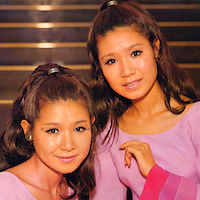

Sources for Intro:

Garland Encyclopedia of World Music. “Twentieth-Century Popular Music in Japan.” Written by Mitsui, Tôru; edited by Robert C. Provine, Yosihiko Tokumaru and J. Lawrence Witzleben. Routledge, 2001.

Sayonara Amerika, Sayonara Nippon: A Geopolitical Prehistory of J-Pop. Michael Bourdaghs. Columbia University Press, 2012.

Tokyo Boogie-Woogie: Japan’s Pop Era and Its Discontents. Hiromu Nagahara. Harvard University Press, 2017.

The Prolific Life & Genius of Francis Bebey

by Karen Lee

Francis Bebey (July 15, 1929-May 28, 2001) was a Cameroonian-born father, musician, artist, filmmaker, author, musicologist, anthropologist and composer. He was born in the city of Douala, where he attended college, played in a band and studied mathematics. Bebey is considered the father of African music, educating inquisitive minds and ears to African culture, musical songs, rhythms, sounds, history and theory. In the mid 1950s he moved to France to study at Sorbonne University. In Paris, Bebey was influenced musically by Spanish guitar player Andres Segovia, who played there often and specialized in concert flamenco and classical guitar. Bebey also loved jazz artists like Duke Ellington and Louis Armstrong, stating he bought Armstrong’s records like he was buying cigarettes. Bebey sang, played Pygmy flute, African sanza thumb piano and guitar in his younger years. In 1960, after attending New York University, Bebey settled in Paris where he worked at various radio stations, broadcasting shows and educating listeners on different forms of African music and culture. He was eventually hired by the United Nations Educational, Scientific and Cultural Organization (UNESCO) to document and research African music. Throughout this time Bebey continued to work on his own music. He eventually left UNESCO to focus on composing, playing and blending Latin American, Western, and Asian influences with African music (Kisliuk, 2003). 

Bebey was a multifaceted artist who immersed himself in every aspect of musicology. He went through a “colonialist” period fusing Western technology with African rhythms to promulgate any preconceived notions about African rhythms being “primitive.” To facilitate this he sang traditional African songs and ballads in French, English and Douala. He also yodeled (Kisliuk, 2003). In the 1970s he integrated synthesizers, drum machines, harps, flute, electric keyboards, guitar and electrified sanzas, overdubbing all of the instruments on his albums Fleur Tropicale, La Condition Masculine, Heavy Ghetto, Sanza Nocturne and Un Petit Ivoirien and other releases on his label Ozileka. Ozileka studio was a spare room built onto his apartment where he recorded and released over 20 albums between 1975 and 1997, not counting 12 or more on other labels. 

Bebey’s artistic manifesto was spreading information about African music. Throughout his life he was focused on regenerating African art. From an interview with Bebey by Chris May in 1982, Bebey wrote, “Many of the foreign influences that have penetrated Africa will be incorporated into a new form of black African art. This form of initiation may be deplored by those with deep-seated conservative or racist tendencies, but far from resulting in a bastardized and damaging modernism, we believe this mutation will breathe new life into African art and will demonstrate the triumph of humanism and universality over esoteric sterility….It is imperative that the future of African music be based on the idea of development and not merely upon preservation.” Focusing on preservation would be tokenizing African music much like exhibiting pieces in a museum, concluded Bebey (The Vinyl Factory, 2018). The “world music” movement hounded Bebey for much of his career. He challenged colonialist views about African musics’ “authenticity” perpetrated upon African music from audiences who are Western. Many Western audiences questioned “foreign” influences in African music, implying racist beliefs that African music cannot modernize without changing qualities. This inspired President Sekou Toure in independent Guinea, and other post-colonial African countries later, to support traditional African arts while also embracing avant garde creativity and experimentation (May, 2018). Bebey coined a term “amaya” in English, which stood for “African modern and yet authentic” as an umbrella descriptor to explain his work (Winders, 2006). 

As an example of Bebey’s modernization of African music, Bebey yodeled in Pygmy vocal style, refashioning Western style song structure. From his book, African Music: A People’s Art, Bebey explains how the human voice is the most widely used instrument by Africans. Voice is used by Africans in differing nuances, such as manipulating appendages to produce modulating timbres similar to yodeling. Like a modulator, voices can be reconstituted by pinching the nose, fluctuating the tongue, plugging the ears, or singing through a repository. Bebey asserted that the West’s definition of a “beautiful singing voice” is a subjective notion that applies to the standards of melodic pitch, perfection and purity in tone, all based on Western criteria. A “beautiful” African voice, according to these criteria, could be a tonal accident in traditional African music. Music in Africa is used every day to delegate life, nature, beliefs and rituals where the context of “beauty” is secondary in maintaining a constant purpose. African life requires musical adaptation, preserving a collective aspect where no one is ruled out as being a “bad singer.” Anyone who has the urge to sing or make their voice heard have the liberty to do so, and singing is not a grandiose or beautiful affair. Africans use musical affirmations to fill conversations when retelling indiscreet affairs with a husky voice, or using a mocking tone to produce a satirical account of a circumstance. It gives people a rite to preach, pray, validate, settle affairs, and execute their actions in pronounced verbalizations. Voice is a common language that all African ethnic groups can understand to reframe life banality with philosophic wisdom (Bebey, 1969).

Bebey’s song “Divorce Pygmy” exemplifies his feelings about African voice as an instrument. Translating the song in English from French, Bebey is singing about a failed Pygmy marriage; or more specifically, a wife’s treatment from the husband’s standpoint, where she is asking for a divorce. He sings, she does not tell him nice things anymore, after everything he has done for her to change her from a thin “small leaf” into a beautiful “fat” woman (being a thin woman is considered less attractive by African standards). Bebey yodels after each song segment which adds a satirical inflection on the catastrophic circumstance of divorce. In addition to entertaining, he is also educating listeners about the process of marriage in African communities, where giving gifts such as elephant tusks to the bride’s parents is ceremonial in Pygmy culture, much like a dowry, mirroring marriage ceremonies in Asian cultures.

Bebey was an experimental African music visionary, ranking with legends such as Fela Kuti, Manu Dibango, Franco, William Onyeabor, and Odion Iruoje. Like Bebey, Iruoje believes that Africans should be proud of their musical innovations and aimed to integrate these sounds into his production and arrangement for EMI Nigeria throughout the 70s and 80s. He is currently reissuing some of these records with deejay Temitope Kogbe on their reissue label, Odion Livingstone. Given the global north’s colonialist history of unauthorized bootlegging of African records, it is important to see a Lagos-based label taking ownership of what is theirs.

Bebey was prolific, releasing 25 albums, authoring 9 books, radio broadcasting, lecturing about musicology and African culture, plus performing his music globally. His albums have been compiled by numerous labels, highlighting different periods of his career. John Williams composed a tribute piece honoring Bebey, named “Hello Francis.” The piece is based on the Makossa dance rhythm from Cameroon documented and performed by Bebey and other African musicians. Arcade Fire also has paid tribute to him through their song, “Everything Now” which includes the flute melody from Bebey’s “The Coffee Cola Song” played by his son, Patrick. Bebey passed away on May 28, 2001 and is survived by his wife, a daughter, and two sons: Toups (saxophonist) and Patrick (keyboardist) Bebey who continue his father’s legacy of “amaya.”

References

Bebey, F. (1969) African Music: A People’s Art

Kisliuk, M. (2003). The Pygmy: Hunter, Gatherer, Survivor, and Yodeler: The yodeling and hocketing of Pygmy singing has served as an icon of social and musical utopia. In Platenga, B., Yodel-Ay-Ee-Oooo: The Secret History of Yodeling Around the World, chapter 6 (pp. 137-149). Routledge, New York, NY. 

May, C. Cameroonian trailblazer Francis Bebey https://thevinylfactory.com/features/electric-futurism-francis-bebey/

Winders, J. (2007). Paris Africain: Rhythms of the African Diaspora. Palgrave MacMillan, New York, NY.

Interview with Frank Izuora of Question Mark


By Karen Lee

The following interview was transcribed from a Weekend Family Music Hour broadcast which took place on July 21st, 2018 on Freeform Portland. Jim (from the show Center for Cassette Studies) and I had the privilege to interview organist, singer and solo artist Frank Izuora. Izuora was a founding member of the Nigerian band Question Mark. Other members included his brother, bassist Amehi (Joe) Izuora; Chyke Okafor on drums; Uzoh Agulefo on percussion, and Victor Egbe on lead guitar. Their incredible debut release, Be Nice to the People, was recorded in Lagos, Nigeria in the mid 70s and is a masterpiece of psychedelic rock. Released by EMI’s Nigerian subsidiary, it was produced by the legendary Odion Iruoje, talent scout extraordinaire and the man behind the board for Ofege’s Try and Love and The Last of the Origins, C.S. Crew’s Funky Pack, Butley Emeka Moore’s Kiss & Smile, Apples’ Mind Twister, and literally hundreds of other Nigerian recordings that today inspire music aficionados around the globe. 

Original copies of Be Nice to the People are highly coveted and rarely show up on the used market. Shadoks in Germany reissued a limited vinyl release in 2007, which is how we came to know of it. A CD reissue came out several years later. Similar to Ofege, Be Nice to the People is known for its driving fuzz guitar passages and catchy rhythmic grooves, one-upping the UK hard rock scene at its own game. But Question Mark had a progressive pop lyricism that their peers lacked, an ability to craft ballads about the goodness of love and the importance of compassion and humanism, songs that, rather than being breathers between big guitar jams, are ones you would put the record on for. At the forefront of this unique sound was the voice and organ of Frank Izuora.

Izuora currently resides in Houston, TX, and he is still writing and composing music. He has a current recording available on Amazon called, Cruise Out.

He is also counselor who specializes in working with couples, families and children. Frank is a warm soul and multi-faceted human being whom we adore, and we are deeply thankful to him for granting us this opportunity.


Karen: How did Question Mark form as a band?

Frank: We formed our band through our social networks. Much like a domino effect, the one person I knew very well was my brother who was a bass player. I went to the same school my father went to, Dennis Memorial Grammar School. There was a young guy who played soccer there named Chyke, and his last name was Okafor. His nickname was Chykzilly. He knew I played guitar and the keyboards. He in turn knew Ekelaw Uzoh –I know it’s hard for Americans to pronounce African names because it can be jaw breaking! — so from there we formed a band. We knew an engineer in Enugu, his name was Goddy, sort of like Godwin. We went to his studio and recorded some sample tracks, and while we were there, we met Victor and he played lead guitar for Question Mark. So I played keyboard for the band. From there we got together: Joey, myself, Chykzilly, Victor, and Uzoh and we formed the band Question Mark.

Karen: How did you get signed by EMI?

Frank: It’s interesting because I knew Chykzilly who knew Uzoh, and Uzoh who was a congo player and percussionist; he had contact with EMI recording studios, so through Uzoh we met this guy and we started talking about our songs. He said we sound good enough and we did some recordings, so that’s exactly what we did. 

Karen: Was it produced by Odion Uroje, I think he was the talent guy for EMI, I think he also was the producer for Ofege? 

Frank: Yes!

Jim: Did you spend some time in the U.K growing up?

Frank: Yeah, we have an in interesting family background. My father went to London and took the whole family, including my mother, myself, and my only sister and my two brothers. We sailed on an ocean liner. Back in those days it was quite popular and flying in an airplane was quite expensive. So we went on an ocean liner which took us about a month to get there from Nigeria. Along the way we stopped in various countries. In 1960 we got to London and spent 6 years there. I went to school there. I just got back from London recently and I went to my old elementary school. We were there from 1960-1966 and returned back to Nigeria. When I was in London I was exposed to the Rolling Stones and the Beatles at a early age. I was tuned into all the stars that were around, like Elvis Presley. We returned back to Nigeria in 1966 and 4 years later I seriously started to learn how to play the guitar. From there I met other musicians and played in garage bands and honed my skills and then met Question Mark band members much later. 

Jim: If I could be in the U.K, I think 60-66 in terms of music would be a great time to be there. 

Frank: Yes! I remember a competition between the Beatles and the Rolling Stones and I believe in my mind, The Beatles won. When I hear my music I think of old girlfriends or analogies like that. 

Karen: Have people tried to contact you prior to us about your music, or asking if Question Mark would get back together?

Frank: I was talking about that to my brother, you know that’s 30 years ago and the drummer is dead and it’s like getting the Beatles back together again, you can’t. Chykzilly passed away a number of years ago. The percussionist Uzoh is actually here. He’s the guy sitting on the extreme right of the album cover with afro hair and Chykzilly is the guy beside him with his arms crossed. Uzoh is a professor in Dallas at a university. Who knew he would end up being a professor…but the track “Hey Hey Girl” was one of the few tracks we wanted to remix. We were all living on school campus and we decided to go to EMI studios in Lagos to record these songs. We all got into a car and drove 8 miles to Lagos to record Be Nice to the People. We were supposed to have spent 3 days recording the album but we just spent a day and a half. We were rushed and a lot of things we wanted to remix such as the drums, some guitar parts and vocals; we had to rush back to high school, coming back on a Sunday so we had no time. It’s like when you hear on recordings, certain areas need tweaking, so when I’m relistening to my music I say, here it comes. Oh it’s that part needs changing! Where today’s artists their perfectionists who spend 2-3 days. We spent a day and a half on ten songs. 

Karen: The lyrics are so great on Be Nice to the People and Didn’t Want to Lose You

Elizabeth Izuora (R)

Frank: Interesting because in the song, “Love,” the lyrics were not my lyrics, they were written by my sister. She was a child prodigy who passed away. She spoke 3 languages, she was a bass player, she played classical music like Mozart and Handel. When you listen to the lyrics of “Love,” it has a lot of substance and so she wrote that and I didn’t sing it. My younger brother Joe sang it. As I said I just visited Joe in London and we were listening to Question Mark because your show wanted to interview me. So we were listening to the entire album in the car on CD and like most musicians they are very critical of their own work; more so than listeners. So when Joey sang the words, “Love was really out to hurt me,” I wasn’t really a lyricist. I’m a very spontaneous person, where if I see something right away, I will write words about it. My sister Elizabeth would put a lot of thought into how to write a song. I admired her for that. Now that I’m a therapist, I put a lot of thought into my words, like when I see my clients or play with other musicians I am not trying to overpower them, I’m trying to blend with them. It’s all about harmony and the give-and-take and relationships and everything you do in life. I was supposed to have sung that song, and it was really late at night in the studio. We convinced my brother Joe to sing that song. He said “I’m not a vocalist” and I told him he would go down in history. He was tired, so tired. 

Karen: Did you guys tour very much as a band apart from recording?

Frank: We did, we played at parties, we opened for BLO and we played on TV. My mother was a director at a TV station in Enugu in the eastern part of Nigeria before the Biafran war she was in charge of a TV show called Curtis Club, which featured young people who could sing, dance, play the piano or tell stories. We went on that talent show and performed for the first time. That was the first time we played live. We thought we can go in there and tear the place down. As soon as we saw the camera rolling and hear the producer say you’re on the nervousness sets in. It’s a lot different performing live than being in a recording studio. 

Jim: Did you guys attend a music school like Ofege?

Frank: No, my sister and I had an Italian music teacher strictly for the piano who was hired by my parents. Unfortunately, I think I had ADHD or something because while she was teaching us I could hear my friends kicking the soccer ball so I went to join them instead. My sister learned to read music and play piano. I never really gave myself the opportunity to read and write music. I learned strictly by ear. I learned how to play the guitar for all the wrong reasons after seeing how he attracted girls when he played music. So I had my friend show me a few chords, I started to listen to Beatles songs again and rehearsed guitar parts and then used my own creativity to produce something similar. You can hear some of that in Oh My Girl. I didn’t play guitar on that track but I showed the guitarist what to play. There was no one who could play the piano, so I took that instrument.


Karen: How did your solo record come to be?

FI: I left Nigeria and came to the States in 1977 and I went to Buffalo State College in Buffalo NY. I returned to Nigeria in 1982 and recorded a solo album. I played all the instruments and did it myself, I decided to quickly write songs and practice. The producers at the TV station where my mother worked on the talent show heard me playing so he started helping me out in recording my solo album. I wanted to record my album before I headed back to Buffalo. So the producer helped me. So I went to meet a guy, Goddy Oku–Oku in Nigeria means fire or light in English. He had a band called the Hykkers who were known in eastern Nigeria. So I went to Oku’s recording studio with them, and it took quite some time recording my album but I got it all done before going back to college.

Karen: Didn’t Want to Lose You was also pressed at Wilfilms, which was William Onyeabor studio. So you’re giving us an incredible history lesson…

Frank: I can tell you a whole lot more. It’s very interesting history, do you guys know about the history of the Nigerian Biafran War? Well, my mother knew the head of state Ojukwu, so when Nigeria broke away, he was aware of our band. He purchased instruments for us and at the time we were not Question Mark, we were The Questions. In The Questions my sister was playing the bass guitar and my cousins who were my mother’s half sister’s daughters were on vocals. So through Ojukwu after buying us instruments he flew us to Gabon during the Biafra war to perform for the president of Gabon. I think his name was Bongo something, he was a really short guy, he was sitting on a couch and his feet barely touched the ground and I was telling myself, he’s the president of a country…We performed to raise money for the troops and we were flying there on a relief plane and they were shooting at us in the plane we were flying in. We actually raised money for the troops and we evolved from Question to Question Mark and then we performed for the first time on TV on the talent show.

Jim: There was another band called The Wings who also performed for the military….

Frank: My mother knew them as well. My mother knew quite a few bands that helped us we knew bands who rehearsed and played through the war, we rehearsed in a garage with a band called The Fractions. 

Karen: Have labels contacted you about reissuing Question Mark?

Frank: I think I could have done things differently, at that time about 9 years ago they had us sign papers and they reissued that. I still own the rights to my own solo record. The song “Freaking Out” and the story behind that song. My father’s brother who was a doctor and musician in the Army returned from Germany, he played music for the fun of it. He returned with a bass guitar and my brother Joey played guitar and he had an amplifier. He gave us his bass as a gift and I looked at my brother and he looked at me and I said, hey let’s freak out! And so we wrote and titled the song “Freaking Out”. 

Karen: Now Again reissued Freaking Out and Scram Out on their compilation Wake Up! Is it strange to hear your original record is worth quite a lot now?

Frank: Yeah! Remember that old phrase, one man’s trash…when we recorded these songs I wasn’t thinking of business. We were having fun. I think sometimes when you feel what you do isn’t really all that valuable. I think as human beings we don’t stay put and life is a journey. You improve who you are as a person, musician work on your style and keep on making progress. It fills my heart with pleasure/appreciation to hear that people appreciate the music I have made many years ago. If the whole world could appreciate each other it would be a better world. 

Karen: Through your music and lyric writing I hear how much positivity you have…

Frank: Music is my first love and I am a musician first. I am also a LMFT (Licensed Marriage Family Therapist), I’ve run into people who have so much emotional stress and through my profession and my personal life I’ve come to realize that when a person loses a sense of self and purpose, I try to come in and show them who they are and bring that out, and gain self esteem. When I was young I was extremely shy and when I tried to talk to girls, I would write down things to talk about. I would call them on the phone and then drop the phone because I was so nervous. I’ve realized it takes two to make a relationship. It inspired me to write songs to appeal to both sexes and inspire people.

Karen: What are your musical projects now?

Frank: I’m working on some new material. I have a new instrumental album called Cruise Out. I am also working on a new vocal album that will have some lyrics that reflect the same philosophies I have. My songs are going to make people appreciate life and have a really good time. When I get through with my new songs, I’ll let you guys know.

Karen: Would you ever tour Didn’t Want to Lose You?

Frank: I would tour in Portland, OR if I can get back up musicians. I’ll think about it and figure out a possibility to have people play old and new stuff. I left London and I was talking to Joey about people wanting to interview me. I ran into musicians on the plane, people who played with Heart and Bad Company. It was a coincidence and I think there is some positive karma going on right now. Hopefully one of these days I get to meet up with you guys, as we say in Nigeria, eyeball to eyeball.

Nigerian Pop and Disco Women Singers

Screen Shot 2019-02-15 at 10.37.18 AM


by Jim

The very start of the 1978 liner notes for Grace Ekpeyong’s Morning Prayer puts it bluntly: “Although the Nigerian entertainment industry, especially the musical sector, has grown enormously over the past two decades, the incidence of outstanding female performers on the scene remains rare and isolated.” Women were often on backing vocals, transforming good records into great ones in the process; see William Onyeabor’s “The Moon and The Sun,” The Wings’ “Someone Else Will,” or anything on N’draman Blintch’s “Cosmic Sounds” record. If they assumed a headlining role, it was sometimes through collaborative partnerships with musician spouses (Grace and Jack Ekpeyong) or through family in the industry (Lorine Okotie, sister of Kris). Joe Ngozi Mokwunyei was already a young academic when she recorded her landmark Boys & Girls LP in 1979, as Joe Moks. Many point to the success of Oby Onyioha’s breakthrough I Want To Feel Your Love in 1981 as the big tipping point. From the pre-80s era, the most well-known Nigerian women singers outside of the country were probably the Lijadu Sisters and Christiana Essien. Essien was a teenage T.V. star when she recorded her first LP Freedom for Anodisc in 1977. The Lijadu Sisters were perhaps culturally acceptable because harmonizing sisters often get a societal pass. By their own account, gender bias and exploitation played a role in their acrimonious split from Decca’s Nigerian subsidiary label Afrodisia, in 1980.

Biographical details are scarce to non-existent. I have linked to the best YouTube rips I could find and noted any good reissues. I am just an amateur fan so please forgive any errors, poor assumptions, or general ignorance on display. A shout of gratitude to Nigerian pop music experts Uchenne Ikonne and Temitope Kogbe for graciously answering questions via email and for all they have done to get many of these great records re-issued and broadly exposed.  — Jim


Sandra Smith Izsadorefela-sandra-400x400

It’s ironic that women artists are absent from Nigeria’s early afrobeat scene given that it was an African-American woman in California, Sandra Smith (now Izsadore), who had such a profound impact on its most renowned male figure, Fela Kuti. According to drummer Tony Allen’s autobiography, when they toured America for the first time in 1969, it was she who turned Kuti on to the importance of black nationalism, colonial history, and cannabis. Sandra was a turning point in Kuti’s sense of political identity, the one who, in his words, “Africanized” him. After her influence, his records became sonic attacks on western dominance, augmented by Lemi Ghariokwu’s anti-imperialist art design. And it is Sandra’s voice that forms the centerpiece of my favorite Kuti side, 1976’s Upside Down, credited to “Sandra Sings With Fela & Africa 70” and recorded during her 6-month stay at Kuti’s commune, Kalakuta.


Bola Onagoruwa & Ukachi “Ukay” OfurumR-8077500-1491251589-1788.jpeg

Some contributions by women on records headlined by men were transformative. Such is the case with the first LP from Grotto, At Last…, which was issued in 1977 by EMI Nigeria. According to its liner notes, Bola and Ukay were classmates of Grotto’s guitarist and composer Martin Amenechi, at St. Gregory’s College. During a second session of vocal overdubs in December 1976, they were invited to participate, recording over the previously laid-down men’s vocals. Bola’s classic lead on “Come Along With Me,” the album’s opener, is a mesmerizing collision of musical influences. Likewise, Ukay’s contributions to “Grottic Depression II” and “Change of Tide” helped elevate this LP to a new plateau of afropop greatness. Check out “Funk From Mother,” where both Bola and Ukay trade off lead vocals with male members of the band. Original pressings rarely surface and fetch hundreds of dollars when they do. Luckily, At Last… was just re-issued by Odion Livingstone, a Nigerian label run by Odion Iruoje, the original producer, and Temi Kogbe, a record collector and DJ. Highly recommended.


Mary Afi UsuahR-9172736-1476040976-3130.jpeg

Classically-trained singer Mary Afi Usuah released several beat singles for the Italian market, as Mary Afi, before returning to Nigeria to record two highly-regarded LPs. She is one of the few artists here who has received a stand-alone reissue in full, courtesy of archivist (and former Usuah pupil) Uchenna Ikkone; all should seek out Ekpenyong Abasi, her first LP with the South Eastern State Cultural Band. She later released African Woman on Clover Sound, which I have yet to hear. From the first record, the slow escalation of “From Me To You” is six soulful minutes of power, strength, and sadness. “Mma Ama Mbo” is also a must.


Joy NwosuScreen Shot 2019-06-13 at 11.25.29 AM

Like Usuah, Joy Nwosu studied voice in an Italian conservatory, initially researching African cinema and writing a book on the topic in 1968, entitled Cinema e Africa nera. She then returned to Nigeria and began recording a mixture of her own compositions and new arrangements of folk songs, which became Azania on Afrodisia, her most popular release. Among its standout vocal accomplishments are “Egwu Oyoyo (Oyoyo’s Dance)” and “Ile (What the Tongue Can Do).” The A-side of a 7” single released just prior was included on an anthology called Nigerian Blues 1970-76. Nwosu later became an academic in ethnomusicology, holding a faculty post at University of Lagos, where she admiringly butted heads with its chauvinistic patriarchy. An accomplished author, she now lives in New Jersey. A fantastic 2014 interview with her can be found at the African Women in Cinema blog.


Christy Ogbahimage4

Christy Ogbah recorded three stellar LPs in her career that I know of: two for Duomo (pop) and a third for Mosokam (highlife), which is credited to Christy Ogbah & Her Melody Group. While best known for her wall-of-fuzz dance track “Advice”–her only English-language song–Ogbah excelled at slower synth-heavy pop, sung in Esan, that was strictly neither disco nor funk but a far more fascinating mashup. Songs like “Iyiye” and “Iyebhado” become plodding loops of multi-tracked vocals and melodic Moog accents, a sort of odd boggie-drone. At times, her layered voice sounds almost like a synthesizer. The 1980 LP Advice, packed side to side with deep hooks, is my fave Duomo release (its three best tracks are on Odion Livingstone’s indispensable 2017 Duomo Sounds Ltd.) Its follow-up, Iziegbe, shows Ogbah further exploring intersections of highlife and Lagos disco, melding the hybrid sounds found on her first two recordings. According to the liner notes of Duomo Sounds Ltd., she was a police officer at the time of these recordings.


Joe Ngozi Mokwunyei (Joe Moks)image2

Comb & Razor put the song “Boys & Girls” on their superb Brand New Wayo anthology, which led to its rapid spread through DJ disco sets around the world. The track was taken from Joe Moks’ LP of the same name, released on Afrodisia in 1979. Like Ogbah’s Advice, it is a synthy dance bomb from beginning to end, meticulously sequenced and arranged by Moks and Tony Okoroji, without a bad track. Apart from the title song, “Being In Love Is Being Involved,” “Closer Than Skin,” and “Insure My Love” are all particularly outstanding. Today, Dr. Mokwunyei continues her teaching and research at the University of Benin, specializing in subsects of Nigerian musicology, most recently among the Anioma and their use of a woodwind instrument called the akpele which serves as a melodic surrogate for the human voice.


Grace Ekpeyong (Grace Jackson ‘E’ & The Galaxy)image7

Ekpeyong started off as the lead singer for an all-girl Army band called The Tranquilizer in 1975, but they broke up later that same year. She then met and married bassist Jackson Ekpeyong, with whom she assembled her fantastic backing band, The Galaxy. Her first EMI LP Morning Prayer from 1978 unfortunately lacks band credits but elements of The Galaxy already sound in place. Standout tracks are the two “think” songs closing each side, “Think of Tomorrow” and “Think of Yourself.” So many of her songs are philosophical, socio-political statements that somehow transcend time. The three EMI records that followed throughout 1979-80–Don’t Treat Me Like a Fool, Woman Needs Love, I Need You–are all full of addictive melodies and electronic sounds. DTMLAF is arguably the best of the three (Mike Umoh on trap drums!) and includes the trancey title song, the conflict-resolution epic “For Better for Worse,” and “Give Me Your Love.” Woman Needs Love is more reggae, simultaneous released in Nigeria on EMI and France on Pathé. I Need You is ballad-centric and melancholy, with great use of Moog accents, as with DTMLAF, courtesy of keyboardist Coll. Jonas. In 2014, the lead cut from WNL, “I’m Gonna Get You,” was bootlegged onto a 7″ by Ximeno Records, albeit in edited form.


Helen NkumeR-9244339-1477254203-7601

There were several great women bandleaders in Nigeria in the 1970s. In the southwestern jùjú scene of the Yoruba, Lady Balogun & Her Famous Brothers Band and electric guitar genius Queen Oladunni Decency & Her Unity Orchestra reigned supreme. One of their peers was Helen Nkume, who also recorded under the name Helen Williams. The only album I have heard of hers is called Volume IV, recorded with Her Young Timers for Utimo Records in 1978. All four of its tracks are outstanding but the best is likely “Music”, the breakneck fuzz-filled dance bomb that closes out the first side. (EDIT: Volume IV just reissued by Dig This Way)


Commy Basseyimage8

It was South Africa’s Miriam Makeba whose beats exploded into the European market in the 1960s, with her worldwide hit “Pata Pata” being covered by women artists from Italy, Yugoslavia, Hungary, and France. She became a pan-African source of pride and inspiration for women, as evidenced on the lead track “Great Miriam Makeba” from Commy Bassey’s first LP, In Solitude, released in 1978 on Clover. Bassey wrote and composed all but one song, with Original Wings guitarist Charles Effi Duke helping out with arrangements. Her voice was deeper than others on this list, with a unique drawl, both single and double-tracked. Although In Solitude suffers somewhat from Clover’s claustrophobic production sound, the performances are solid. “Pretty Angel” and “Smiles” punctuate rhythm with silence. But it’s the lead on Side 2, “Looking for My Man,” that’s the big jammer. Anodisc’s Let’s Dance, released two years later, saw Bassey finding her niche in the disco scene and offers up such essential clap-heavy grooves as “Now That I’ve Found You,” “I Need Someone,” “We Want Togetherness,” and “Let’s Dance.”


Eme BallantyneScreen Shot 2018-10-03 at 9.19.29 AM

From all accounts, Afrodisia had a bad habit of signing artists, releasing one LP, and not offering much in the way of follow-up, promotion, or helping them get established. This might have been the case with Eme Ballantyne, an obscure singer for which I can find no information. Her sole LP is called Remember Me, which came out in 1981. The piercing timbre of her double-tracked voice as it repeats “My life is like a rainbow in the sky” throughout the opening ballad “My Life” manages to sound both old and contemporary at the same time.


Carol BridiR-1625693-1232991322.jpeg

Carol Bridi’s synth-groover “Shake The Dust” comes from her debut LP called One Family, which was released on an indie label called Otto Records at the height of the Lagos boogie explosion, in 1984. Other standout performances include “Where You Are” and “Soul On Fire.” The crisp spacey sound owes much to the wonderful engineering and production of George Achini and Remy Njoku, who also worked with such greats as Esbee Family, Bassey Black, Christy Essien, and Oby Onyioha.


Christiana Essienimage11

Already known for playing a beloved character on a popular Nigerian TV series, Christy Essien branched off into recording in 1977, with the nearly-perfect Freedom on Anodisc, whose uncredited band likely backed Tex Soul on his superb The Vibrations project that same year. In addition to the title jam, “Mr. Boom Boom Boom”, “Feel So Good Sometime”, and “My Kind of Man”, it contains two great slower tracks, “I’m No More Your Little Fool” and “If I Can Be Free From Darkness.” Patience followed, before a move to the Blackspot label for Time Waits For No One. Decca then picked her up for her two most popular records, One Understanding and Give Me A Chance on Afrodisia, the former featuring parts of Pino’s Heartbeats. Her sixth release, Ever Liked My Person?, was the biggest success of her career and saw her moving towards a more polished (but less funky) sound. She later became the founder and first woman president of the Performing Musicians Association of Nigeria and was involved in social advocacy causes for women, including against female circumcision.


Doris Ebongimage1

Apart from her music, I know next to nothing about Doris Ebong. She recorded one colossal LP for Phonodisk in 1982, All I Need Is Your Love, produced by Tony Essien and with songwriting credits split between the two of them. Ebong’s own contributions, or the ones that she co-wrote–like the frenetic “Disco Drive” and the ground-shaking “I Won’t Let You Down”–are the album’s shoulda-been megahits that today fill dancefloors worldwide. The Shirley-Ellis-meets-Catfish-Collins instructional “Boogie Trip” was the mind-blowing centerpiece of the Lagos Disco Inferno compilation a few years back, which is essential listening. Willy Nfor’s exceptional bass playing graces all tracks.


Mona Finnihimage6

Mona Finnih recorded three collaborations with former Aktion and MonoMono guitarist Jimi Lee. The first and best, EMI’s A Stroll In The Moonlight from 1980, is a wonder to behold, packed with horn-heavy tracks like Lee’s majestic funky title cut, Finnih’s “People of the World,” and her pounding tour-de-force of empowerment “I Love Myself.” In 1984, they released Almighty on Afrodisia and Eni Ma Bimo on Emona. More highlife than disco, Lee’s “Iwa Ika” is the standout from the latter, a tight swirling mass of percussion, Hawaiian guitar, saxophone accents, and multi-tracked vocals. In 2014, Voodoo Funk compiled two of her best tracks from the Moonlight LP onto a 12” release.


Eunice Mokus Arimokuimage5

Like label-mate Christy Ogbah, Eunice Mokus Arimoku was affiliated with the early-80s Lagos club scene. Her first record was on Duomo, Onye Oni Me, while her second was self-released five years later on her own label, Unimokus Records, called I Am Glad You Are Mine. The track “Loneliness” from the latter is her big jammer, a loud echoey sprawl of voice and synth over a single looping guitar signature. From her first LP, “Ariro” is a standout, recently anthologized on the Duomo compilation from Lagos-based Odion Livingstone. Her powerful multi-tracked voice propels all of these songs forward in profound ways that I can’t articulate.


Oby OnyiohaScreen-Shot-2018-05-30-at-2.11.32-PM

Onyioha’s acclaimed I Want To Feel Your Love represented the launch of a new era for women artists in Nigeria. While industry prejudices remained, a steady stream nevertheless began changing disco conventions and embracing a more mellow 80s dancefloor sound. Time, Tabansi, Phonodisk, and Taretone all began to sign and record more women artists, like Stella Monye, Lorine Okotie, Julie Coker, and Martha Ulaeto. Onyioha recorded a second LP in 1984 on Sunny Alade, entitled Break It, but its success failed to match I Want To Feel Your Love. While you can’t beat the driving force of its title song, I’m partial to “Enjoy Your Life,” the smooth swinging side closer that includes a line about “humpty dumpty stuff” that I can’t ever really make out due to the cool jabby synth pan. Check out the compilation Doing It In Lagos from Soundway for this track and others. She’s now an anthropologist.


Lijadu Sisters47fa1b37e5904d47a62990fdc6c6847a

Lastly, there isn’t much I can add to the story of Taiwo and Kehinde Lijadu. The talented twins toured the world and knocked out a string of flawless records during the latter half of the 70s: Danger, Mother Africa, Sunshine, and Horizon Unlimited. While Danger is usually the fan fave, be sure to check out “Set Me Free” and “Reincarnation” from Sunshine. Instead of a song, I’m linking to an incredible documentary clip from 1980 that finds them grappling with the exploitation they’ve experienced at the hands of Decca’s Afrodisia label, but also optimistic about the roles for women artists moving forward. “It’s only this industry that has a problem of a shortage of female artists…I wouldn’t be surprised in the next five years if we don’t have more females in this profession than men.” LISTEN

Val Wilmer is Seriously as Serious as Her Life

By Karen Lee

Valerie Wilmer was born in Harrogate, England Dec, 7th 1941. She is an English woman, photographer, jazz/African, Jamaican West Indies music historian/archivist, writer, lesbian and feminist. She has written for Jazz Journal, Mojo, The Wire, Jazz News, The Oxford Dictionary of National Biography, The British Library Sound Archive and The Guardian, as well as many other jazz/music publications. She is the author of Jazz People (London: Allison & Busby, 1970; Indianapolis: Bobbs-Merrill Co., 1970), The Face of Black Music (New York: Da Capo, 1976); As Serious as Your Life: The Story of the New Jazz (London: Allison & Busby, 1977) and her autobiography Mama Said There’d Be Days Like This: My Life in the Jazz World (London: Women’s Press, 1989).

Wilmer and her brother Clive were raised by a single mother, who rented rooms from their London house to pay the bills. Wilmer’s mother was supportive of her blossoming interests in jazz music which began in her teens with the book by New Orleans Jazz enthusiast and radio deejay Rudi Blesch, Shining Trumpets: A History of Jazz. At a young age, Wilmer immersed herself in jazz and African American/international music culture before it was embraced by mainstream culture. She frequently brought home jazz musicians who were mostly male, black and international to have tea with the family, and, as a result, the house soon became a known jazz performer destination in London to visit while on tour. Harry Carney, who played baritone sax with Duke Ellington’s band, sent them Christmas cards every year. Jazz pianist Randy Weston would stay over to talk about Africa and Nationalism while eating a breakfast of bacon and eggs. The Ambassador for Liberia invited her mother to champagne parties (Neglected Books, 2016).

Wilmer’s life as a white female gay critic in the 1960s and 1970s juxtaposed the conventional media coverage of race with the empowerment of people of color and women as captured through her personal lens. The early women’s liberation movement then flourishing in the United States also influenced the U.K., and Wilmer became politically involved with women’s empowerment, organizing Take Back the Night events in the late 1970s in London to bring awareness to sexual violence perpetrated upon women. Wilmer realized she preferred women sexually when she witnessed Althea Gibson, the first African American woman to play in professional international tennis, embrace her opponent in good sportsmanship at Wimbledon. Wilmer was never deterred when private lesbian clubs she visited were occasionally raided by vice squads because she felt it was her right to have access to such clubs without discrimination or shame:

. … because what we were doing by walking through that door was declaring ourselves — what some would call “coming out” — there was about the whole exercise a sense of terrible excitement. It revolved around bravado and ritual. Getting ready to go there was a ritual, the crease in the trousers, the eyes made-up just so Parking the car was a ritual, as near to the club as possible to avoid the voyeurs and the challenge of passers-by. Gaining entry meant mustering bravado. And for what? To spend time in a place where you could, supposedly, be yourself. 

Louis Armstrong- Val Wilmer 1961

Wilmer has lived her life always being herself and actively pursuing what interests her the most. She took her first photograph documenting Louis Armstrong with her mother’s Kodak Brownie camera and soon afterward pursued an education at The Regent Street Polytechnic in London, with a dual degree in jazz photography and writing. Her photographs have been shown in galleries in Europe and the U.S, and she co-founded the first all-woman photo agency in London, Format, in 1983 (The Jazz Image).

Wilmer has been documenting jazz artists and music history since 1959. She has countless interviews and photographs with jazz greats, beginning with Earl Warren, who was an alto saxophonist and sometimes vocalist for Count Basie and Lester Young. Her reputation as a serious critic grew following her piece on Billy Higgins and Ornette Coleman. By 1965, she was visually documenting Thelonious Monk’s progression through his changing improvisation and composition styles while critiquing the past decade of his career (Wiki).

My favorite book by Wilmer, As Serious As Your Life, first published in 1977, documents the early scene of “free jazz”, or “new jazz,” in various urban areas across the United States. It is a seminal text that chronicles the groundbreaking beginnings of what would soon become known as the Free Jazz movement.

Wilmer interviews such innovators as Sunny Murray, Sun Ra, Cecil Taylor, Rashied Ali, Albert Ayler, Bill Dixon, Archie Shepp, Marion Brown, and Don Cherry, to name a few, all of whom changed many conceptions of what “jazz” music is. She interviews jazz musicians who performed at community places, such as The Storefront Museum in Jamaica, New York, which was a converted storefront and community project in the borough of Queens. She talks to Milford Graves, an innovative free jazz drummer, comparing his compositions to the compositional brilliance of Terry Riley, and the British gay painter, David Hockney.

Wilmer’s critical comparisons often mirror the artists she is interviewing, comparing and contrasting other fringe musicians. She often combines descriptions of musical virtuosity with visual artists, to better display the dynamics of hearing free/new jazz in three dimensional concepts, to help her readers conceptualize their expanse. Wilmer appears to always be fully present in her writing about jazz or music history, portraying jazz artists in their natural environments and contextualizing the aspects of jazz intellects.

The label of free/new jazz was often condoned by the jazz musicians who were making the music, but the concept of categorization is typically based on paradigms created by white patriarchal institutions. Thus, one can argue that categorical terms like “Free/New Jazz” may limit the audience. Unfortunately, the concept of categorization is often needed to relay a style or period to draw context for     readers because of the established dominant discourse of labels. The Art                         

AlbertAyler- Val Wilmer 1966

Ensemble of Chicago explains, “It is whites who have called our music ‘free,’ we just call it music”. The Art Ensemble of Chicago was part of the Association for the Advancement of Creative Musicians (AACM). AACM became an established group in 1965 by pianist Muhal Richard Abrams; Jodie Christian; drummer Steve McCall, and Phil Cohran.The AACM was composed of four to five creative musician groups who based their creativity on maintaining their own rights and self to their music. They paid minimal dues to AACM and played concerts at different venues or places in Chicago. Cohran was a band member in Sun Ra’s Arkestra, playing trumpet for Ra from 1959-1961, until he left to pursue his own form of spiritual jazz. As Wilmer explained in As Serious As Your Life, many AACM members had always focused on the progression of jazz but some members felt Sun Ra had progressed too far out. After time, these members went to New York to seek out Sun Ra to tell him “yes” to his music, after Ra had left AACM (Wilmer, 1977).

Liner notes to Phase One- Art Ensemble of Chicago Prestige 1971 by Val Wilmer

Wilmer’s photographs are mostly taken in black and white. She used a 35mm Pentax Silverline and would wait backstage or in the audience, before or after interviews, or on the sidelines for the perfect shot. Wilmer is a master at manipulating light to contrast the artists she is capturing. For example, referencing the Sun Ra photo Wilmer took in 1966, we see Sun Ra and his Arkestra in deep concentration. The group was living communally at the time, maintaining a regimen of creative cohesiveness that was rooted in the cosmic realm of Ra’s psyche. The light that plays on Ra’s sequined cloak shines and morphs into shadows on his right side, downplaying his eloquent genius. Marshall Allen stands to Ra’s left, playing oboe and complimenting the photo’s chiaroscuro lighting with infinite dimensional sounds that are heard by Wilmer at that moment, suspended in time.

Sun Ra Arkestra- Val Wilmer 1966

Wilmer is in every sense as important as the musicians and music she has documented. Music criticism is often told from the standpoint of the critic, who is usually a white male, and the criticism can be construed as flat, lacking compassion and mostly based on the judgment of the white male critic’s taste or bias. Sometimes the white male ego is accentuated in their writing, and often the emotion behind the critique lacks any form of humanism or compassion for exploring compositional pieces that are dynamic and rooted in the creative heritage of the artists they are critiquing. Wilmer is a transcriber: she writes what the musicians “tell” her, and she portrays musicians in their spaces, places and mindsets, while not impinging upon their creative narrative. She spends time with the people whom she admires, and the time she spends adds increased depth to her prolific photographs and writing.